Clear Sky Science · en
Breastfeeding and children’s sleep duration at 1 year of age: A nationwide birth cohort - The Japan Environment and Children’s Study
Why baby sleep and feeding choices matter
For many new parents, a central question is how their baby’s feeding routine will affect sleep. Sleep in the first year helps shape growth, learning, and behavior, yet there is surprisingly little large-scale research on how breastfeeding or formula feeding might influence how long a one-year-old sleeps. This study from Japan followed tens of thousands of families to explore whether different feeding patterns in the first six months of life are linked to how much sleep children get at their first birthday.
Looking at many families across Japan
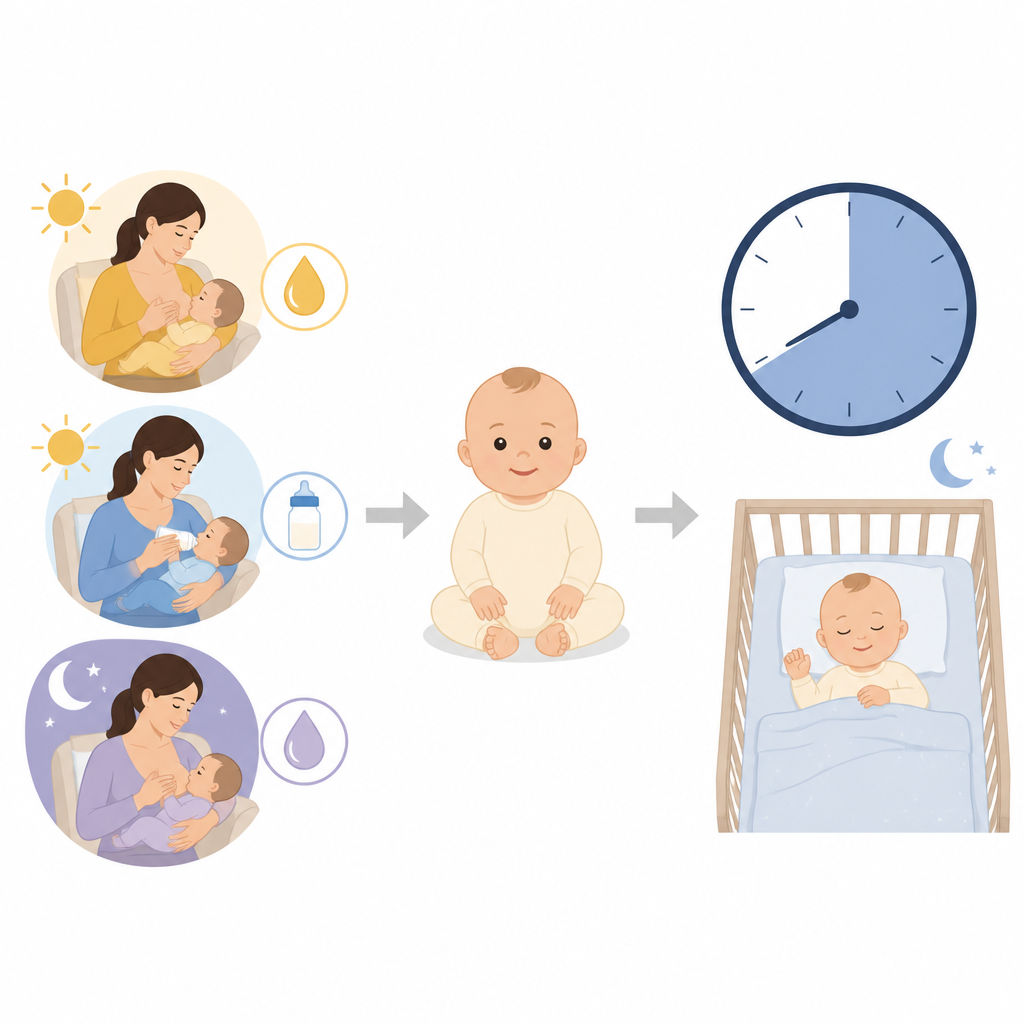
The research drew on the Japan Environment and Children’s Study, a nationwide project that tracks children’s health from before birth. More than 100,000 pregnancies were initially enrolled, and after excluding multiple births, miscarriages, stillbirths, and incomplete questionnaires, the team analyzed 82,918 mother–infant pairs. Mothers reported how long they breastfed and used formula during the first six months, and parents later recorded their child’s sleep over a full day when the child reached one year of age. This large and diverse group allowed the researchers to compare different feeding styles while taking into account many other factors that might influence sleep.
Different feeding patterns in the first six months
Families were grouped into four simple categories based on feeding up to six months: babies fed only formula, babies who were breastfed for less than six months, babies who received both breast milk and formula for six months, and babies who were exclusively breastfed for six months. At one year, the team calculated each child’s total daily sleep and defined “short sleep” as less than eleven hours in a 24-hour period, following international recommendations. They then used statistical methods to estimate how likely short sleep was in each feeding group, while adjusting for many influences such as the mother’s age, income, health, smoking and drinking habits, birth details, early sleep, and the home environment.
What the study found about sleep
Short sleep at one year was most common among babies who had been fed only formula, where about twelve in one hundred slept less than eleven hours a day. Among babies who had any breastfeeding, the proportion with short sleep was lower: around ten in one hundred for those breastfed for less than six months, just under ten in one hundred for those fed both breast milk and formula for six months, and fewer than nine in one hundred for those exclusively breastfed for six months. After taking other influences into account, babies who had been breastfed in any pattern were modestly less likely to have short sleep than babies who had been fed only formula. The difference was not huge, but it was consistent across all breastfeeding groups.
Possible reasons behind the link
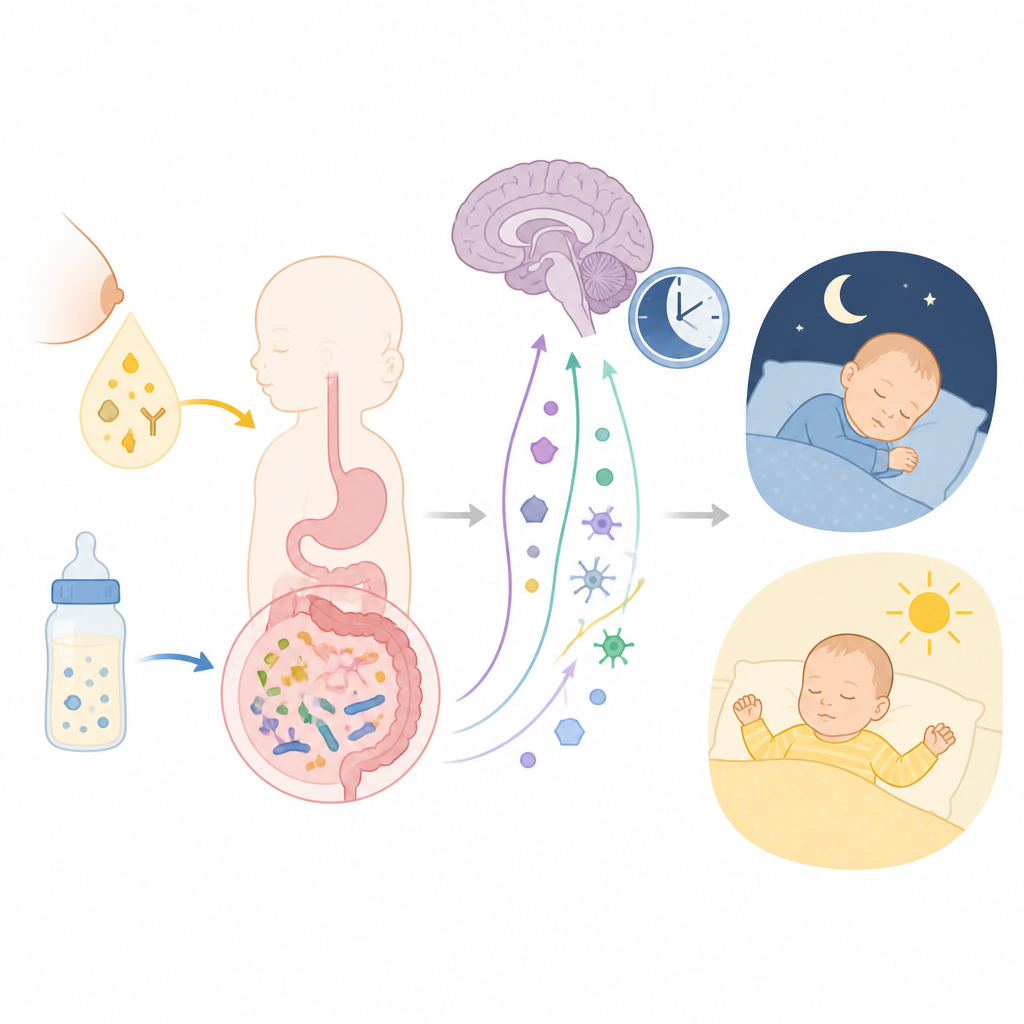
The study did not directly measure biological changes, but it points to several plausible pathways. Breast milk contains the hormone melatonin, which helps set day–night rhythms and is scarce in newborns who do not yet make much of their own. Breast milk also shows daily swings in the level of tryptophan, a building block for melatonin, while formula levels stay constant. These day–night signals from breast milk may help babies develop more stable sleep patterns. In addition, breastfeeding shapes the mix of microbes living in a baby’s gut. These microbes communicate with the brain along what scientists call the gut–brain axis and are thought to influence both brain development and sleep. Together, these features of breast milk and its impact on gut bacteria could help explain why breastfed babies were slightly more likely to sleep longer at one year.
What this means for parents and caregivers
The findings suggest that breastfeeding during the first six months is linked with a small but meaningful reduction in the chance that a one-year-old will sleep less than eleven hours a day. The study cannot prove cause and effect, relies on parents’ reports, and cannot rule out all other influences in the home. Still, by following a very large number of families across Japan, it adds to evidence that breastfeeding may support not only infection resistance and long-term health, but also healthier sleep patterns in early childhood.
Citation: Nakagawa, Y., Matsumura, K., Tsuchida, A. et al. Breastfeeding and children’s sleep duration at 1 year of age: A nationwide birth cohort - The Japan Environment and Children’s Study. Eur J Clin Nutr 80, 476–482 (2026). https://doi.org/10.1038/s41430-026-01718-1
Keywords: breastfeeding, infant sleep, formula feeding, melatonin, gut brain axis