Clear Sky Science · en
ASO-based PKM splice-switching therapy increases anti-CTLA-4 antibody efficacy in pancreatic ductal adenocarcinoma
Turning the Body’s Defenses Back On
Pancreatic cancer is notoriously difficult to treat, in part because tumors cloak themselves in a hostile neighborhood that shuts down the immune system. This study explores a two-pronged strategy: rewiring how tumor and immune cells burn sugar, and combining that metabolic reset with an existing immunotherapy drug. The work suggests that carefully targeting cancer metabolism can make an otherwise “cold” tumor more responsive to immune attack.
Why Pancreatic Tumors Are So Tough
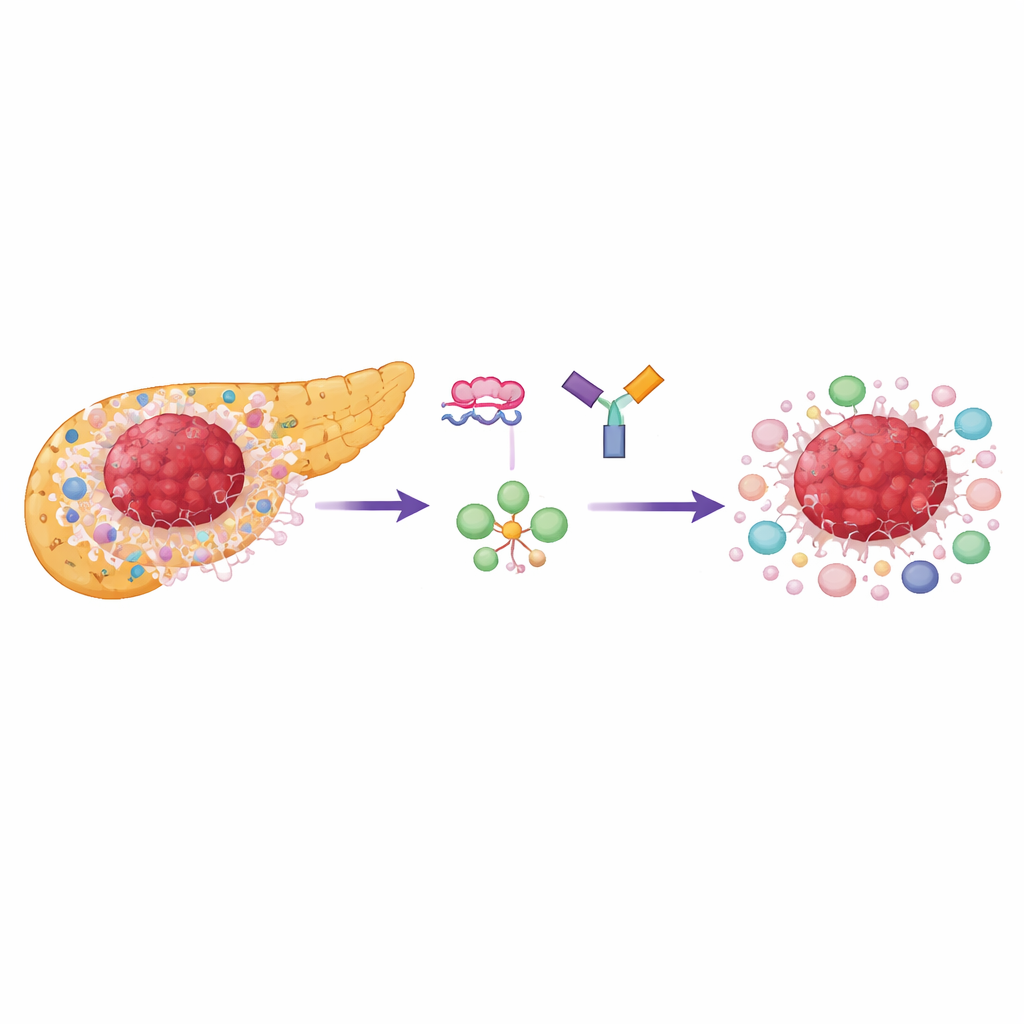
Pancreatic ductal adenocarcinoma grows within a dense, scar-like tissue packed with support cells and specialized immune cells that suppress attack, especially regulatory T cells (Tregs). Both the cancer cells and many neighbors depend heavily on a fast-burning form of sugar use called aerobic glycolysis. A key control point in this process is an enzyme called pyruvate kinase, which exists in two forms: PKM1 and PKM2. Most normal, mature tissues use PKM1, but rapidly dividing cells and immune cells favor PKM2, which supports quick energy and building blocks for growth. The researchers found that PKM2 is widely elevated in human pancreatic tumors and linked to poorer survival, while PKM1 remains low in most tumor areas.
Rewiring Tumor Sugar Use with Designer DNA
The team used short, synthetic strands of DNA-like material called antisense oligonucleotides (ASOs) to force cells to make more PKM1 and less PKM2 from the same gene. This “splice-switching” does not remove the gene; instead, it changes which version of the enzyme is produced. In cell culture, these ASOs effectively shifted pancreatic cancer cells toward PKM1, boosted total enzyme activity, and sharply reduced lactate, the end-product of glycolysis. Basal-like tumor cells—a more aggressive subtype—were especially sensitive, slowing their growth more than the so-called classical subtype. Importantly, the growth slowdown depended mainly on reducing PKM2 rather than simply increasing PKM1, highlighting how strongly tumors rely on the PKM2-driven metabolic program.
Mapping a Metabolic Hotspot Around the Tumor
To understand which cells in the tumor neighborhood might also be affected, the researchers combined tissue staining with single-cell and spatial gene-expression maps from human pancreatic cancers. They observed that many non-nerve cells expressing the PKM gene were, in practice, using the PKM2 form. In particular, basal-like cancer cells and nearby activated Tregs both showed high PKM expression and strong glycolytic signatures. Spatial analysis revealed that the most metabolically active, hypoxic regions—where cancer cells are more basal-like—were ringed by activated Tregs that depend on glycolysis to maintain their suppressive behavior. This close physical and metabolic partnership between tumor cells and Tregs marked an especially immunosuppressive niche.
From Metabolic Switch to Stronger Immunotherapy
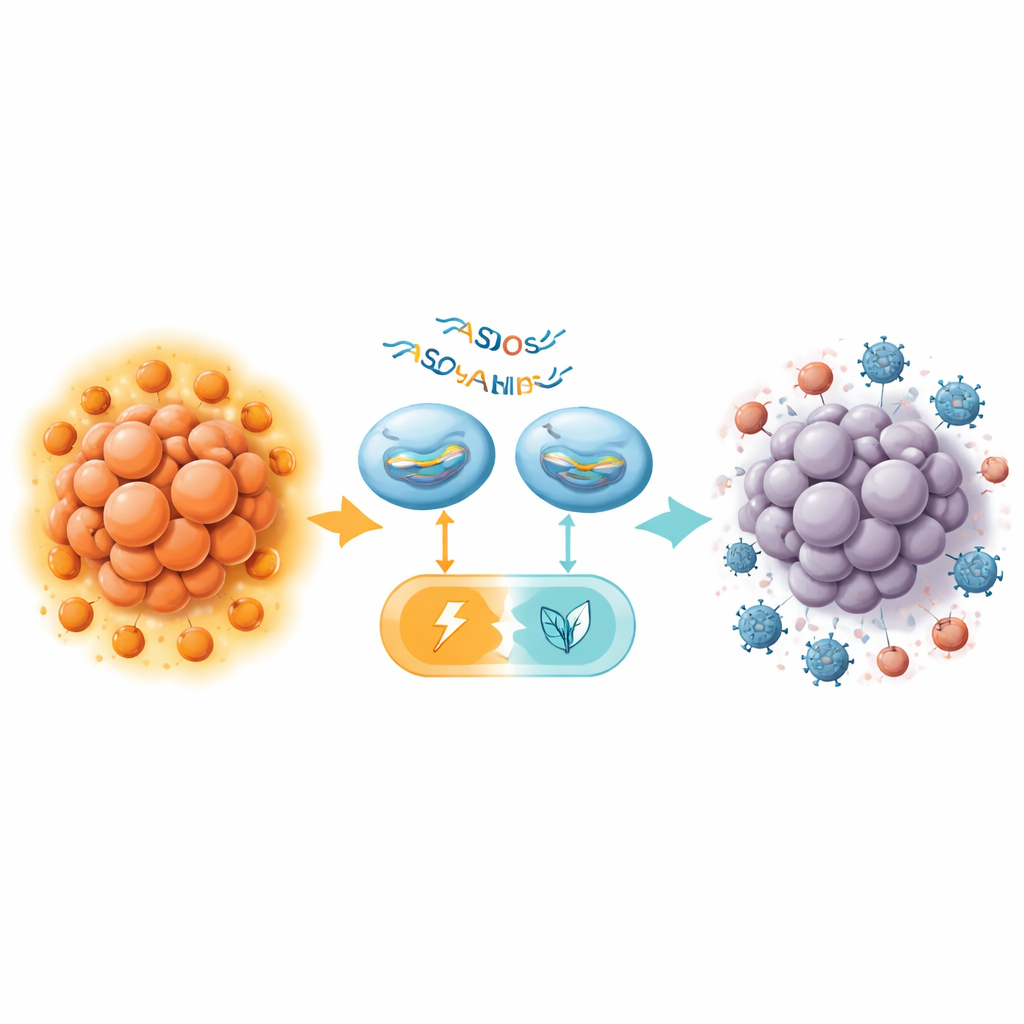
In mice lacking a functional immune system, delivering PKM splice-switching ASOs directly into the body slowed pancreatic tumor growth, increased tumor cell death, and cut glycolysis, all without obvious toxicity in sensitive organs such as liver and kidney. However, the effect was modest compared with earlier results in liver cancer. The key advance came in immunocompetent mice, where the team combined a potent mouse ASO (MOE16) with an anti-CTLA-4 antibody, a checkpoint-blocking drug aimed at Tregs. On its own, anti-CTLA-4 had little impact on pancreatic tumors, echoing disappointing clinical trials. ASO treatment alone produced only a slight benefit. Together, however, the two therapies shrank tumors much more effectively, sometimes leaving only tiny remnants on inspection.
Making a “Cold” Tumor More Responsive
Closer examination of treated mouse tumors showed that PKM splice-switching changed enzyme levels inside both cancer cells and CD4-positive T cells, reduced the number of infiltrating Tregs, and reshaped the local metabolism. By easing the tumor’s dependence on PKM2-fueled glycolysis and weakening the surrounding Tregs, the ASO treatment appeared to make the tumor microenvironment less suppressive and more permissive to immune attack. While further work is needed in slower, more realistic models and human-derived tissues, these findings suggest that precisely targeting a single metabolic switch can turn a resistant pancreatic tumor into one that finally responds to immunotherapy.
Citation: Han, L., Gan, L., Schäfer, B. et al. ASO-based PKM splice-switching therapy increases anti-CTLA-4 antibody efficacy in pancreatic ductal adenocarcinoma. Cell Discov 12, 28 (2026). https://doi.org/10.1038/s41421-026-00882-9
Keywords: pancreatic cancer, tumor metabolism, immunotherapy, regulatory T cells, antisense oligonucleotides