Clear Sky Science · en
Plasma proteome profiling identifies novel biomarkers and predictors for schizophrenia
Why blood can hint at future mental health
Schizophrenia is a serious mental disorder that often appears in late adolescence or early adulthood, yet its early warning signs are hard to spot. This study asks a simple but powerful question: can a routine blood sample, taken years before illness, reveal subtle protein patterns that signal who is more likely to develop schizophrenia?
Looking for clues in blood proteins
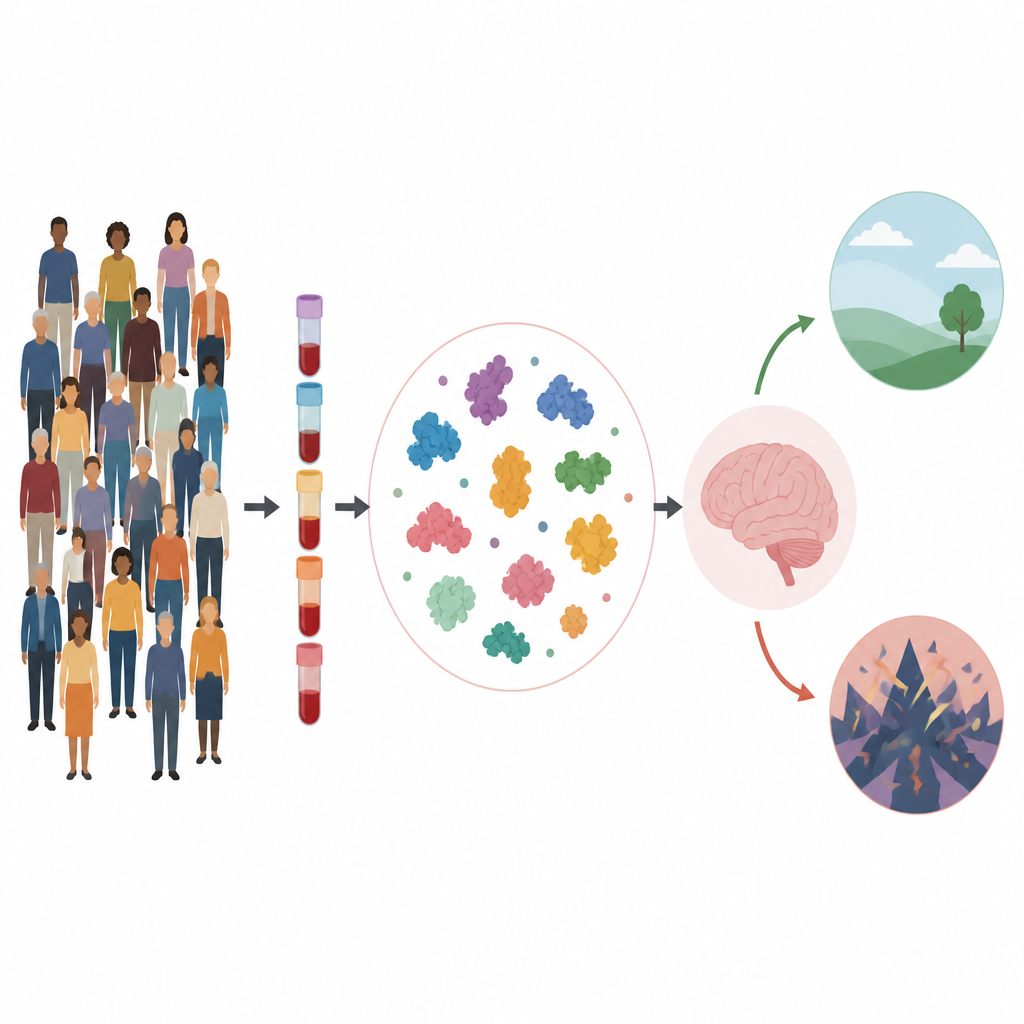
Using data from the UK Biobank, a long term health study in the United Kingdom, researchers examined blood from more than 36,000 adults who were initially free of schizophrenia. Among them, 70 people went on to develop the condition over nearly 14 years of follow up. The team measured the levels of almost 3,000 different proteins in blood plasma and then tracked who later received a diagnosis, looking for proteins that differed between people who remained well and those who developed schizophrenia.
Thirty one proteins stand out
The analysis highlighted 31 proteins whose levels were linked to the later onset of schizophrenia, even after accounting for age, sex, body weight, social disadvantage and ethnic background. Some of these proteins showed simple rising or falling risk with higher levels, while five displayed U shaped relationships, where both unusually low and unusually high levels were associated with greater risk. When the researchers combined the information from these 31 proteins in a machine learning model alongside basic demographic data, the model could distinguish future schizophrenia cases from others with fairly strong accuracy.
Signals of sticky cells and leaky barriers
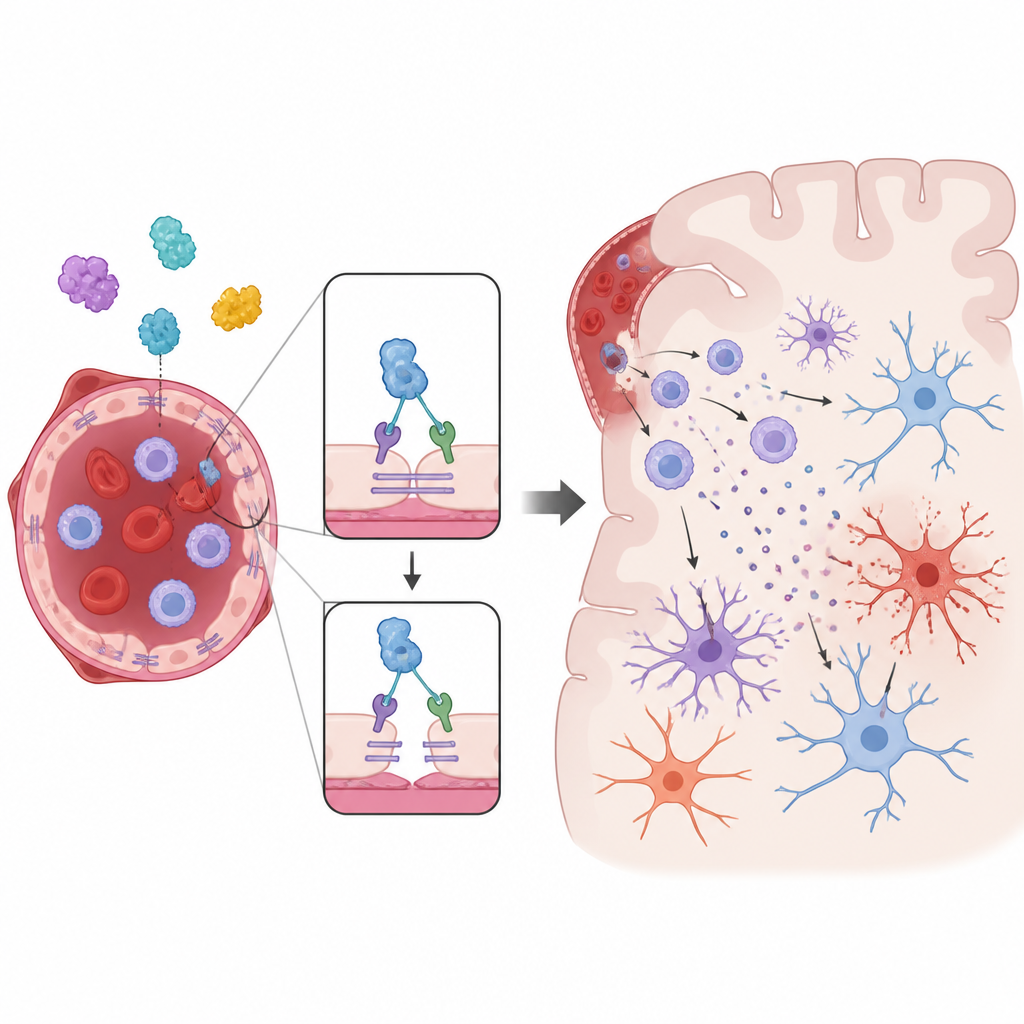
Many of the 31 proteins shared common roles in how cells stick to each other and to their surroundings, and in how immune cells move through tissues. Several belonged to the integrin family, proteins that help cells grip the surrounding mesh that supports them and that influence how brain cells form and change connections. Another key protein, called JAM3, helps seal the walls of blood vessels and contributes to the tight barrier that protects the brain from unwanted substances in the blood. The pattern of findings suggests that subtle changes in cell adhesion, immune activity and the brain’s protective barrier may be part of the pathway leading to schizophrenia.
Testing cause and effect with genetics
To move beyond simple association, the team used genetic data as a natural experiment. Certain gene variants are known to influence blood levels of specific proteins. By asking whether people who inherit variants that raise or lower particular proteins also have altered schizophrenia risk, the researchers can get clues about cause and effect. This approach pointed most strongly to JAM3, where genetically higher levels were linked to higher risk of schizophrenia, consistent with the observational findings. Other proteins showed weaker or less consistent patterns, underscoring that biology is complex and that protein levels can be shaped by illness and environment as well as genes.
What this could mean for care
Taken together, the results suggest that a small set of blood proteins carry information about who is more likely to develop schizophrenia years later, and that processes involving immune activity, cell stickiness and the brain’s protective blood vessel barrier may play important roles. While this work does not yet translate into a clinical blood test, it shows that future screening tools and treatments might target these systems, potentially allowing earlier detection and more tailored care for people at risk.
Citation: Wu, S., Guo, X., Jia, T. et al. Plasma proteome profiling identifies novel biomarkers and predictors for schizophrenia. Transl Psychiatry 16, 266 (2026). https://doi.org/10.1038/s41398-026-04017-2
Keywords: schizophrenia, blood proteins, biomarkers, neuroinflammation, brain barrier