Clear Sky Science · en
Effects of a single dose of psilocybin on diet-induced weight loss in obese mice
Why a mushroom drug and weight loss matter
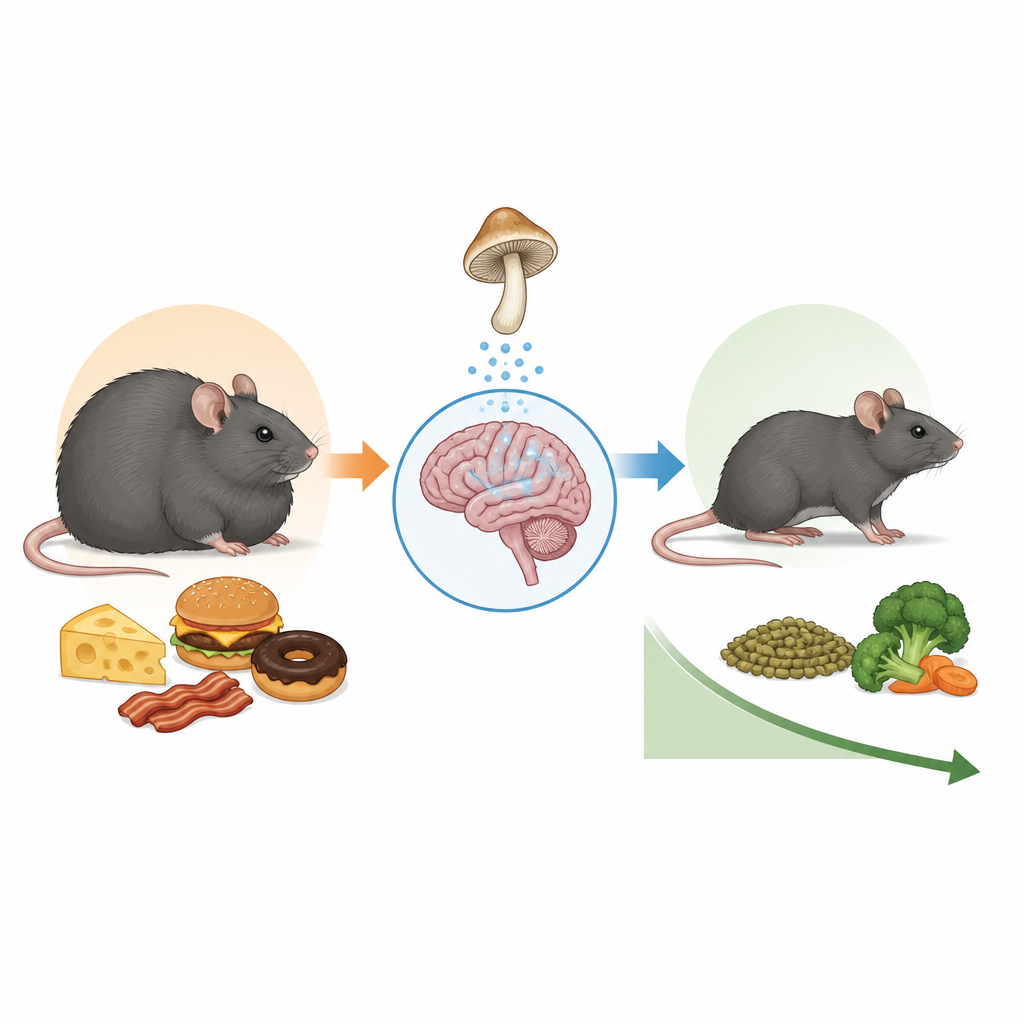
Obesity is common, stubborn and hard to treat with dieting alone, because the brain seems to defend a higher “set point” for body weight. This study asked whether psilocybin, the active ingredient in many so‑called magic mushrooms, might help the brain loosen that grip and make diet‑driven weight loss easier, at least in obese mice.
How weight gets stuck at a higher level
Long term obesity does more than just enlarge fat stores. It reshapes brain circuits that regulate hunger, fullness, motivation and emotion. Regions deep in the brain help control how much we eat and how much energy we burn, while areas in the thinking part of the brain guide willpower and decision making around food. Over time, these circuits adapt to support a heavier body, so that when someone loses weight, the brain often responds by pushing appetite up and energy use down, driving weight back toward the old level.
Why psilocybin is of interest
Psilocybin is converted in the body to psilocin, a compound that acts on serotonin and other receptors in the brain. In animal studies, a single dose can trigger rapid growth of tiny branches on nerve cells, a sign of increased brain plasticity. Similar drugs have shown promise in models of depression, anxiety and addiction, conditions that share brain pathways with obesity and are often seen alongside it. Because some of these brain regions also help control eating, researchers wondered if psilocybin could make the brain more flexible and more willing to “reset” body weight when a diet is changed.
What the researchers did in obese mice
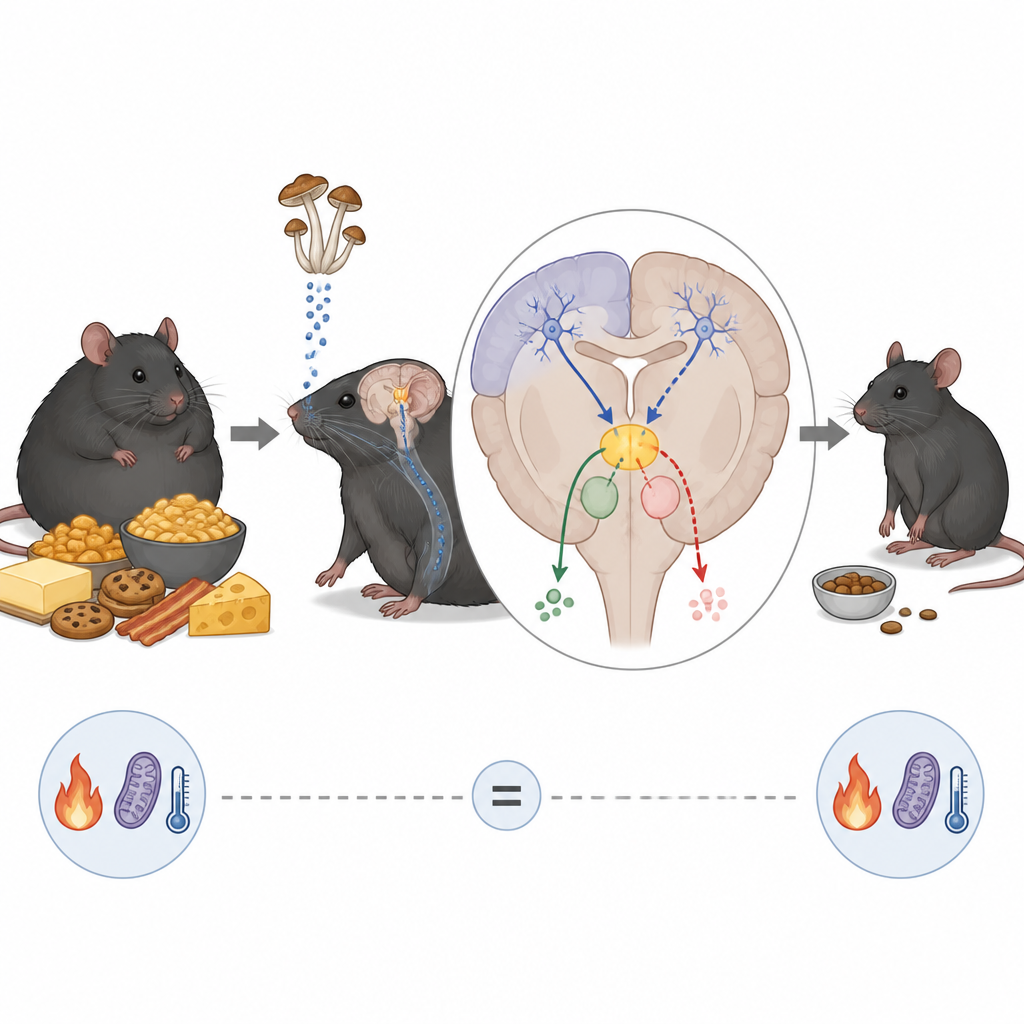
Male mice were first made obese by eating a high fat diet for several months. Then they received either a single injection of psilocybin or a salt solution. Two days later, half the animals in each group were switched from the rich, high fat food to a standard low fat chow, similar to starting a healthier diet, while the rest stayed on the high fat menu. Over the next four weeks, the team carefully tracked body weight, food intake and energy use in special metabolic cages, and later examined brain tissue for signs of changes at nerve cell connections.
Psilocybin helped some mice lose more on a diet
In mice that stayed on the high fat diet, psilocybin made no difference: they kept gaining weight and ate the same amount of fatty food as untreated mice. But in obese mice that were switched to the low fat chow, those given psilocybin were much more likely to lose a larger share of their starting weight during the four week diet. The drug did not cut overall energy use or change how the animals burned fat versus carbohydrate, pointing instead to changes in how much they chose to eat. Among the dieting mice, those that lost the most weight tended to eat less and use the calories they did eat less efficiently, and most of these high responders had received psilocybin.
Clues and open questions in the brain
The team also looked at proteins linked to synapses, the contact points between nerve cells, in brain areas involved in appetite and control of behaviour. Thirty days after the single psilocybin dose, they did not find clear differences between psilocybin and control groups, although the change in diet itself reduced some synaptic markers. This could mean that any structural shifts in brain wiring peaked earlier and then faded, or that important changes occurred in ways or places not captured by the methods used. Other work suggests psilocybin may act by making certain brain circuits temporarily more adaptable and more responsive to outside influences like diet or behaviour.
What this might mean for people
The study suggests that psilocybin alone does not act as a simple weight loss drug or appetite blocker. Instead, in obese mice that were already placed on a healthier diet, a single dose made it more likely that they would lose a larger amount of weight, apparently by helping them eat less over time. For human obesity, this points to a potential role for psychedelic‑based treatments as helpers that work alongside lifestyle changes, rather than replacing them. Much more research will be needed to clarify how timing, dose and brain mechanisms translate from mice to people, and to ensure safety, before such an approach could be considered in clinical practice.
Citation: Keenan, R.J., Haque, R.T., Jin, X. et al. Effects of a single dose of psilocybin on diet-induced weight loss in obese mice. Transl Psychiatry 16, 276 (2026). https://doi.org/10.1038/s41398-026-03995-7
Keywords: psilocybin, obesity, diet-induced weight loss, food intake, neural plasticity
See more on the researcher's website: https://www.monash.edu/discovery-institute/cowley-lab