Clear Sky Science · en
Hair cortisol concentrations as a putative biomarker for suicidal behavior
Why your hair might hold clues about suicide risk
Suicide is a leading cause of death for young adults, and even among people in psychiatric care, doctors still struggle to tell who is most in danger. This study asks a striking question: could a simple clipping of hair reveal long-term stress hormone patterns that signal who is at highest risk of dying by suicide? By looking for traces of the stress hormone cortisol in hair strands, the researchers tested whether our bodies carry a quiet, measurable signature of risk that goes beyond what people say about their thoughts and intentions.

From fleeting thoughts to lasting signals
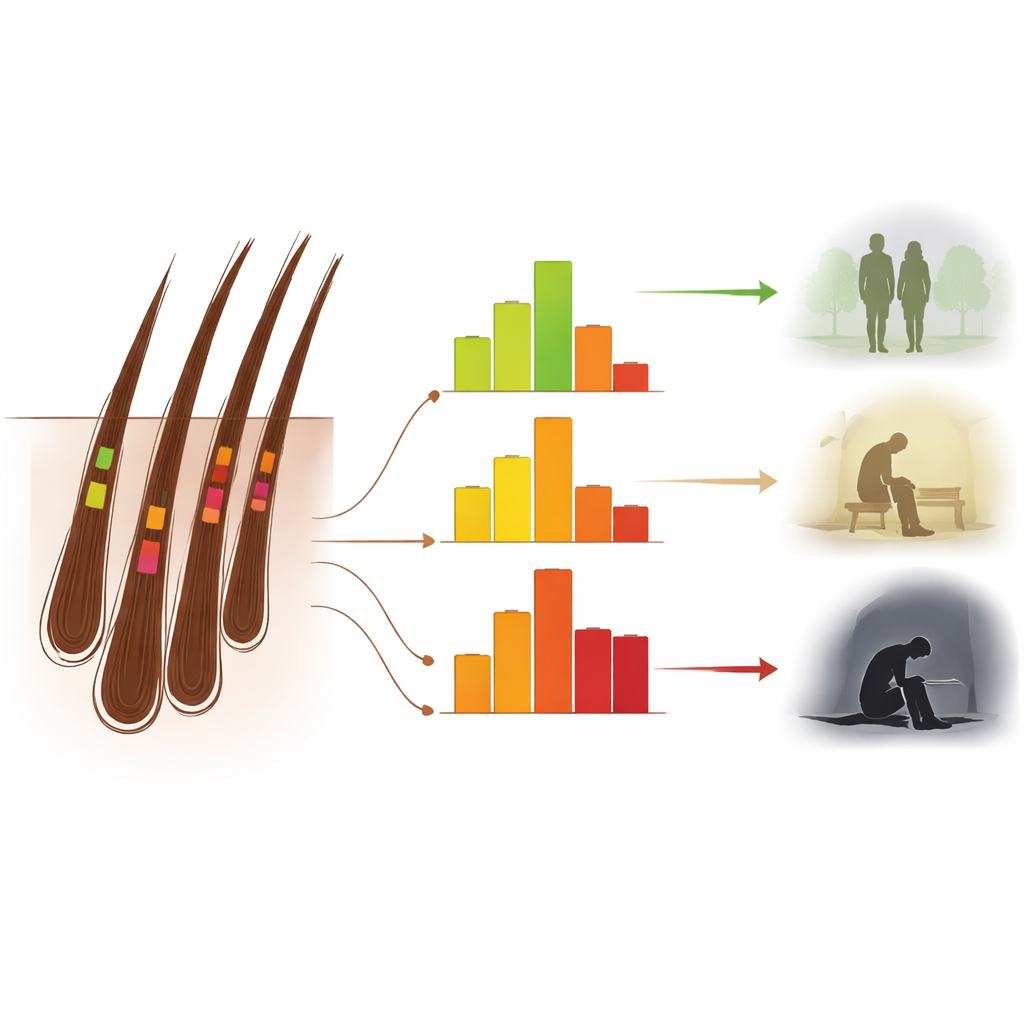
Thoughts of self-harm can change from hour to hour, and people are often reluctant or unable to share how desperate they feel. Clinicians therefore hope for objective, biological markers that don’t depend on self-report. Cortisol is a hormone released when we experience stress and is controlled by a brain–body network called the stress system. Most past studies measured cortisol in blood or saliva, which only capture a moment in time and often after suicidal behavior has already occurred. This work focuses instead on cortisol stored in hair, which accumulates slowly over weeks and offers a three-month “diary” of stress-system activity.
Reading stress history from strands of hair
The team studied 238 young adults with psychiatric conditions, spanning a full range of suicide-related experiences: some had recently attempted suicide, some had serious suicidal thoughts, some had no current suicidal thoughts, and another group had died by suicide. They also examined hair samples from people who had died by accidental drug overdose. By cutting and analyzing only the three centimeters of hair closest to the scalp, the scientists estimated the average cortisol level over the three months before death or hospital admission. Using rigorous interviews, medical records, and statistical models, they compared hair cortisol while accounting for factors such as sex, body weight, medications, and lab batch effects.
Lower long-term stress hormone levels in those who died
Across multiple analyses, one pattern stood out: individuals who died by suicide consistently showed lower hair cortisol than those who had attempted suicide, had suicidal thoughts only, or were psychiatric patients without current suicidal thinking. The differences were large enough to be unlikely due to chance. When the researchers pooled data from an earlier pilot study with the new sample, the signal became stronger, and lower hair cortisol was also linked to more severe and more medically dangerous suicide attempts. Among people who died, those whose deaths were classified as suicide tended to have lower hair cortisol than those who died from accidental overdoses, though this difference was less certain, in part because some overdose deaths may actually hide unrecognized suicides.
What low stress hormones might mean
At first glance, low cortisol may seem like a good thing, but the story is more complicated. Chronic stress can initially push the stress system into overdrive, raising cortisol. Over time, however, the system can become exhausted and downshift into a “blunted” state, producing less hormone even in the face of new challenges. This wear-and-tear process, sometimes called allostatic load, may leave people less able to mount a healthy response when major life crises strike. The authors suggest that this long-term underactivity of the stress system may be part of the biological vulnerability that, combined with other factors like trauma, impulsivity, and mental illness, raises the risk of lethal suicidal behavior.
How this research could help save lives
These findings point to hair cortisol as a promising, although not yet ready-for-clinic, tool for identifying who is at greatest risk among already high-risk patients. A noninvasive hair sample is easy to store and not strongly affected by the time of day or short-term events, making it practical for hospitals and possibly even medical examiners investigating cause of death. Still, the study is modest in size, and larger, diverse samples are needed to confirm the results, refine how different levels translate into risk, and explore monthly changes along the hair shaft. If replicated, measuring cortisol in hair could become one component of a broader risk assessment toolkit, adding a quiet biological signal to the complex picture of who needs the most urgent help.
Citation: Taraban, L., Hone, E., Jia-Richards, M. et al. Hair cortisol concentrations as a putative biomarker for suicidal behavior. Neuropsychopharmacol. 51, 1084–1090 (2026). https://doi.org/10.1038/s41386-026-02344-y
Keywords: suicide risk, hair cortisol, stress hormones, biomarkers, young adults