Clear Sky Science · en
Hereditary red cell defects as an underrecognized cause of neonatal jaundice
Why some newborns turn yellow
Many parents notice a yellow tint in their baby’s skin during the first days of life, a condition called jaundice. It is often blamed on blood type mismatch or common enzyme problems, but this study shows that, in some babies, the real cause is a subtle inherited change in their red blood cells. Understanding this hidden factor can help doctors recognize which babies need closer follow up and which will recover safely with simple care.
A closer look at newborn jaundice
Jaundice happens when a baby’s body has more bilirubin, a yellow pigment, than the liver can clear. Doctors usually look first for well known causes such as blood group incompatibility, enzyme deficiency, or disorders of hemoglobin, the blood’s oxygen carrier. The authors of this study suspected that another group of conditions, in which red blood cells are structurally fragile, might quietly account for a share of newborn jaundice cases that are not easily explained.
Hidden weakness in red blood cells
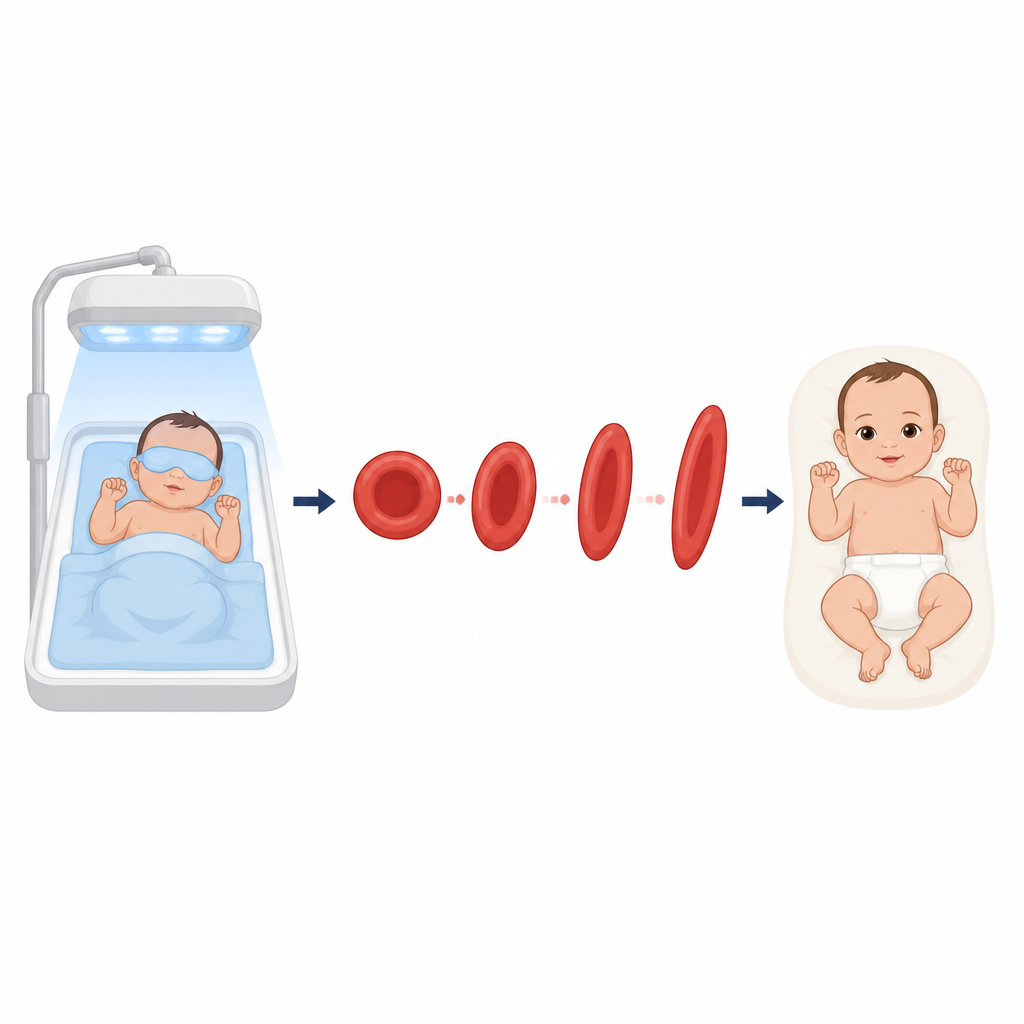
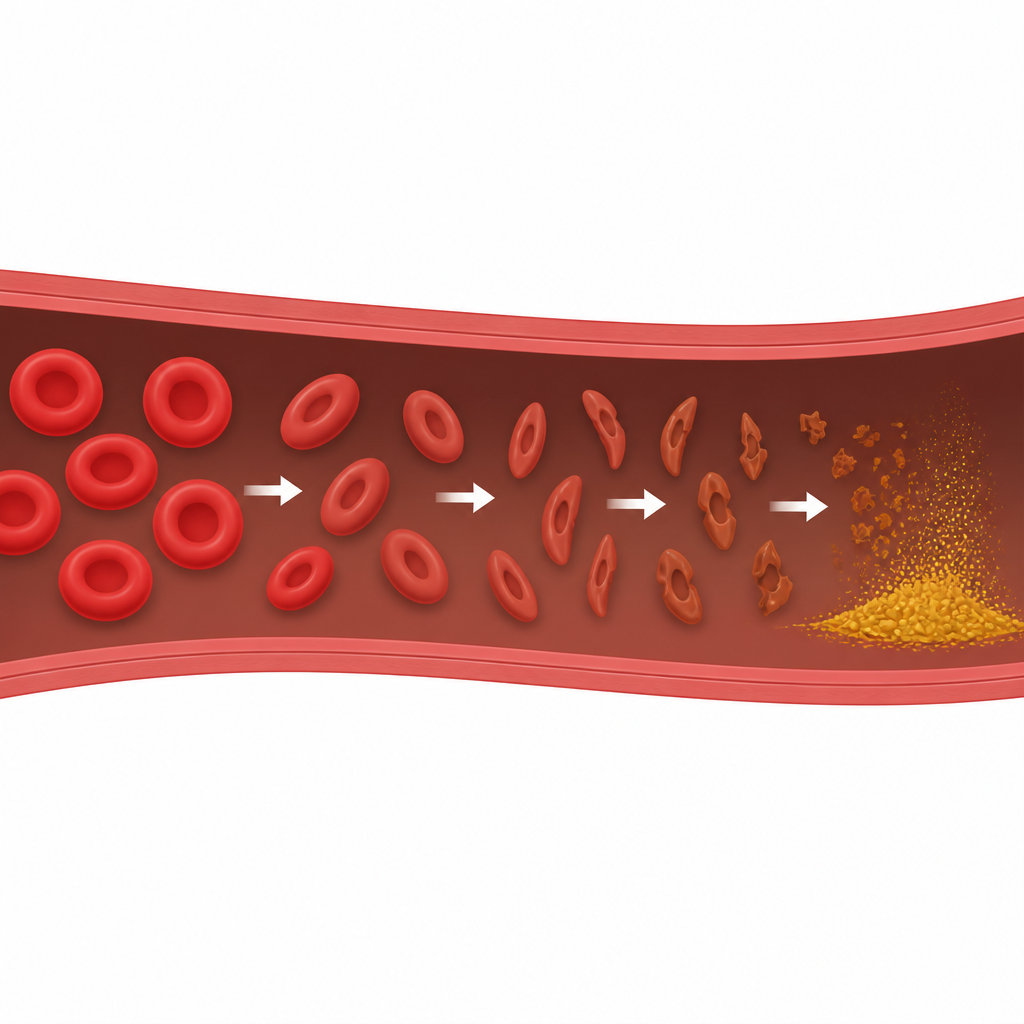
Red blood cells normally have a flexible, biconcave shape that lets them squeeze through tiny blood vessels. In hereditary elliptocytosis, a change in a protein called spectrin weakens the cell’s inner scaffolding and causes many cells to become elongated instead of round. These misshapen cells break apart more easily, releasing extra pigment that can trigger jaundice and sometimes anemia. The team focused on three known spectrin variants common in Thailand, called Providence, Buffalo, and Chiang Mai, which arise from changes in the SPTB gene.
Who was studied and how
The researchers reviewed records from 1,584 newborns admitted with jaundice over three years at a university hospital. They excluded babies with other clear causes, then examined blood counts, blood smears, bilirubin levels, and responses to treatment. When blood smears showed unusual shapes such as distorted or very small red cells, they performed genetic tests to look for the specific SPTB variants. They also screened for common thalassemias and other hemoglobin disorders when the blood picture suggested these might be present.
What the doctors found
Out of all jaundiced newborns, 76 babies, or about 5 percent, were found to have hereditary elliptocytosis linked to a single altered copy of the SPTB gene. Most carried the Providence variant and a smaller number the Buffalo variant; a few also had separate hemoglobin disorders. Jaundice began early, at a median of about 38 hours after birth, and peak bilirubin levels were moderately high. Nearly all of these babies needed phototherapy, and a handful required more intensive light treatment, but none needed an exchange transfusion. About one third developed anemia; most of those needed a single red cell transfusion in the first months of life. Despite this early stress, enlargement of the liver or spleen was rare.
How blood changes over time
During the newborn period, blood tests in affected babies showed signs of active red cell turnover: slightly small red cells, wide variation in cell size, high reticulocyte counts, and sometimes immature red cells in the circulation. Interestingly, the classic elongated cells that define hereditary elliptocytosis were often not obvious at birth but became clear only around four to six months of age. After that age, most children had normal or only mildly low hemoglobin levels and did not need repeated transfusions, even though their blood still showed the telltale oval cells on smear.
What this means for parents and clinicians
This study suggests that an inherited red cell shape disorder is an underrecognized cause of early jaundice and anemia in newborns, especially in regions where SPTB variants are common. The good news is that most affected babies follow a mild path once the early period has passed. For families, this means that a baby who needed phototherapy or a single transfusion because of this condition is still likely to grow and develop normally. For clinicians, careful review of blood smears, repeat checks after several months, and targeted genetic testing can uncover the diagnosis and prevent unnecessary worry and treatment.
Citation: Komvilaisak, P., Wichajarn, K., Laoaroon, N. et al. Hereditary red cell defects as an underrecognized cause of neonatal jaundice. J Perinatol 46, 775–779 (2026). https://doi.org/10.1038/s41372-026-02621-0
Keywords: neonatal jaundice, hereditary elliptocytosis, red blood cell defects, newborn anemia, SPTB mutation