Clear Sky Science · en
Central city construction and urban land green utilization efficiency: evidence from Chinese urban agglomerations
Why smarter city building matters for our planet
Across the world, cities are spreading outward, using more land and putting pressure on air, water, and ecosystems. China has tried a bold approach to tackle this problem by building powerful “central cities” that guide the development of entire urban regions. This study asks a simple but crucial question: do these central cities actually help surrounding areas use land in a cleaner, more efficient way, and if so, how?
From sprawl and smoke to greener land use
The researchers focus on what they call urban land green utilization efficiency, which captures how well cities turn land into economic and social benefits while keeping pollution in check. Instead of looking only at growth or only at emissions, this measure combines land area, workers, and investment with outcomes such as economic output, public finances, park space, and industrial pollution. Using data from 213 cities in 19 major Chinese urban clusters between 2006 and 2021, the team applies a widely used efficiency tool from economics to score how green and efficient each city’s land use really is over time. 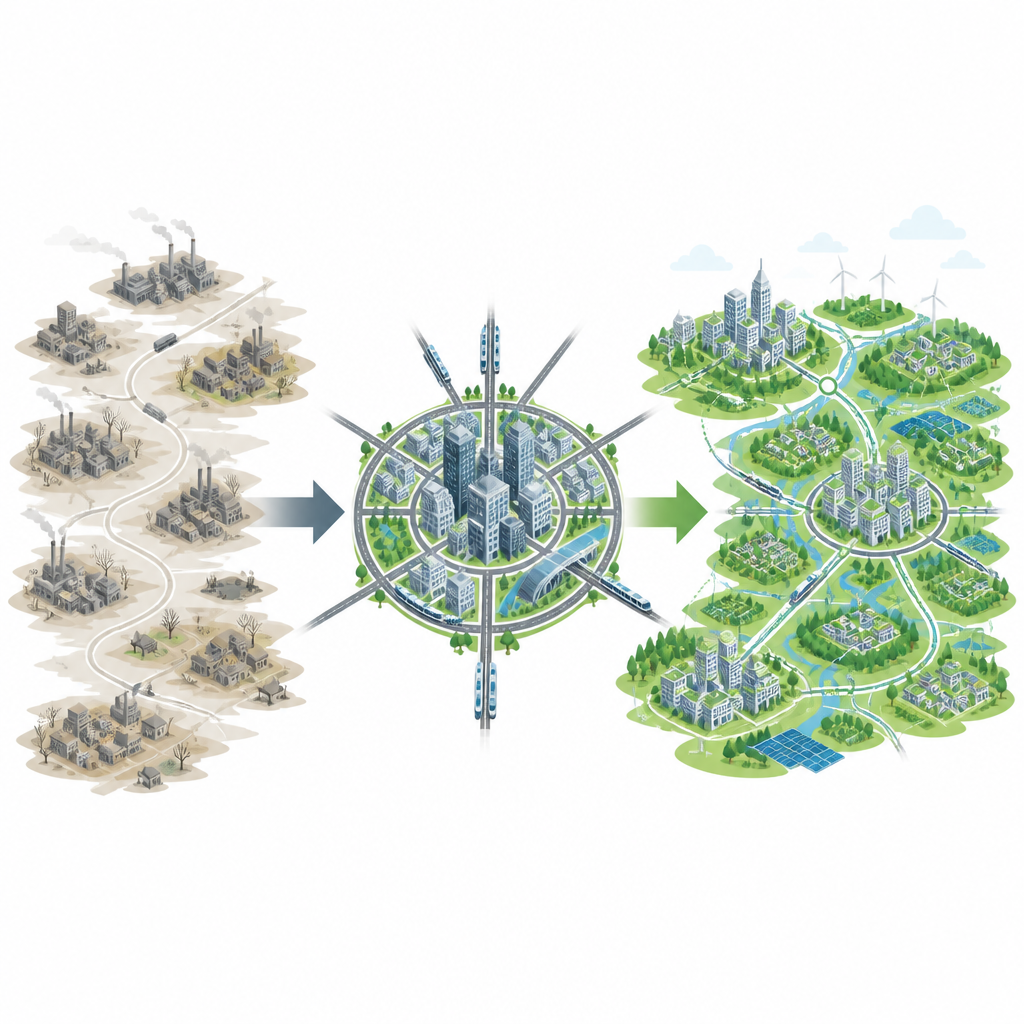
Central cities as engines for cleaner growth
China has officially designated several large cities, including Beijing, Shanghai, and Chengdu, as national central cities. These hubs receive extra responsibilities and policy support so they can pull in talent, technology, and modern services, then spread those benefits to nearby cities. To see whether this strategy works for greener land use, the authors treat the official rollout of central city status as a kind of natural experiment. They compare cities inside central city regions with similar cities outside those regions, before and after the policy took effect. Using a technique called difference in differences, they find that central city construction significantly raises green land use efficiency, even after accounting for many other influences such as government spending, income levels, foreign investment, and savings rates.
How innovation, industry, internet, and people reshape land
The study then digs into the mechanisms behind this improvement. It finds that four forces act together. First, central cities boost green innovation, as shown by rising numbers of environmentally oriented patents, which help firms save resources and cut pollution per unit of land. Second, they push industrial upgrading: dirty, land-hungry industries shrink relative to cleaner, higher value sectors like advanced manufacturing and services. Third, stronger internet networks and digital infrastructure make it easier to coordinate production, manage resources, and monitor environmental impacts across the region. Finally, better quality urbanization concentrates population and services more compactly, holding back wasteful sprawl and freeing space for parks, waterways, and farmland.
Not all cities benefit in the same way
The gains from central city construction are uneven. Coastal urban regions and medium-sized cities reap the biggest improvements, likely because they already have solid economic bases and flexible land patterns that can respond to new policies. Nonresource cities benefit more than areas whose economies depend on coal, oil, or minerals, where entrenched industries and land uses are harder to change. The first wave of central cities, launched earlier and given more time to adjust, also shows stronger improvements than later waves with shorter policy histories. These patterns suggest that local conditions strongly shape how far a national strategy can go in cleaning up land use. 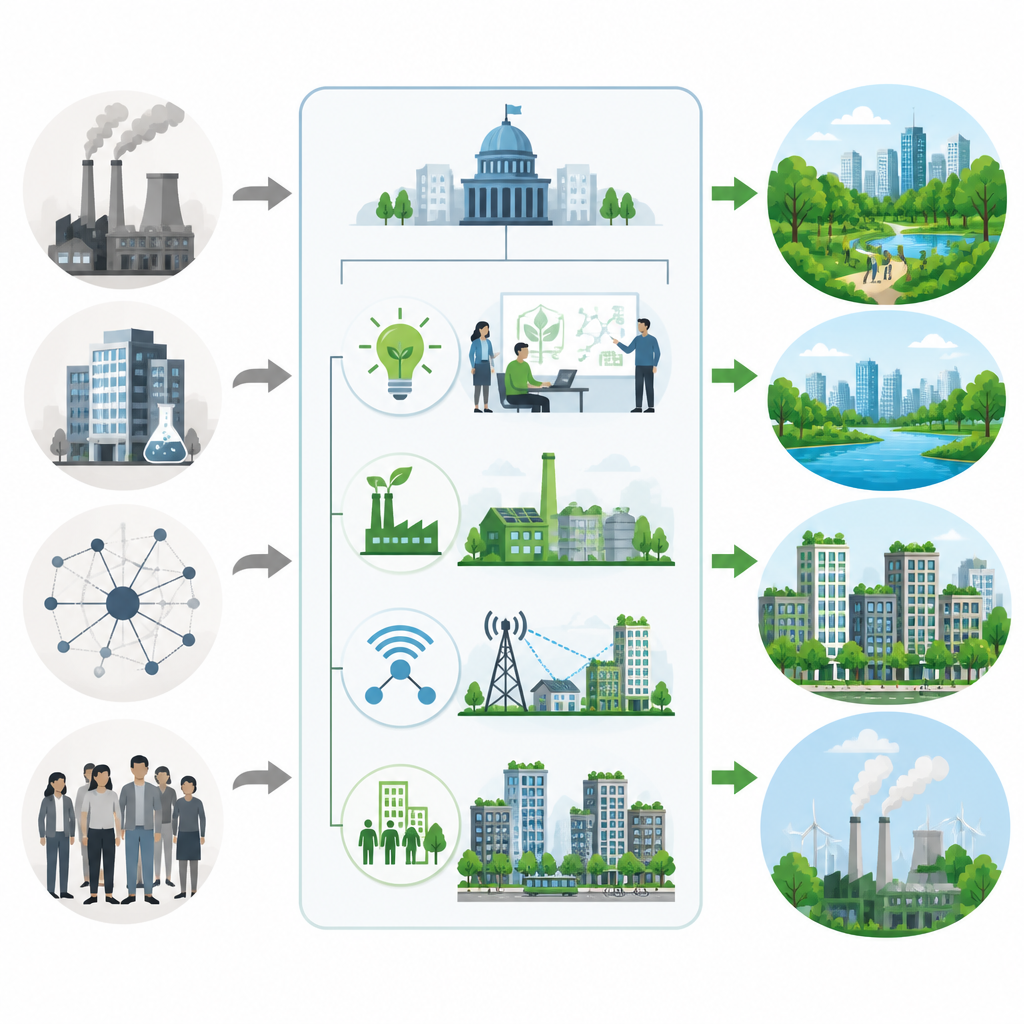
What this means for city builders elsewhere
In plain terms, the study concludes that carefully planned, well supported central cities can help entire urban regions use land more wisely: creating more jobs, income, and public services from each hectare while cutting pollution and protecting green space. The key is not just adding new buildings or roads, but weaving together innovation, cleaner industries, digital links, and thoughtful urban growth so that development and the environment advance together. For other rapidly urbanizing countries, the Chinese experience offers a template for turning big cities into anchors of greener land use rather than drivers of endless sprawl.
Citation: Xiao, Y., Kong, Q., Yang, H. et al. Central city construction and urban land green utilization efficiency: evidence from Chinese urban agglomerations. Humanit Soc Sci Commun 13, 746 (2026). https://doi.org/10.1057/s41599-026-07066-6
Keywords: central city construction, urban land use, green development, Chinese urban agglomerations, urbanization policy