Clear Sky Science · en
The Russian colour lexicon and its diatopic variation: elicited lists, cognitive salience of colour terms, and neologism boom
Why the names of colors keep changing
From fashion catalogs to paint strips at the hardware store, it can feel as if every shade has its own special name. This study looks at how young Russians talk about color today and asks a simple question with far-reaching implications: which color words are truly central in everyday speech, which ones are rising stars, and how does life in different cities shape the colors people choose to name?
The core set of everyday color words
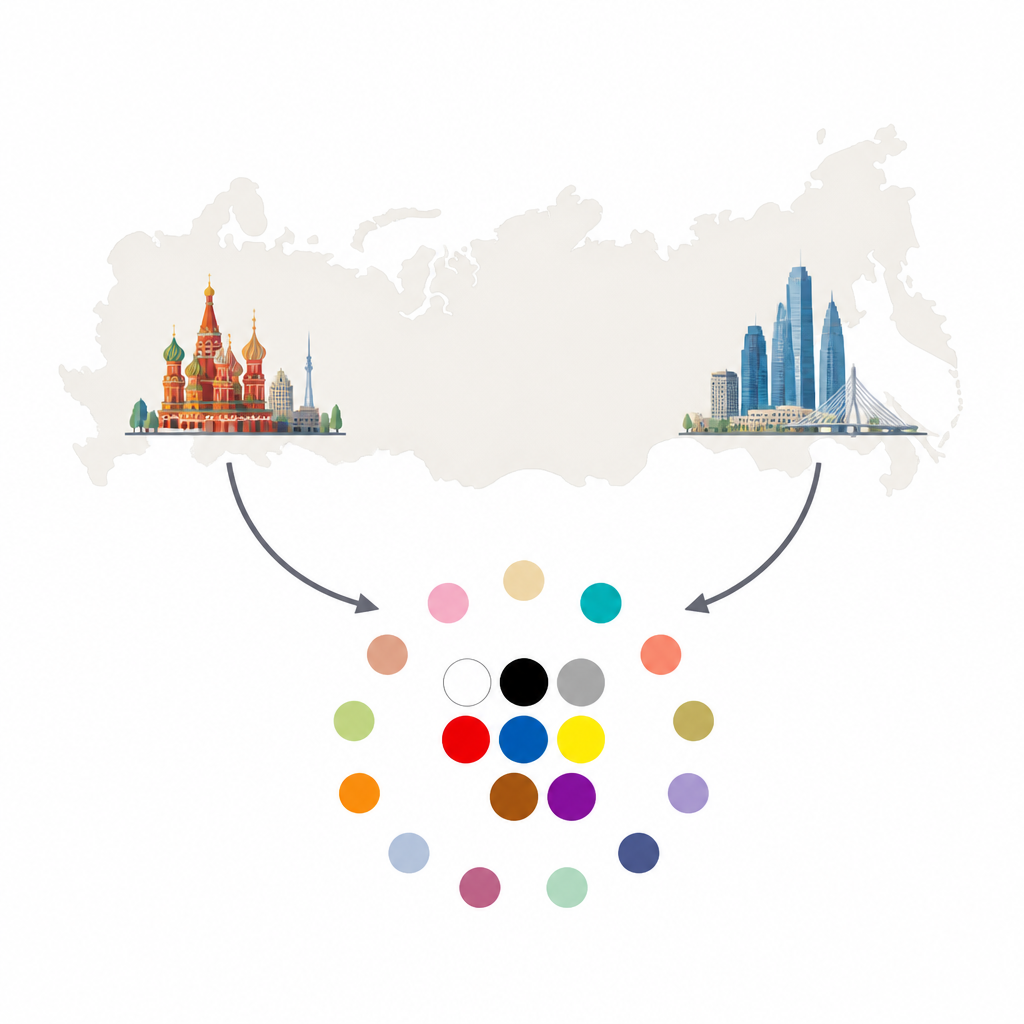
Researchers asked university students in two Russian cities, Kazan and Smolensk, to type as many color names as they could in five minutes. Together they produced hundreds of different terms, but a small group appeared on almost everyone’s list. These twelve basic color words cover familiar categories such as white, black, red, yellow, green, and grey, plus an interesting twist: Russian regularly uses two everyday words for blue, one for lighter sky-like shades and one for darker tones. Using statistics that combine how often a word was listed and how early it appeared, the authors confirmed that these twelve still form the backbone of Russian color vocabulary.
New favorites in a world of many shades
Beyond this core, the lists were full of more specific terms, often inspired by foods, flowers, metals, or precious stones: raspberry, claret, peach, emerald, and many more. Some of these “extra” colors were especially common and appeared high on people’s lists. In both cities, terms like beige, turquoise, lettuce-colored, claret, and raspberry stood out. The authors argue that turquoise, in particular, is behaving like a new basic color word, sitting right beside the traditional set and giving people an easy way to talk about bluish‑green shades that are hard to capture with older labels alone.
How culture and place shape the color palette
Although Kazan and Smolensk lie about two thousand kilometers apart and have different linguistic neighbors and histories, their core color vocabularies were strikingly similar. Where they differed was mostly in the less common terms. For instance, Smolensk speakers mentioned khaki and fuchsia somewhat more often, perhaps reflecting local styles or the visibility of military uniforms. The study suggests that everyday surroundings – from clothing and advertising to local landscapes – create a kind of “visual diet” that nudges which color words feel useful enough to remember and repeat.
The boom in new color names
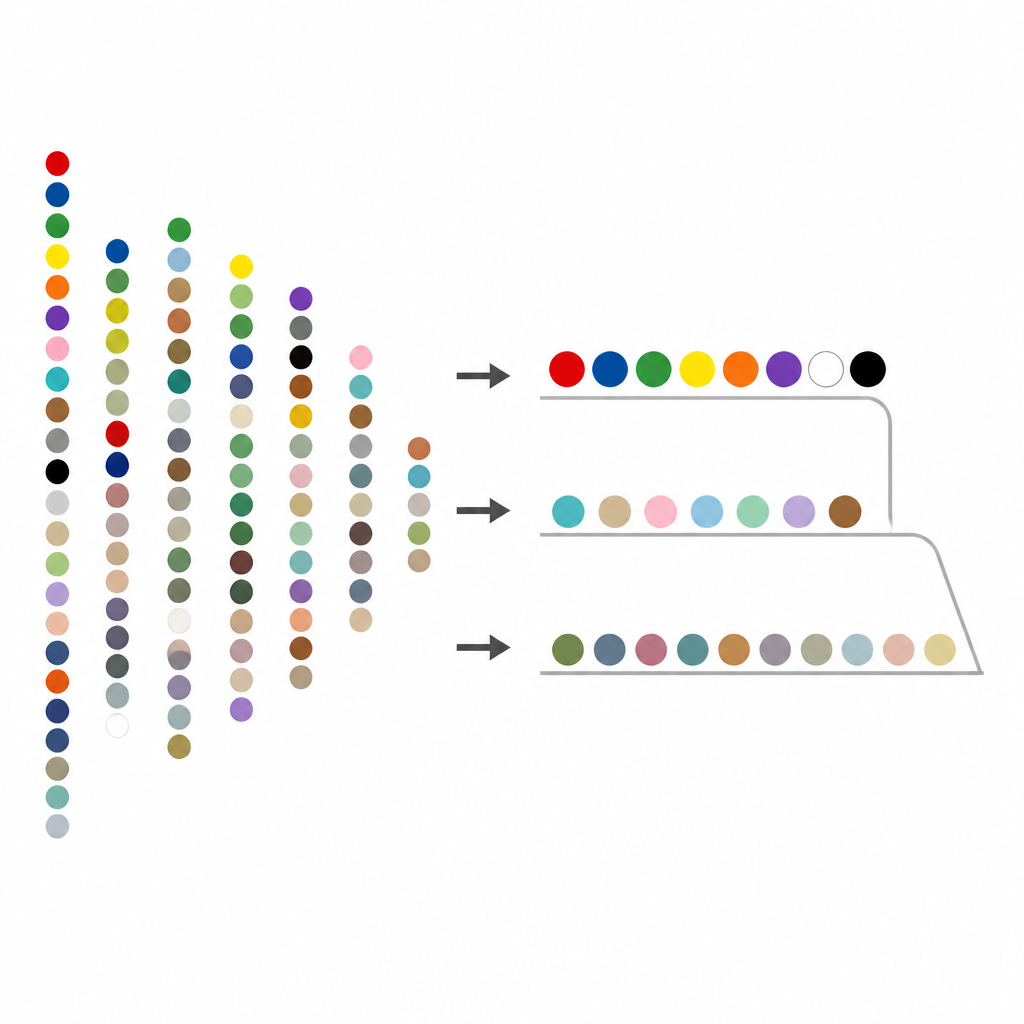
Since the 1990s, Russia has seen a surge in imported products and global fashion, and color naming has followed suit. Many new words have entered Russian from English, French, and Italian, sometimes translated, sometimes written in a Russian spelling, and sometimes reshaped into local grammatical patterns. Young speakers now use playful multiword expressions, affectionate suffixes, and even shortened noun forms, turning older descriptive phrases into quick, catchy color labels. These innovations rarely replace older Russian terms outright; instead, they carve out slightly different meanings and social shades, signaling elegance, trendiness, or humor as much as hue.
What this means for how we see and talk about color
For a lay reader, the main message is that color words are not fixed; they evolve as societies change. The study shows that Russian speakers share a stable, widely agreed-upon set of basic color words, while also rapidly expanding their vocabulary to capture new products, fashions, and subtle visual differences. In doing so, they mirror patterns seen in other languages, where categories like turquoise and beige are also gaining ground. Color naming, the authors conclude, is shaped both by our shared human perception and by the cultures we inhabit, revealing how global influences and local tastes work together in something as everyday as the words we use for the colors around us.
Citation: Griber, Y.A., Ivleva, A.I., Solovyev, V.D. et al. The Russian colour lexicon and its diatopic variation: elicited lists, cognitive salience of colour terms, and neologism boom. Humanit Soc Sci Commun 13, 681 (2026). https://doi.org/10.1057/s41599-026-07021-5
Keywords: Russian color words, basic color terms, language and perception, neologisms, cultural variation