Clear Sky Science · en
Skilled personnel risk management under war-induced forced migration: implications for labor market sustainability
Why this topic matters to everyday life
War in Ukraine has forced millions of people, including many highly trained workers, to leave their homes and move across Europe. This sudden movement of doctors, engineers, teachers, and other professionals is reshaping job markets in both Ukraine and the countries that receive them. The study behind this article asks a simple but vital question: how can Europe and Ukraine manage this shock so that workers, communities, and economies remain stable now and after the war ends?
A new way to measure pressure on job markets
The authors introduce a tool called the Human Capital Risk Index, or HCRI, to capture how much strain war driven migration puts on a country’s workforce and budget. Instead of focusing on politics or emotions, the index looks at two basic facts: how many Ukrainian refugees there are compared with the local working age population, and how costly support for them is compared with the size of the national economy. By combining these numbers into a single risk score, the authors compare how exposed different European countries are to sudden changes in refugee flows and job needs.
What the numbers say about different countries
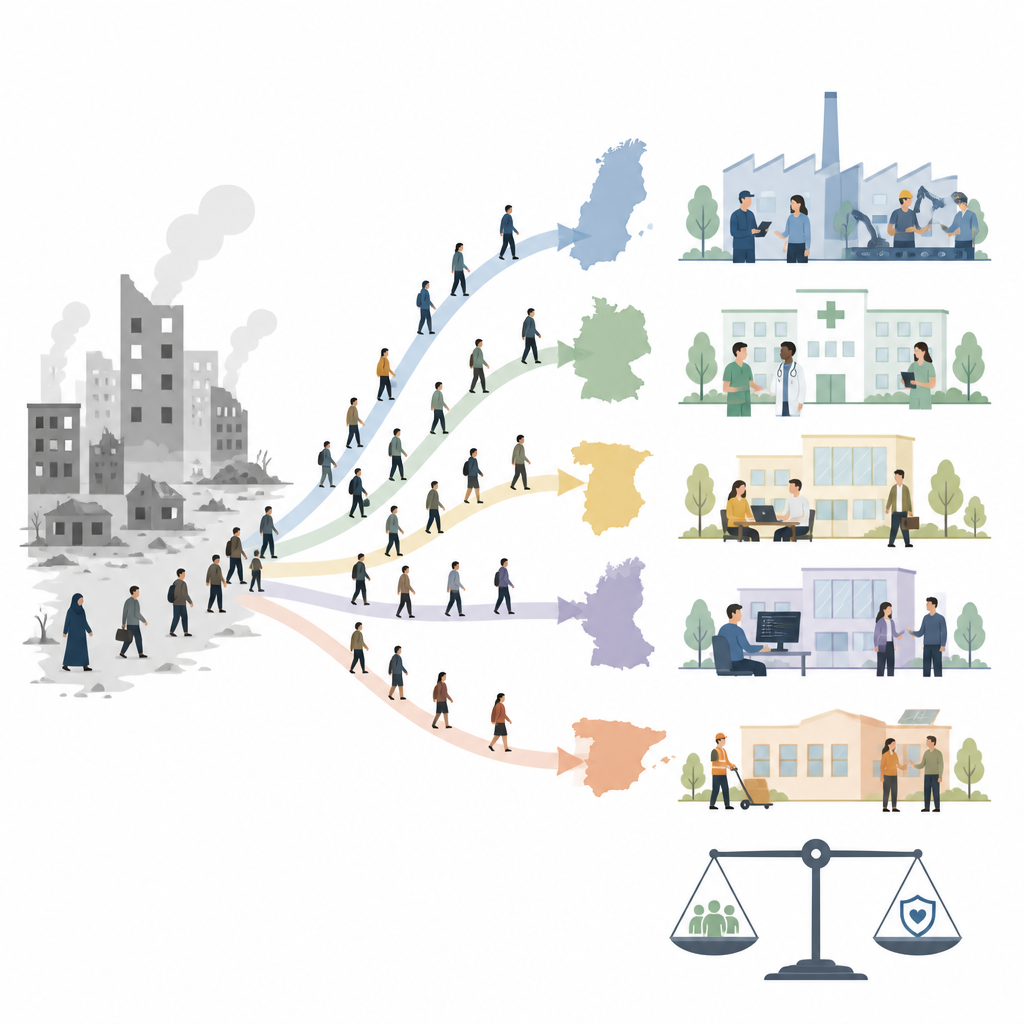
Using this index, the study examines five major destinations for Ukrainian refugees: Germany, Poland, Czechia, the United Kingdom, and Spain. The results show that Poland and Czechia carry the highest risk, not because they host the very largest numbers, but because their economies and labor pools are smaller. Germany, in contrast, absorbs a bigger absolute number of refugees while still keeping its risk level moderate, thanks to its large and diverse economy. Spain and the United Kingdom show the lowest risk levels, suggesting that their job markets can more easily adapt to added workers. To explore uncertainty, the authors run thousands of computer simulations where refugee numbers rise or fall. These simulations reveal that risk swings widely in Poland and especially Czechia, while Germany, Spain, and the United Kingdom remain much more stable.
Where refugees work and why that matters
The study also looks at which sectors rely most on Ukrainian workers. In Poland and Czechia, many refugees are employed in manufacturing, logistics, construction, and hospitality, often in physically demanding roles that local workers are reluctant to take. In Germany, Ukrainians are visible in healthcare and social services, but many are employed below their skill level because foreign degrees and licenses are slow to be recognized. In Spain and the United Kingdom, they are concentrated in agriculture, tourism, retail, and simple office work. Across countries, many refugees are highly educated but face language barriers and red tape that push them into jobs that do not match their qualifications. This means host countries gain valuable labor, but often do not fully use people’s skills.
Possible futures: return, stay, or something in between
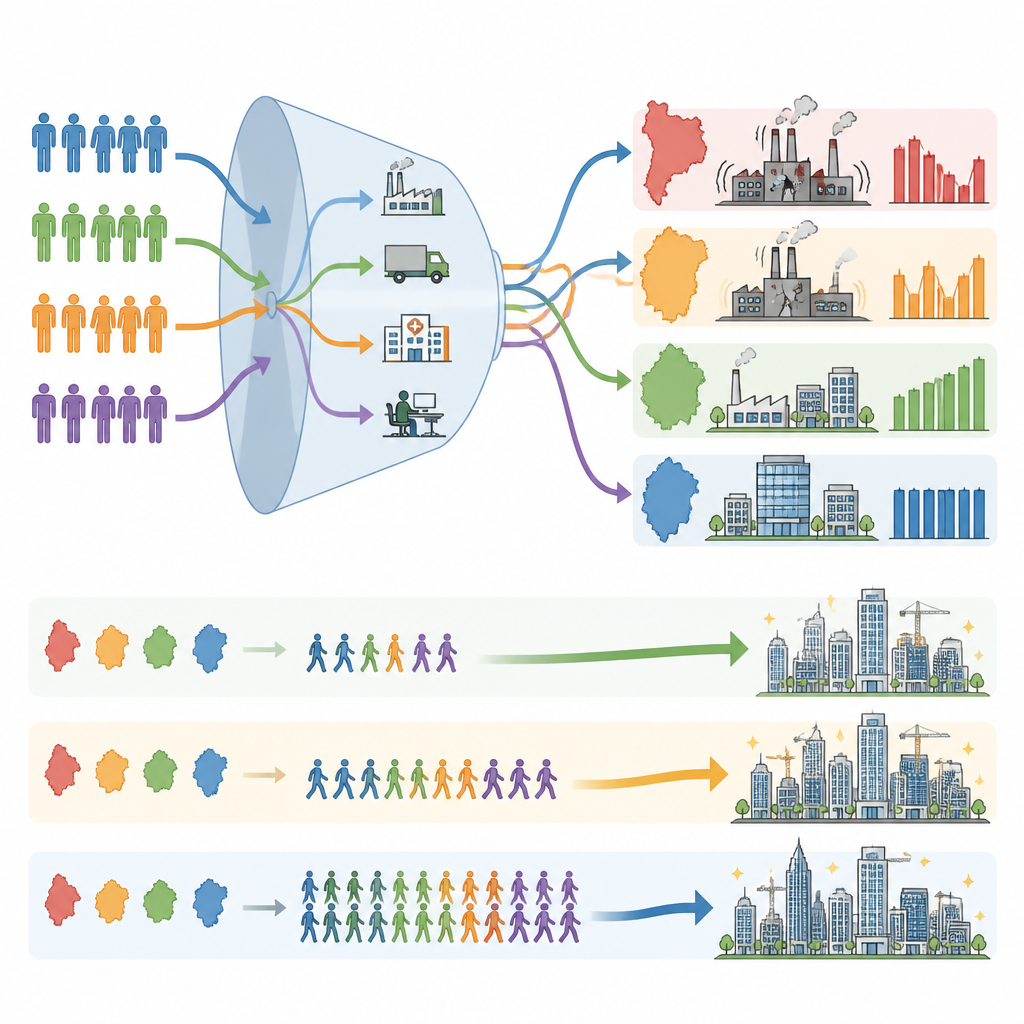
Because no one knows how many Ukrainians will eventually go back, the authors model three scenarios. In an optimistic case for Ukraine, about seven in ten refugees return, sharply lowering risk for Poland and Czechia but also creating openings that may be hard to fill in host countries. In a middle path, four in ten return, easing some pressure but leaving smaller economies still exposed. In a pessimistic case for Ukraine, only a small minority return, locking in long term labor shortages in Ukraine while host countries remain dependent on foreign workers. To manage these outcomes, the article proposes steps such as special support centers to help Ukrainians prepare for return, tax breaks for firms that hire returnees, and better systems for recognizing foreign qualifications. It also suggests digital tools and remote work options so that Ukrainians abroad can still contribute to Ukraine’s economy.
Looking ahead: turning risk into shared gain
The article concludes that war driven migration is neither a simple burden nor a simple benefit. In the short term, host countries gain workers and a younger population, while many Ukrainians secure income even if they work below their skill level. Over the longer term, the outcome depends on whether governments coordinate. If Ukraine creates clear paths for people to come back and rebuild, and if host countries invest in fair integration and skill use, the same movement of people can support recovery in Ukraine while helping Europe cope with aging populations and labor gaps. Managed poorly, however, Ukraine may face a lasting loss of talent and host countries may waste the abilities of those who fled. The study’s framework offers a practical way to track these risks and design policies so that workers and societies on both sides can plan for an uncertain future.
Citation: Bashynska, I., Selivanova, N., Brahina, O. et al. Skilled personnel risk management under war-induced forced migration: implications for labor market sustainability. Humanit Soc Sci Commun 13, 640 (2026). https://doi.org/10.1057/s41599-026-07008-2
Keywords: forced migration, labor markets, Ukrainian refugees, human capital, workforce risk