Clear Sky Science · en
Urban–rural disparities in disaster awareness and preparedness: a case study from Türkiye
Why this local story matters everywhere
Earthquakes and floods may seem like distant threats until they hit close to home. This study from the Lâdik district of Türkiye shows that how well people are prepared for disasters can change dramatically from one neighborhood to the next, even within the same small region. By comparing villagers and town residents living side by side on an active fault, the researchers reveal how age, income, schooling, and trust in public institutions shape who is ready when the ground starts to shake and who is left at risk.
A town on a restless fault line
Lâdik, a small district in Samsun province, sits along the North Anatolian Fault, one of Türkiye’s most dangerous earthquake zones and the source of a deadly quake in 1943. Despite this history, there has been little detailed information about how people in this area understand and prepare for disasters. To close that gap, the researchers surveyed 700 adults from both the town center and 56 surrounding rural neighborhoods. They asked about past training, family plans, safety kits, insurance, and how people learn and talk about disasters in daily life.
How the researchers took the pulse of the community
The team used a structured questionnaire, drawing on previous disaster studies, and reached participants in different ways. Urban residents were interviewed face to face in public spaces, while rural participants mostly received the survey through local schools, which passed forms to adults at home. Responses, analyzed with basic statistical tools, focused on simple but revealing patterns: who had ever received training, who felt prepared, and how these answers changed with age, gender, education, work, and income. Rather than building complex prediction models, the authors concentrated on clearly mapping social and spatial contrasts within this one high risk district.
Different ways of getting ready in town and in the countryside
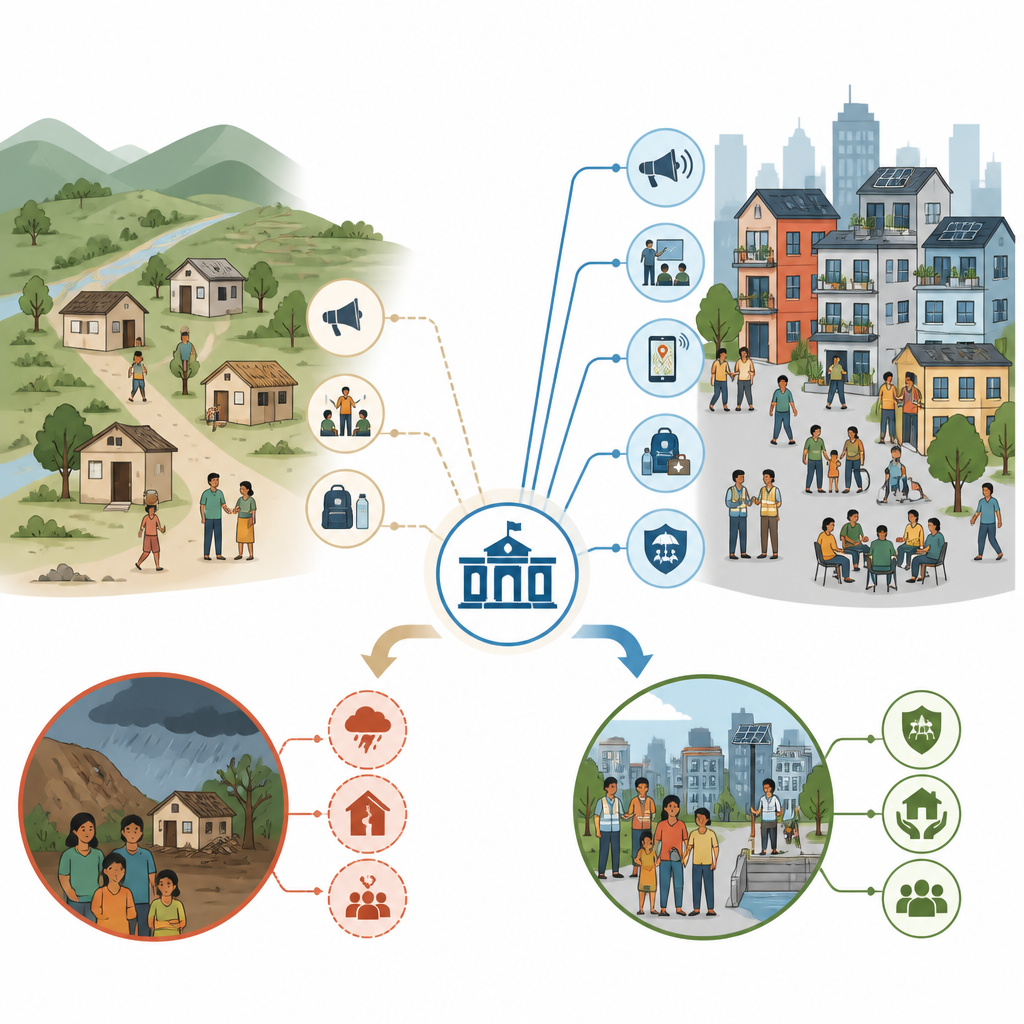
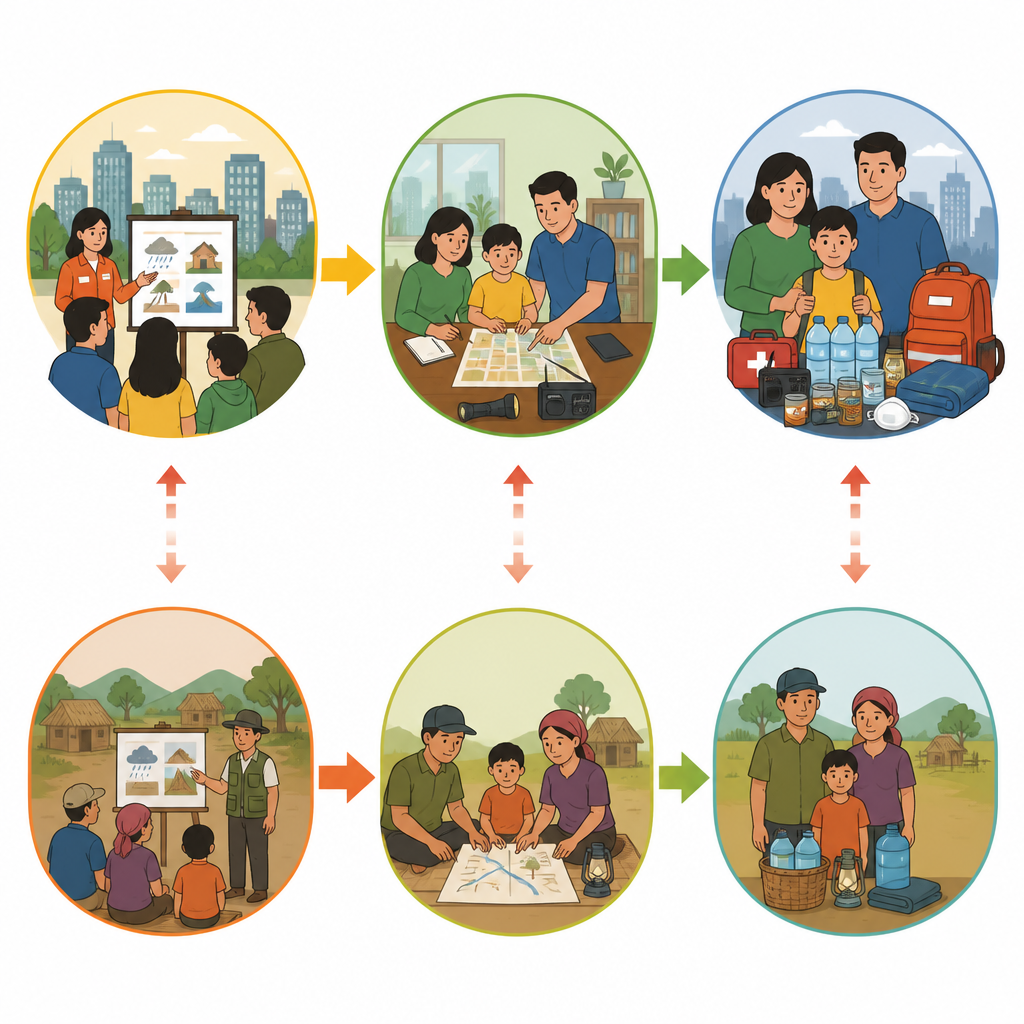
The results show that people in urban areas generally feel more informed and better prepared. City dwellers are more likely to have attended disaster training, bought mandatory earthquake insurance, created a family plan, and say their buildings follow zoning rules and are safe. Many turn to official channels and digital sources for information. In contrast, rural residents rely more on family, neighbors, and local meetings, and are less likely to have formal insurance, written plans, or clear knowledge of where to gather after a quake. In both settings, many people admit they still would not know exactly what to do in the first moments after a disaster, but uncertainty is higher in the countryside.
Who you are and where you live both matter
The study also shows how personal circumstances interact with place. In towns, people with more education and higher incomes are more likely to follow disaster news, join drills, and hold insurance. Middle aged adults, who often have families to protect, tend to be the most active in planning. Women, especially in rural areas, report high worry about disasters but do not always have the means or social power to act on that concern. In the countryside, even those with better schooling or higher incomes may remain less prepared because public services, information networks, and trust in institutions are weaker. Here, informal social ties and community solidarity partly fill the gap left by missing formal support.
What this means for safer communities
For non specialists, the key message is that disaster readiness is not just about living near a fault or river; it also depends on everyday inequalities in education, income, and access to trustworthy help. The authors conclude that one size fits all disaster policies miss crucial differences between urban and rural life. They argue for locally tailored programs that mix official training with community based efforts, pay attention to vulnerable groups such as low income households, youth, and rural women, and build trust between residents and institutions. Strengthening both formal services and neighborhood networks, they suggest, is essential for turning high risk places like Lâdik into more resilient communities.
Citation: Bodur, A., Emecen, Y. Urban–rural disparities in disaster awareness and preparedness: a case study from Türkiye. Humanit Soc Sci Commun 13, 637 (2026). https://doi.org/10.1057/s41599-026-06931-8
Keywords: disaster preparedness, urban rural differences, earthquake risk, community resilience, Turkey