Clear Sky Science · en
Place identity through spatial reproduction in the context of global culture in rural China: generational differences in livelihood capital
Why this story of a Chinese village matters
Across the world, once-quiet villages are being transformed by tourism, art festivals, and outside investment. This article follows one such place in rural Shandong, China, to ask a simple but far-reaching question: when global culture and money arrive in a traditional community, do they hollow out local identity or help renew it? By tracing how new art spaces, roads, and jobs interact with everyday village life—and how younger and older residents experience these changes differently—the study sheds light on what truly makes a place feel like home in an age of globalization.
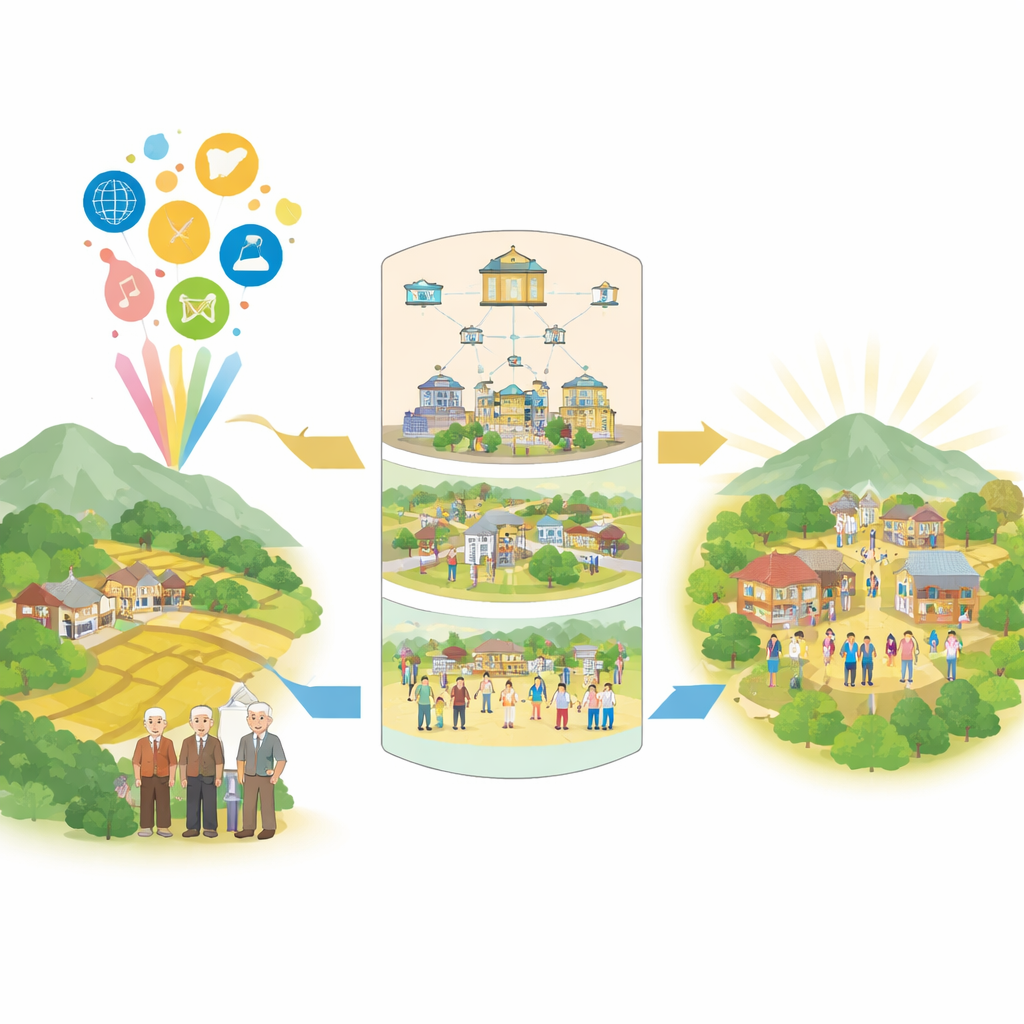
New art, new money, new questions
The authors focus on Yiheyuan, a mountainous community that had long struggled with poor infrastructure, aging populations, and out-migration. Beginning in 2016, local leaders invited international architects and artists, built art galleries and homestays, and attracted businesses in mushroom and fruit cultivation. These moves brought in what the authors call global cultural capital: the skills, artworks, events, and networks tied to the wider world. While such projects promised income and visibility, they also raised fears that local customs and a sense of belonging could be displaced by a glossy, outsider-friendly version of village life.
How space carries culture and power
To understand what was happening, the researchers blend ideas from rural development and spatial theory. They argue that outside culture does not reshape identity directly; instead, it works through how village space is planned, built, and lived in. They distinguish three kinds of space. “Conceived” space is the realm of plans and rules shaped by officials, village committees, and investors. “Perceived” space is the visible environment—roads, public services, buildings, and landscapes. “Lived” space is the web of daily interactions, memories, and emotions among residents. Using surveys of 355 villagers and interviews with 32 stakeholders, the team built a structural equation model to trace how art projects and related investments ripple through these layers of space and, in turn, through livelihoods and feelings of identity.
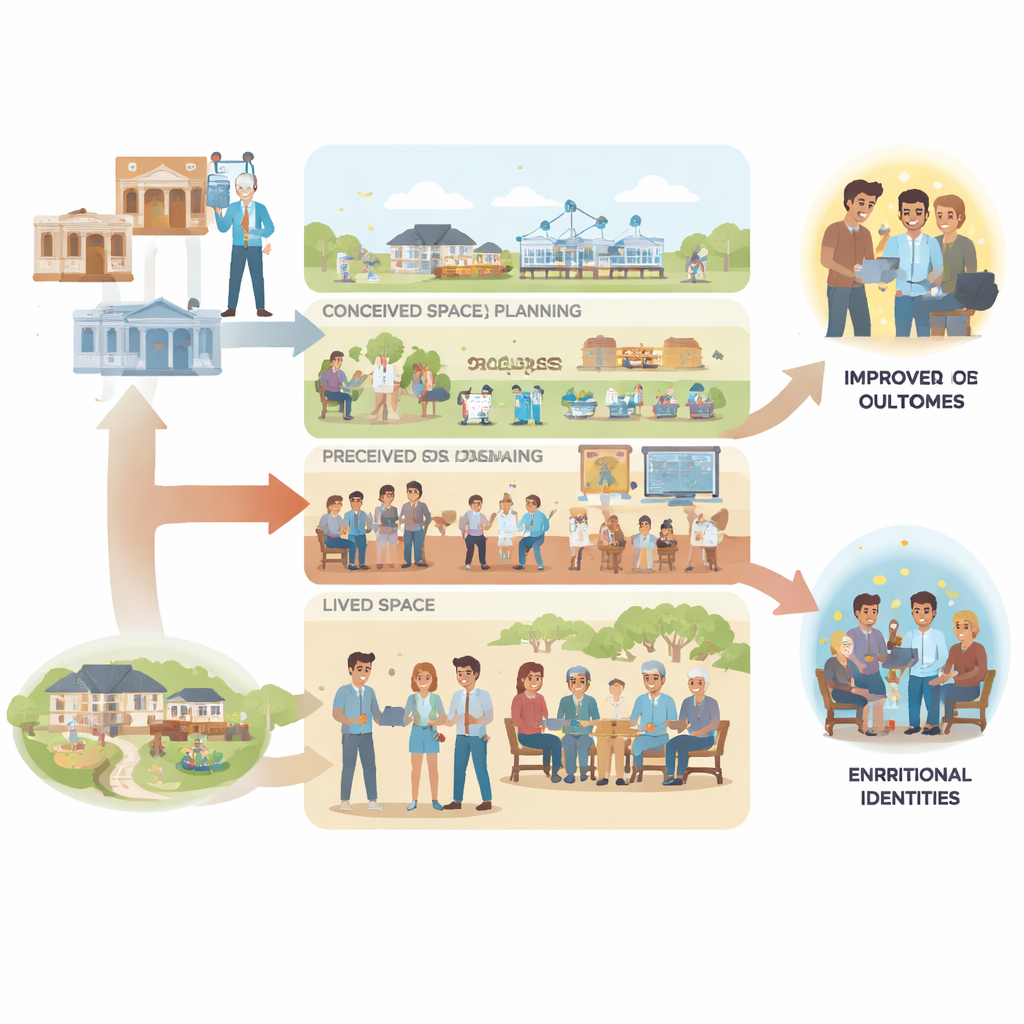
From galleries to daily life
The results show that global cultural capital strengthens local cultural identity only indirectly. First, it alters conceived space by changing who sits at the table and how decisions are made—through new policies, land arrangements, and benefit-sharing schemes. These shifts then affect perceived space via upgraded roads, cultural venues, and ecological improvements, and lived space via new meeting places, vocational training, and more frequent contact with visitors. Together, these changes reshape power: villagers gain or lose livelihood opportunities, income sources, and chances to take part in community decisions. The study finds that improvements in livelihood—better jobs, new businesses, higher skills—are especially important. When people feel their material conditions and influence are improving, they are more likely to embrace a renewed local culture that weaves together old traditions and new artistic elements.
Youth, elders, and different paths to belonging
Not everyone experiences this transformation in the same way. Younger villagers, many with more education and digital know-how, are better positioned to tap into new industries linked to art, tourism, and modern agriculture. For them, identity is closely tied to whether cultural projects bring concrete gains: steady income, nearby work, and better services. Older residents, often less mobile and less comfortable with new technologies, remain more anchored in lived space—longstanding social networks, familiar routines, and ritual practices. Their sense of who they are depends less on new facilities and more on the preservation of community ties and respect for tradition. The model shows that for youth, livelihood gains are the main bridge to stronger local identity, while for elders, changes in everyday social life are more decisive.
Keeping roots while opening doors
The authors conclude that global culture need not erase local identity, but its benefits are far from automatic. In Yiheyuan, art-led regeneration supported local culture when it went hand in hand with sustained investment in livelihoods, inclusive planning, and spaces that foster social ties rather than displace them. Policies that treat villages as mere sites for capital and spectacle risk fragile, short-lived change. In contrast, approaches that respect generational differences, support both income and participation, and use space—streets, squares, fields, and homes—as a bridge between inside and outside can help rural communities stay rooted even as they become more connected to the wider world.
Citation: Liang, Q., Han, X., Cui, D. et al. Place identity through spatial reproduction in the context of global culture in rural China: generational differences in livelihood capital. Humanit Soc Sci Commun 13, 493 (2026). https://doi.org/10.1057/s41599-026-06755-6
Keywords: rural revitalization, cultural identity, globalization, rural China, community livelihoods