Clear Sky Science · en
Is the informal economy a space for ‘waithood’ or a long-term livelihood strategy? Experiences of graduates in Bulawayo, Zimbabwe
Why this story matters
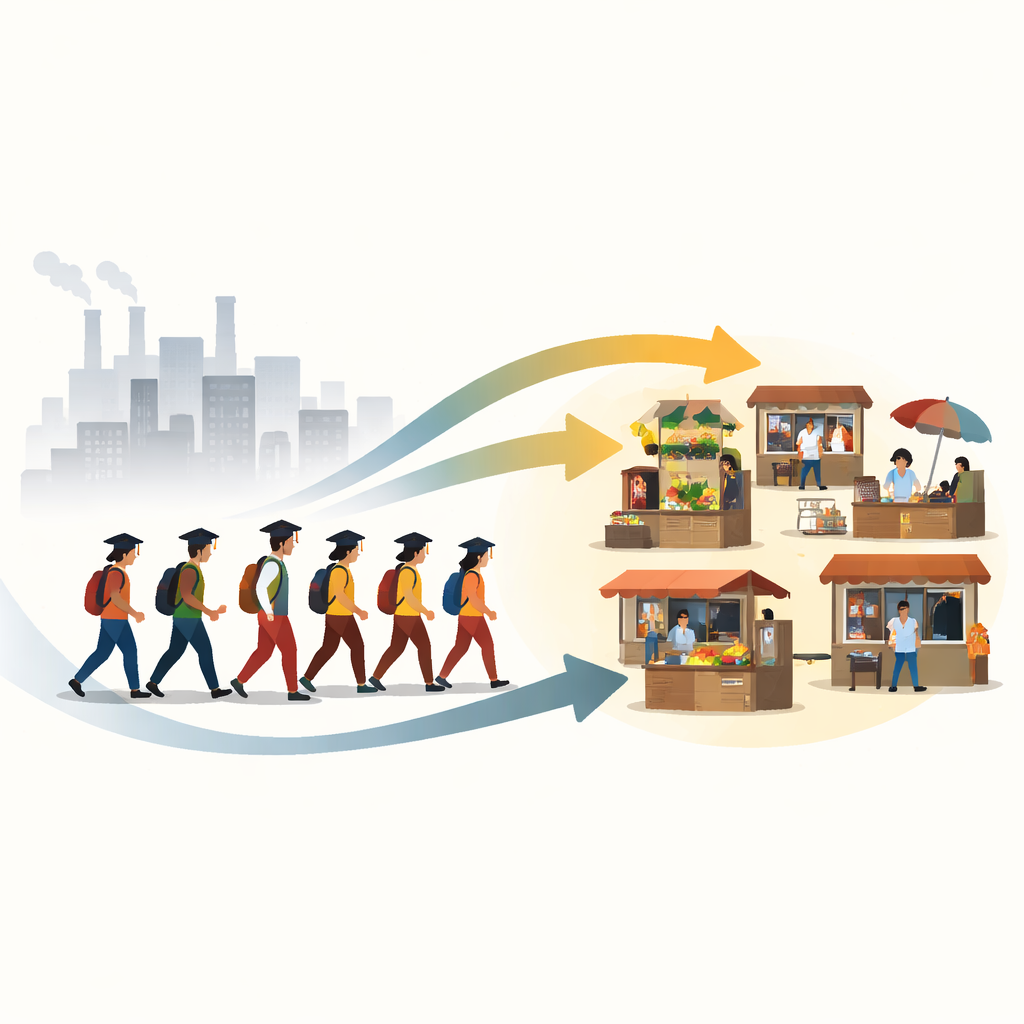
Across much of the world, finishing university is supposed to be a ticket into stable work and adulthood. Yet in cities like Bulawayo, Zimbabwe, thousands of graduates find that the promised jobs simply are not there. Instead of sitting at home, many turn to "hustling" in street markets, home businesses, and other informal work. This article explores whether that world of informal trade is just a stopgap while they wait for a “real” job, or whether it has quietly become a long-term way of making a living.
A city of graduates without jobs
Bulawayo was once a bustling industrial hub whose factories drew workers from across Zimbabwe. Today, after years of economic crisis and industrial decline, formal jobs are scarce, even for people with diplomas and degrees. Each year tens of thousands graduate nationally, but only a fraction can find secure, contract-based work with benefits. Official statistics often understate the problem because many young people survive through activities the state does not count as formal employment, such as street vending, small home businesses, and casual services. These activities form what is known as the informal economy – work that operates outside government regulation and social protections, but that now sustains most urban livelihoods.
Waiting for adulthood, but not standing still
The authors use the idea of “waithood” to describe the drawn-out period when young adults cannot move into full independence: they struggle to leave their parents’ homes, start families, or build assets because they lack stable income. In Zimbabwe, graduates without jobs are often mocked with labels in local languages that imply they are doing nothing, lazy, or failing at adulthood. The study shows, however, that these young people are not simply idle while they wait for formal employment. Instead, they actively seek ways to earn money, gain respect, and craft new identities by joining the informal economy. They may be "waiting" for a salaried position, but they are also working, experimenting, and learning in the meantime.
How graduates hustle in the informal city
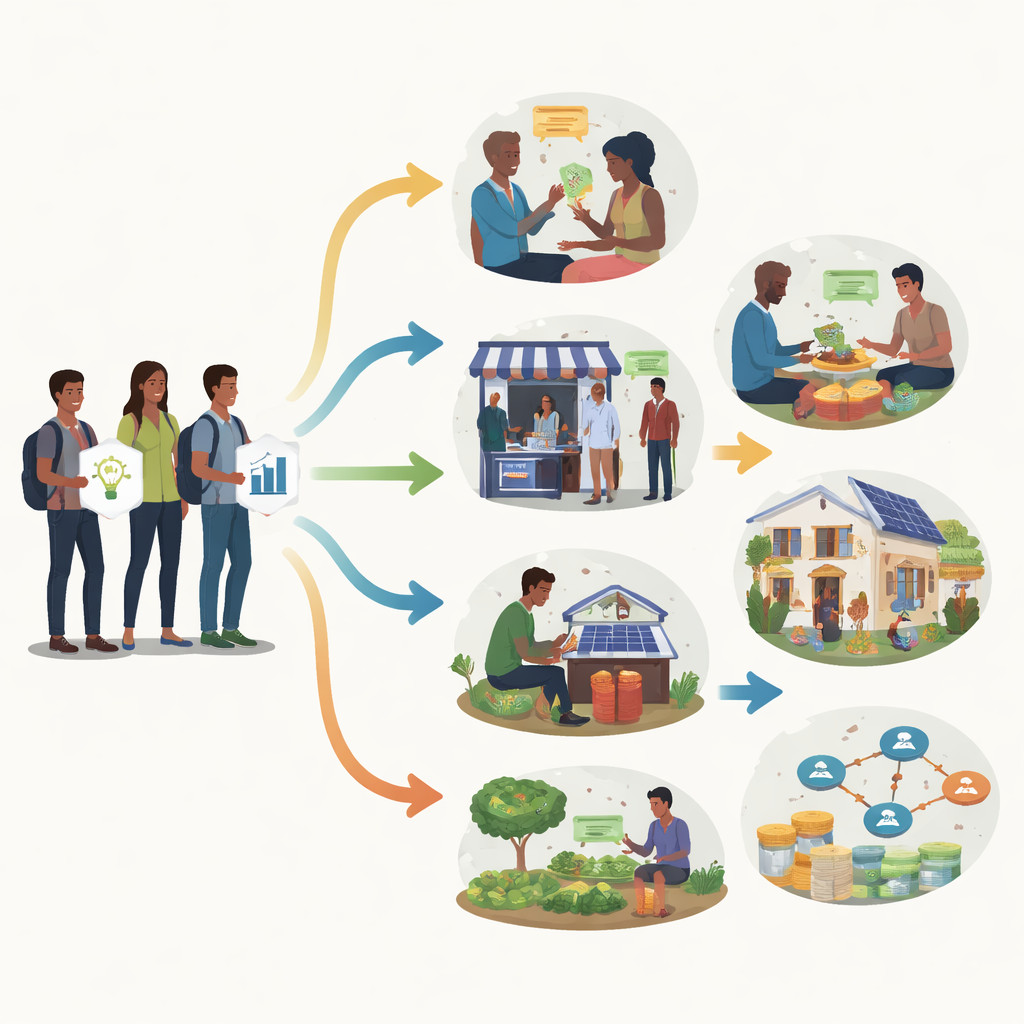
Through months of observation and in-depth interviews with ten graduates aged 25 to 34, the researchers followed everyday life in Bulawayo’s streets, homes, and small workplaces. Participants included a poultry farmer with an agriculture degree, a street currency trader with a languages degree, a beauty therapist, a small-scale miner, an online seller of hair products, a wedding-gown entrepreneur, and others with side businesses alongside formal jobs. Some chose their activities because they matched long-held passions, like beauty or self-care; others were driven purely by survival and went where they saw a gap in the market. The study reveals an informal sector that is far more diverse and skilled than the stereotype of simple street vending, with graduates using digital tools, marketing savvy, and professional knowledge to build their hustles.
Balancing dreams of security and freedom
Graduates’ feelings about their future are complex and often conflicted. Many still hope to move into a stable formal job with benefits, pensions, and predictable pay, and some see their current hustle as a temporary fix. Others have lost faith in that promise and view self-employment as their main path forward. Several participants said they preferred being their own boss after bad experiences with late or low wages and harsh treatment from employers. Yet even graduates who embrace entrepreneurship worry about the risks: changing laws, crackdowns on street trading, lack of loans, no social security, and income that can swing wildly from month to month. A common aspiration is to combine the best of both worlds – keep a side hustle while holding a formal job, spreading risk across multiple income streams.
What this means for young people’s futures
The study concludes that Bulawayo’s informal economy is both a waiting room and a destination. For some graduates it is a temporary space during waithood, helping them avoid the shame of “doing nothing” while they search for a coveted formal post. For others it has already become a long-term livelihood, where they deploy their education, creativity, and networks to build businesses and even create jobs for others. The authors argue that instead of criminalising informal work, governments and universities should recognise its importance, support graduate entrepreneurs with training and finance, and redesign higher education to include practical business skills. In doing so, societies can turn a crisis of graduate unemployment into an opportunity for more inclusive, locally rooted forms of work and economic participation.
Citation: Chipangura, M., Magidi, M. & Brown-Luthango, M. Is the informal economy a space for ‘waithood’ or a long-term livelihood strategy? Experiences of graduates in Bulawayo, Zimbabwe. Humanit Soc Sci Commun 13, 358 (2026). https://doi.org/10.1057/s41599-026-06721-2
Keywords: youth unemployment, informal economy, graduate livelihoods, Zimbabwe, urban hustling