Clear Sky Science · en
Modeling the behavioural intentions of farmers towards active participation in Farmer Producer Companies (FPCs): an extended Theory of Planned Behaviour
Why farmers’ choices about working together matter
Across India, millions of small farmers struggle to earn a decent living because they buy inputs at high prices and sell their harvests at low ones. Farmer Producer Companies (FPCs) were created to help them join forces, bargain better, and run businesses together. Yet many farmers sign up and then stop taking part, weakening these groups. This article explores a simple but crucial question: what makes farmers decide to stay actively involved in their FPCs, and how can policy makers and promoters encourage that commitment?
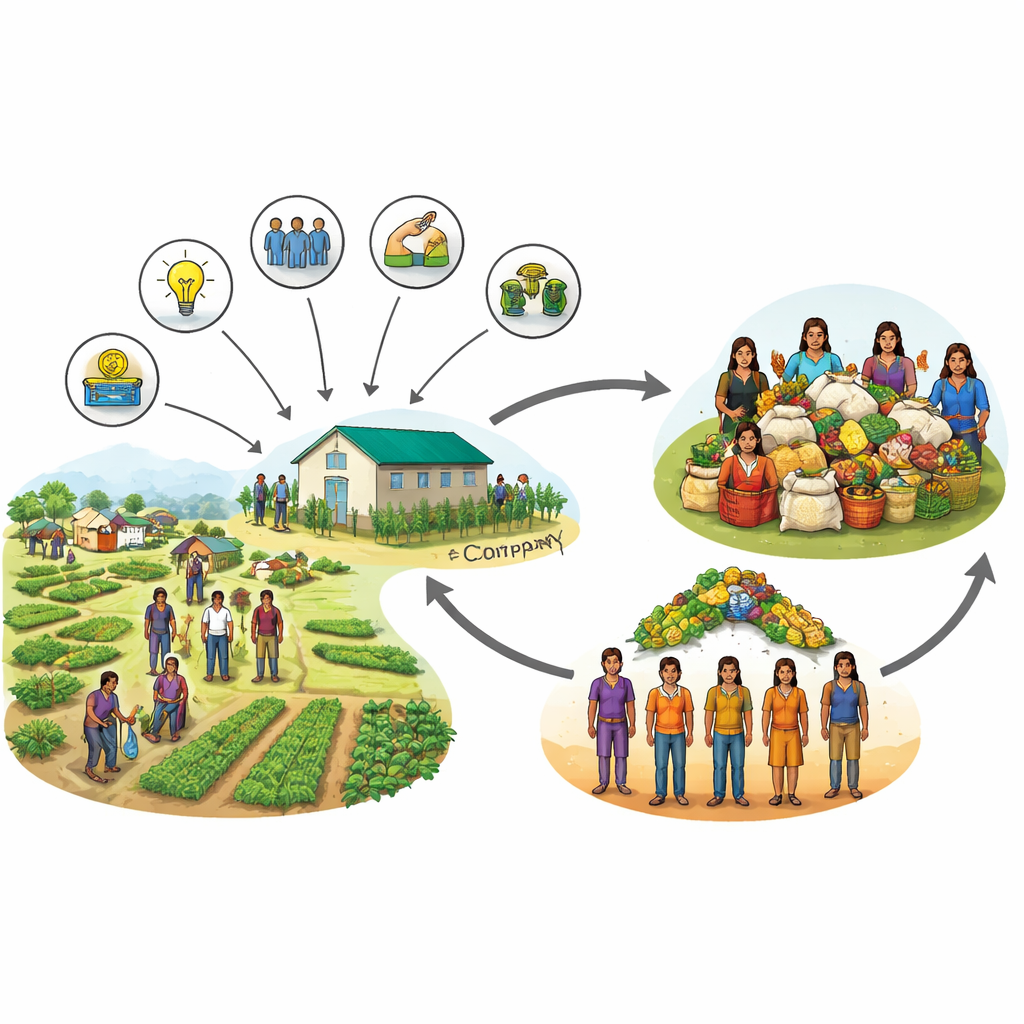
Farming together as a path out of hardship
Agriculture remains a backbone of India’s economy, especially for small and marginal farmers with tiny plots of land. These farmers face high costs, market middlemen, and poor access to information, which leaves them with only a small share of what consumers pay. FPCs are meant to change this by pooling produce, buying inputs in bulk, and helping members find better markets. However, many FPCs have become dormant because members rarely attend meetings, sell through the company, or engage in decision-making. Understanding why some farmers stay active while others withdraw is therefore vital for keeping these organizations alive and effective.
Looking inside farmers’ minds and social worlds
The researchers studied 320 members from eight crop and dairy FPCs in the southern Indian states of Telangana and Andhra Pradesh. They used a well-known framework from psychology called the Theory of Planned Behaviour, which says that a person’s intention to act depends on three things: their personal view of the behaviour (attitude), the social pressure they feel (subjective norms), and how capable they believe they are of doing it (perceived behavioural control). In this study, active participation meant regularly transacting with the FPC, attending meetings, sharing needs, and taking on responsibilities. The authors expanded the framework by adding two extra influences: economic drive (how strongly farmers want to increase profits) and egalitarian outlook (how strongly they believe all members should have equal opportunities in the FPC).
What drives farmers to show up and stay engaged
The analysis showed that all three original psychological factors—attitude, social pressure, and perceived ability—strongly shaped farmers’ intention to stay active in their FPC. Farmers who felt the FPC paid fair prices, opened up new opportunities, and ran usefully for them were more willing to invest time and effort. Support or expectations from family, neighbours, and fellow farmers also pushed them towards participation, as did feeling confident about understanding rules, meeting commitments, and overcoming hurdles in dealing with the company. On top of this, two added elements mattered: farmers with a strong drive to improve their income, and those who valued fairness and equal treatment within the group, were more likely to intend to participate actively.
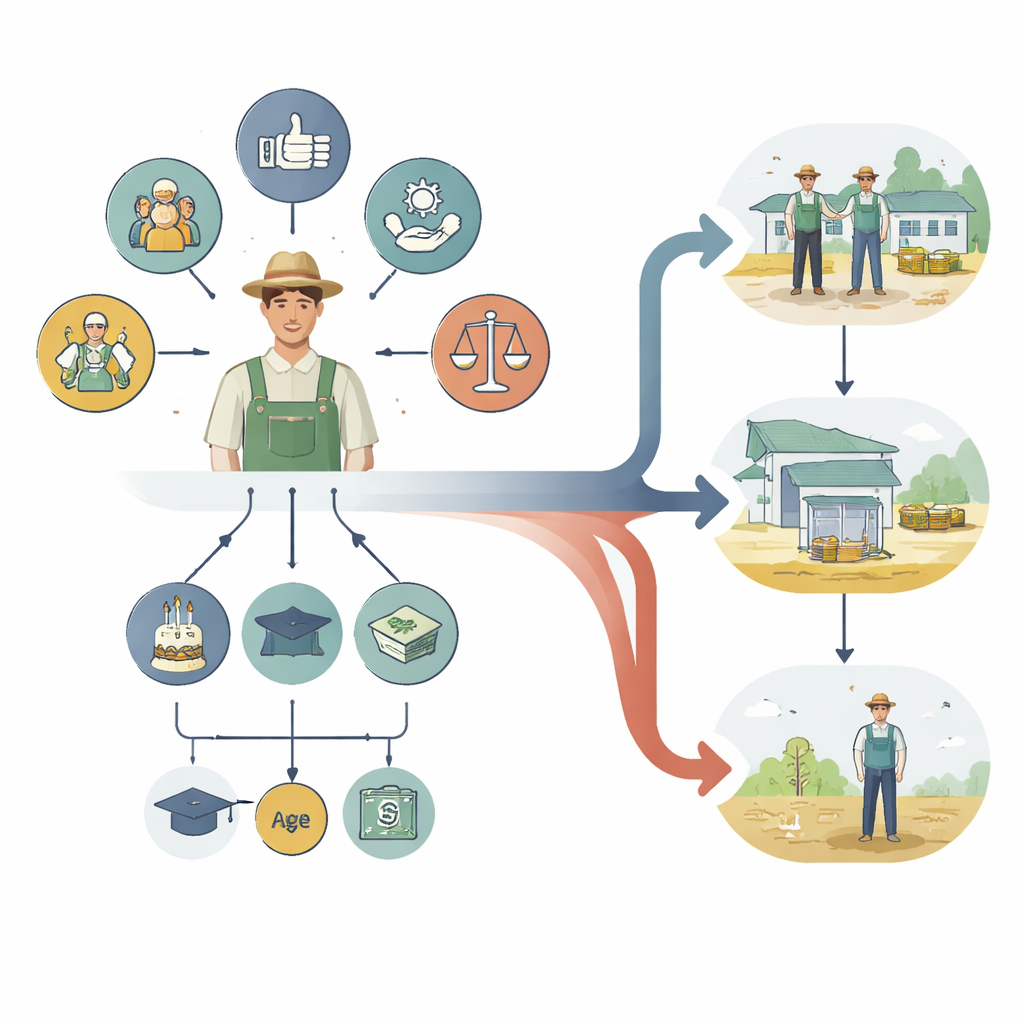
How money, schooling, and age reshape these motives
The study also found that farmers’ income, education, and age quietly reshape how these forces work. Economic drive and egalitarian values not only pushed farmers directly towards participation; they also worked indirectly by improving farmers’ attitudes towards the FPC. At the same time, higher income and more years of schooling tended to weaken the link between economic drive and the intention to participate. Better-off or better-educated farmers may have more alternatives outside the FPC and therefore feel less dependent on it. Age showed a similar softening effect: as farmers grew older, the pull of pure financial motivation on their intention to remain active became weaker, perhaps because security and habit weighed more than growth.
What this means for farmer groups and policy
The extended model used in the study explained over half of the differences in farmers’ intentions to stay active, suggesting it captures key pieces of the puzzle. For those who design and support FPCs, the message is clear: success is not only about offering better prices or services. It also depends on building positive feelings about the FPC, nurturing a culture of fairness and shared voice, and tapping into the hopes of economically driven but less well-off farmers who stand to benefit the most. Selecting and supporting members with these traits, strengthening family and community backing, and ensuring inclusive, transparent governance can all help keep participation strong. In simple terms, FPCs thrive when farmers both believe they can gain financially and feel that everyone is treated fairly and belongs to the same team.
Citation: Pabba, A.S., Ponnusamy, K., Sankhala, G. et al. Modeling the behavioural intentions of farmers towards active participation in Farmer Producer Companies (FPCs): an extended Theory of Planned Behaviour. Humanit Soc Sci Commun 13, 384 (2026). https://doi.org/10.1057/s41599-026-06665-7
Keywords: farmer producer companies, collective farming, farmer participation, rural livelihoods India, agricultural cooperatives