Clear Sky Science · en
eConsent vs traditional consent among prospective biobank participants: a randomized study within a study trial
Why Signing Up for Research Is So Hard
Anyone who has ever signed medical papers before a procedure knows how overwhelming they can be—pages of fine print, legal terms, and warnings that are hard to digest in a busy waiting room. Yet these forms are supposed to help people make clear-headed choices about joining research that could shape future medicine. This study asks a simple but important question: can a carefully designed electronic consent experience on a tablet do at least as good a job as a traditional face‑to‑face talk with paper forms in helping people truly understand what they are agreeing to?
Two Ways to Say "Yes" or "No"
The researchers ran their test inside an existing project at Geisinger Health System called the MyCode Community Health Initiative, a large biobank that links volunteers’ blood samples with their health records to fuel genetic research. Patients in primary‑care and other clinics were routinely asked whether they wanted to hear about MyCode. Those who said yes were randomly steered into one of two consent routes. In the traditional route, staff used a script and a seven‑page paper form to explain what MyCode is, what might be learned from volunteers’ DNA, how data would be protected, and what risks and benefits to expect. In the electronic route, patients used a tablet app built by Sage Bionetworks that led them through the same topics screen by screen, with simple language, icons, optional “learn more” pages, and quick quiz‑style “teach‑back” questions to check understanding. 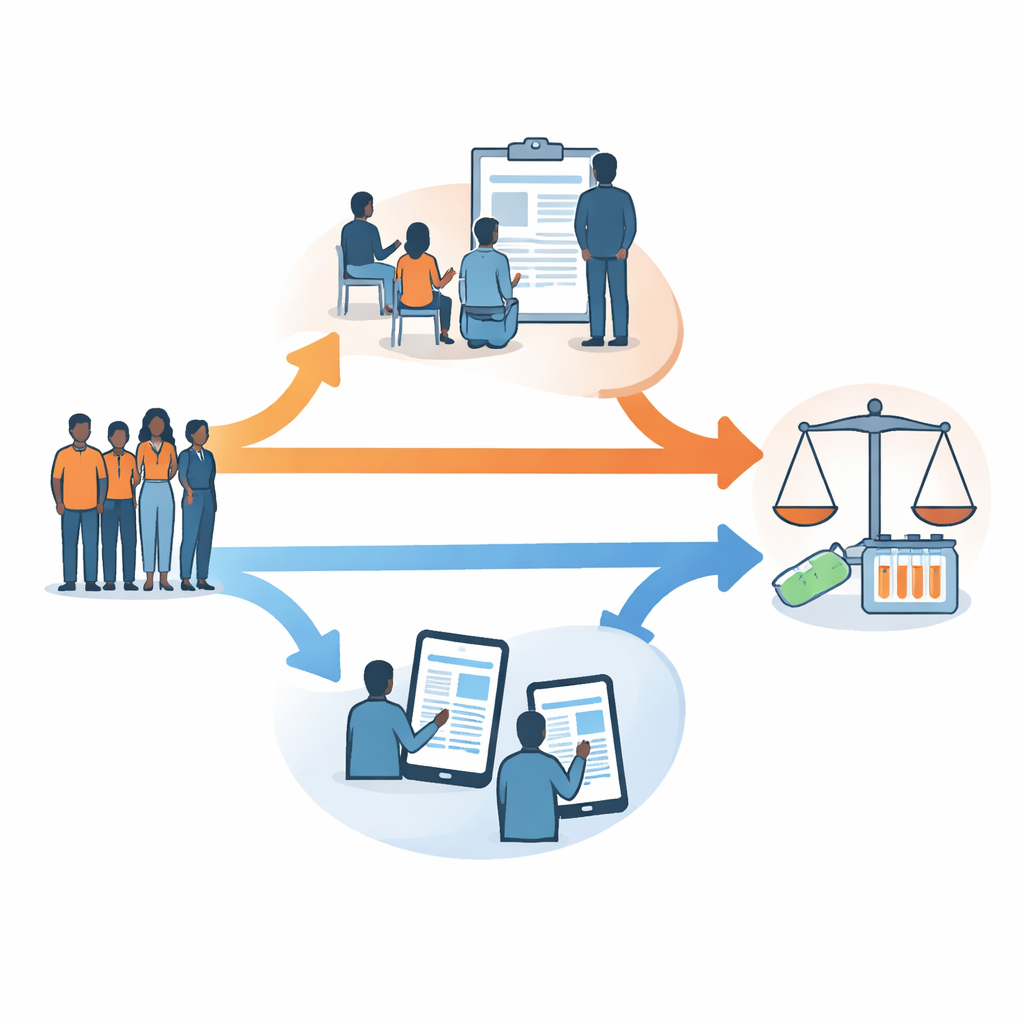
Measuring What People Really Took In
After finishing whichever consent process they were assigned, patients were invited to answer a short anonymous survey. The first ten questions tested what they had actually learned about MyCode, such as who would see their data, whether they could quit later, and whether they would still receive care from their regular doctors. The researchers turned this quiz into a score from 0 to 100. They also asked people how well they thought they understood MyCode, how easy or hard the consent experience felt, and whether it seemed quick or slow. Finally, they recorded whether each person decided to join the biobank, decline, or postpone a decision.
Electronic Consent Holds Its Own
On the central issue—how well people understood the study—the tablet-based consent clearly held up. In fact, people in the electronic group scored, on average, nearly 86 out of 100, while those in the traditional group scored about 76. The study was designed as a “non‑inferiority” trial, meaning the goal was to show that electronic consent was not worse than the usual approach by more than a small, pre‑set amount. By that yardstick, electronic consent passed easily, even after the researchers adjusted for some demographic differences between the two groups, such as income and race. People with more education tended to score higher regardless of which method they used, and there was no evidence that the electronic format widened or narrowed that gap.
Trade‑Offs in Time and Willingness to Enroll
The two methods felt different to participants in other ways. The tablet process took about a minute and a half longer on average than the staff‑led talk and paper form, and people were more likely to say it felt less “quick.” Yet nearly everyone in both groups reported that the process was easy to follow. Interestingly, patients who went through the traditional process were more likely to actually sign up for MyCode than those who used the app, even though higher quiz scores in both groups were linked to a greater chance of enrolling. Only a small share of tablet users clicked on the optional “learn more” links, and most aced the brief teach‑back questions built into the app, suggesting that simple, focused information plus quick feedback may be enough for many people. 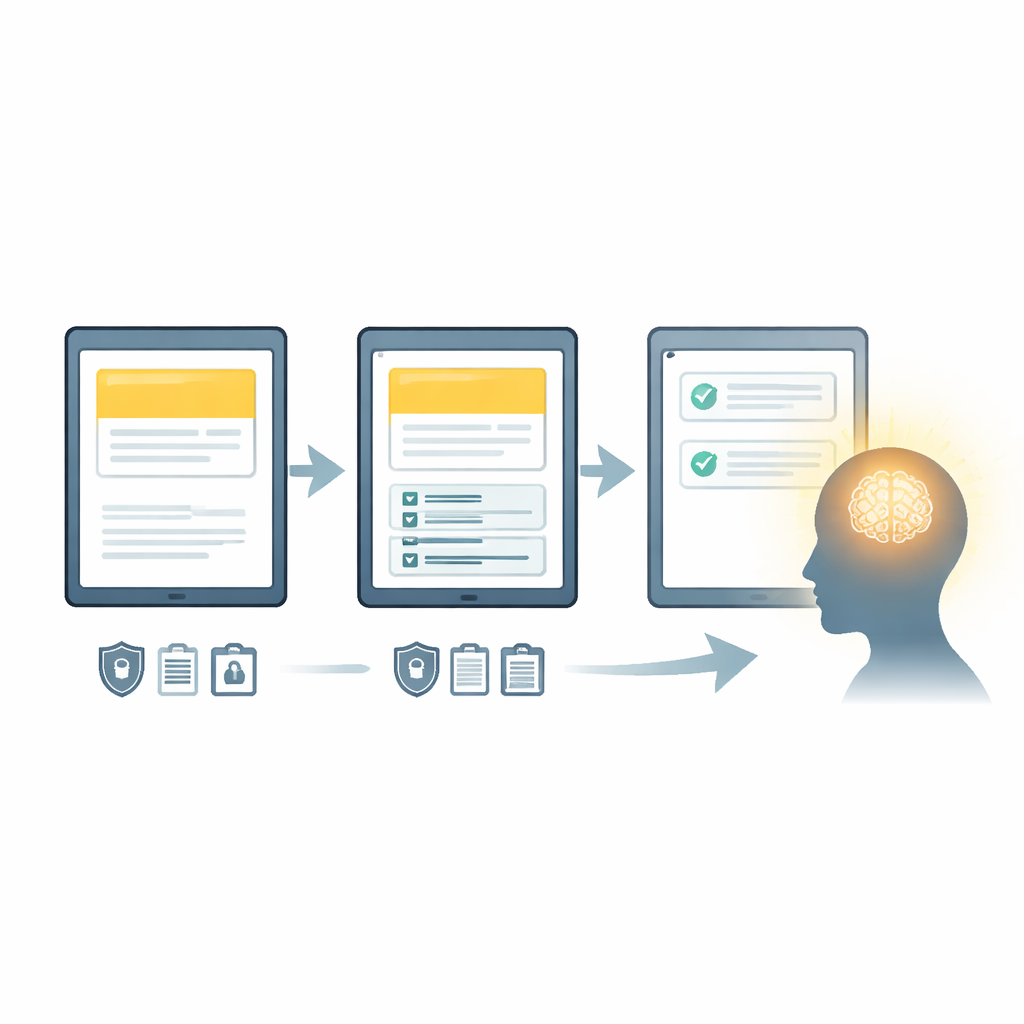
What This Means for Future Medical Research
For health systems and researchers, these findings are encouraging. A well-crafted electronic consent system can match, and may even surpass, a traditional face‑to‑face explanation in helping patients understand what a study involves. Because it can be reused, scaled up, and integrated with digital health records, eConsent could make it easier and more affordable to invite large and diverse groups of people into research. The trade‑offs are that it may take slightly more time and, at least in this setting, led fewer people to join the biobank. Still, informed choice—not automatic agreement—is the ethical goal. This work suggests that thoughtfully designed digital tools can support that goal, giving patients clearer, more consistent information as they decide whether to share their data and samples for the common good.
Citation: Vogt-Yerem, R.L., Heck, P.R., Gjorgjieva, T. et al. eConsent vs traditional consent among prospective biobank participants: a randomized study within a study trial. npj Digit. Public Health 1, 9 (2026). https://doi.org/10.1038/s44482-026-00013-x
Keywords: electronic consent, biobank participation, digital health, informed consent, genomic research