Clear Sky Science · en
Realistic AI-generated climate disaster images decrease support for climate action when artificial origin is suspected
Why pictures of climate danger matter to you
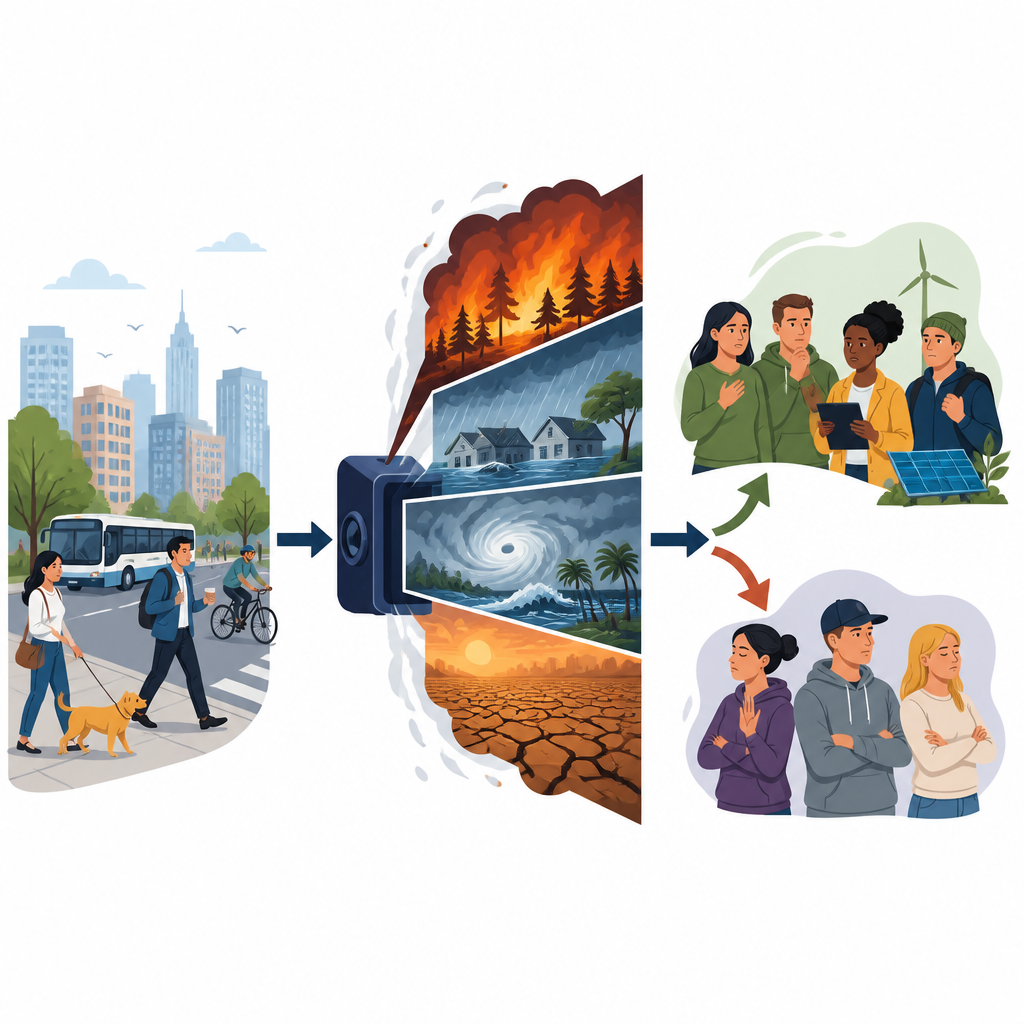
Around the world, more and more climate campaigns are using eye catching images of floods, fires, and storms created by artificial intelligence. These pictures are meant to jolt us into caring and to convince us to back tough climate policies. This article asks a simple but important question: do such AI made disaster scenes actually make people more willing to support climate action, or can they quietly push some viewers in the opposite direction?
Strong pictures, strong feelings
The researchers ran three large online experiments with over 2500 adults in the United States. Participants saw climate messages that either used only text or combined the same wording with AI generated images of severe floods, wildfires, or hurricanes. Some images were drawn in a simplified, poster like style, while others looked almost like real photographs. Afterward, people reported how they felt and how willing they were to accept personal costs for climate policies, such as higher prices or stricter rules.
When fear and anger pull in different directions
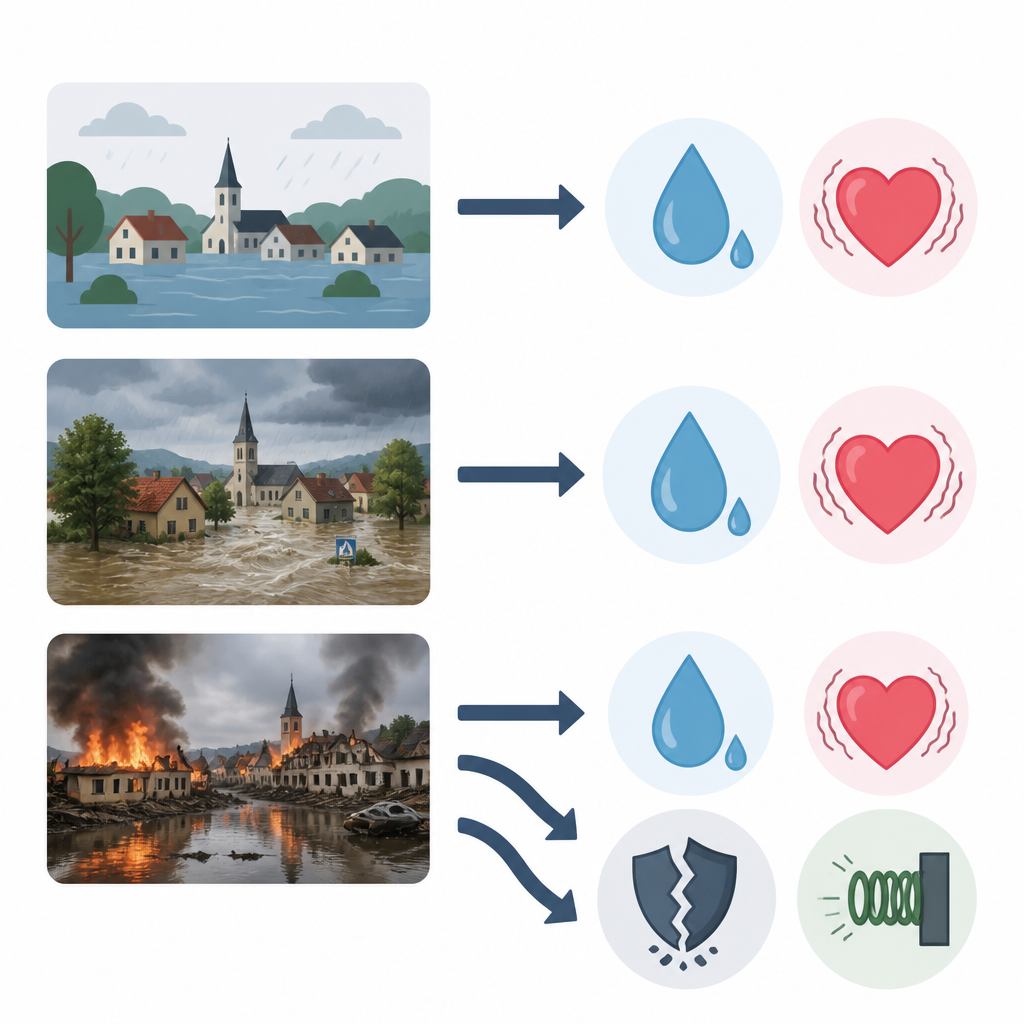
Across the studies, any disaster image made with AI did stir up more negative emotions than text alone. Viewers reported more fear, sadness, guilt, and despair when looking at flooded streets or burning towns, and these feelings were linked to greater stated willingness to make sacrifices for the climate. Highly realistic images were especially powerful at creating this emotional punch. At first glance, this might suggest that lifelike AI visuals are a good tool for climate advocates.
Feeling pushed and losing trust
At the same time, the same realistic images also made many viewers feel pressured, watched, or manipulated. People were more likely to sense that their freedom to decide for themselves was under threat, which led to anger and mental pushback against the message. This state of resistance, called reactance, was strongly tied to lower willingness to support climate action. The effect was even stronger when viewers suspected that the image came from AI or when the picture carried a clear note that it was created by artificial intelligence. In these cases, trust in the sender of the message dropped, and lower trust again went hand in hand with less support for climate measures.
Realistic looks without real gains
Because both emotional concern and resistance grew at the same time, they largely canceled each other out. Compared with text only messages, adding highly realistic AI disaster scenes did not reliably increase support for climate action. In one study, simplified, more symbolic images gave a small boost to people’s stated willingness to accept personal costs, but this effect was modest and not always statistically clear. The authors also found that many participants still mistook stylized AI scenes for real photographs, a sign that people may struggle to tell edited photos and AI creations apart in daily life.
What this means for climate campaigns
For climate advocates, the main lesson is that lifelike AI made pictures of disasters are not a shortcut to stronger public backing. They do grab attention and stir emotions, but they can also feel pushy or fake, weaken trust, and, in some cases, actually lower people’s stated willingness to make sacrifices for the climate. Given that producing such images also consumes energy and resources, the authors suggest using them with care and considering simpler visuals or other ways of engaging people. Understanding not only what helps, but also what can backfire, is vital for honest and effective climate communication.
Citation: Bünzli, F., Eppler, M.J. Realistic AI-generated climate disaster images decrease support for climate action when artificial origin is suspected. Commun. Sustain. 1, 84 (2026). https://doi.org/10.1038/s44458-026-00092-0
Keywords: AI climate images, climate communication, public trust, psychological reactance, climate policy support