Clear Sky Science · en
Environmental and nutritional implications of replacing meat and dairy with alternatives
Why What’s on Your Plate Matters for the Planet
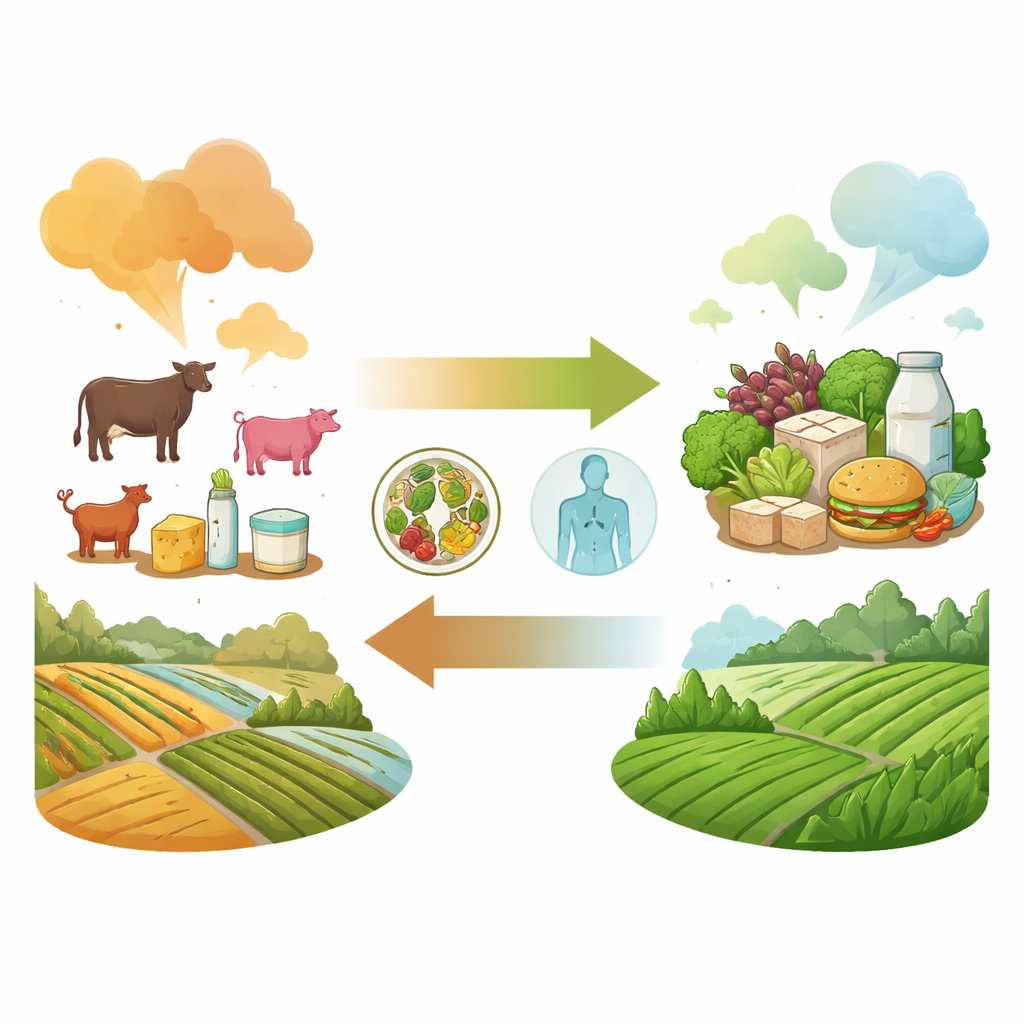
Many people swap burgers for bean patties or cow’s milk for oat drinks, hoping to eat in a way that is kinder to the planet and still good for their health. But do today’s meat and dairy replacements actually reduce environmental harm without leaving gaps in important nutrients? This study looks closely at the foods now sold in Swiss shops—similar to those in many high‑income countries—to see how well they stack up against the meat and dairy they are meant to replace.
Comparing Everyday Foods, Not Future Dreams
The researchers focused only on products that consumers can already buy, such as soy burgers, falafel, tofu, insect‑based items, oat and almond drinks, and plant‑based yogurts and cheeses. They compared these alternatives with common meats and dairy products, looking at both nutrition and multiple environmental pressures, including climate‑warming emissions, land use, air pollution, water scarcity, and water pollution. To judge nutrition, they used a score that rewards vitamins, minerals, protein, and fibre and penalizes sugar, salt, and unhealthy fats, while also examining key nutrients like calcium, iodine, and vitamin B12 one by one.
Greener Plates with Some Hidden Costs
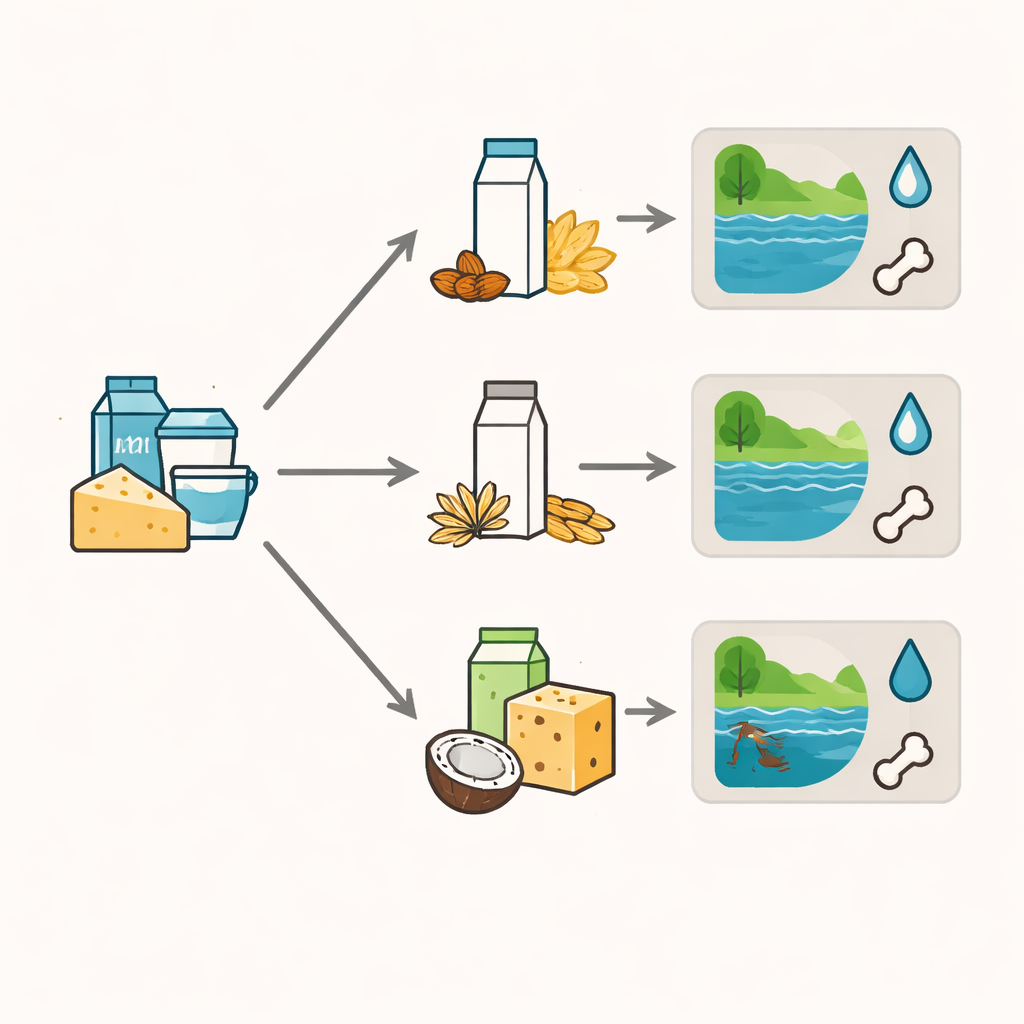
Most meat and dairy alternatives caused much less climate and land impact per 100 grams than their animal‑based counterparts. Swapping meat and dairy for these products in typical Swiss diets could cut climate‑warming emissions by up to about half, and also reduce land use and air acidification. However, not all alternatives were environmental winners. Falafel, insect‑based products, and several dairy alternatives demanded more scarce water, and plant‑based cheeses rich in coconut oil contributed more to freshwater pollution. Ingredients like almonds and coconuts, often grown in irrigated or sensitive regions, were responsible for much of this added burden, reminding us that “plant‑based” is not automatically “planet‑friendly.”
Nutrition Gains and Gaps When We Swap
On the nutrition side, many alternatives had overall nutrient scores similar to the foods they replaced, and often offered more fibre, iron, magnesium, and vitamin E while lowering saturated fat. Yet zooming in on individual nutrients revealed important gaps. Dairy alternatives, especially plant‑based cheeses, usually contained far less calcium and iodine than cow’s milk or regular cheese. Meat alternatives generally had less vitamin B12 unless they were fortified. When the team modelled full replacement of meat, or of both meat and dairy, in both current and recommended Swiss diets, most vitamins and minerals stayed within healthy ranges. The main trouble spots were calcium, iodine, and vitamin B12, which fell well below recommended levels if replacements were chosen carelessly and if the rest of the diet stayed the same.
Why Product Choices and Ingredients Matter
The study also showed large differences between brands and recipes within the same type of alternative. For example, soy‑based meat substitutes varied widely in climate impact and nutrient quality depending on how they were formulated and where the soy was grown. Still, the decision to replace meat or dairy at all had a bigger effect than which exact alternative was picked. This suggests that moving away from animal products can be a powerful step, but that food companies and regulators must pay close attention to which ingredients they use, how they fortify products, and how they source crops to avoid simply shifting problems from one environmental or nutritional issue to another.
What This Means for Everyday Eaters
Overall, the research suggests that replacing meat and dairy with today’s alternatives can substantially shrink the environmental footprint of diets in high‑income countries, but only if we are careful about nutrients and ingredient sourcing. Meat alternatives tend to perform well environmentally and can fit into a healthy diet if vitamin B12 is supplied through fortified foods or supplements. Dairy alternatives are more likely to miss key nutrients like calcium and iodine and can sometimes increase water stress or water pollution, especially when they rely heavily on almonds or coconut oil. For consumers, this means that plant‑based choices are an important part of a more sustainable diet, but not a guarantee of either health or environmental benefit. For producers and policymakers, the message is to design and support alternatives that are both nutrient‑rich and low‑impact, so that future dietary shifts truly benefit people and the planet.
Citation: Mehner, E., Reguant Closa, A., Herrmann, M. et al. Environmental and nutritional implications of replacing meat and dairy with alternatives. Commun. Sustain. 1, 71 (2026). https://doi.org/10.1038/s44458-026-00075-1
Keywords: plant-based meat, dairy alternatives, sustainable diets, nutrient deficiencies, environmental impact