Clear Sky Science · en
Impacts of nature-inclusive urban development on well-being and fairness perceptions
Why city nature is not the same for everyone
As cities around the world add parks, trees and wetlands to become greener and more livable, it can be easy to assume that everyone benefits in the same way. This study looks closely at a new district in Harbin, China, to ask a simple but overlooked question: when farmland turns into a green city, who feels better off, who feels left out and why does that gap appear?
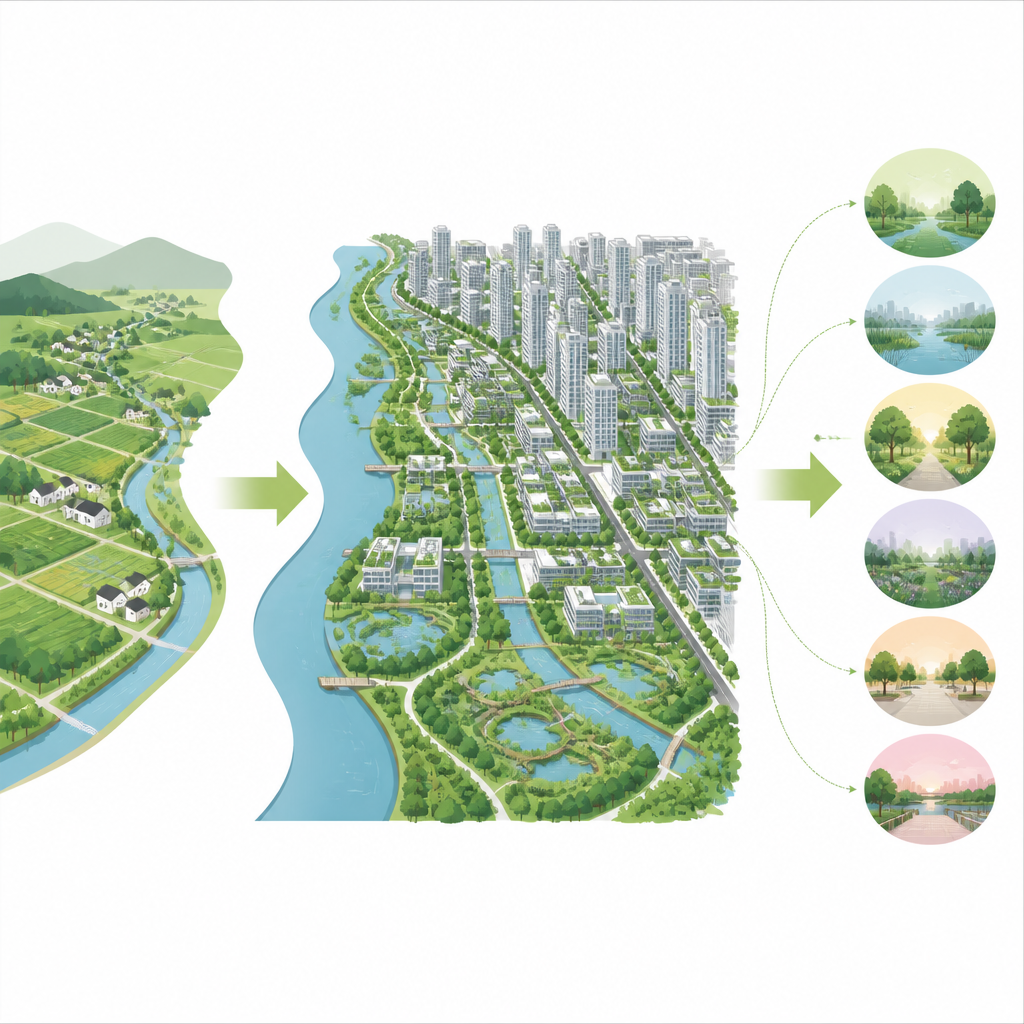
A new town built around water and trees
The researchers focus on Qunli New Town, a large development on the edge of Harbin planned from the start to weave nature into its streets and buildings. Wetlands were restored to manage floods, riverbanks were planted, and corridors of greenery were threaded between housing blocks. Monitoring showed that birds, fish and other wildlife became more abundant, and water and air quality improved. On paper, Qunli is a model of how to grow a city while restoring damaged ecosystems, yet the human story inside this new landscape turned out to be more complicated.
Listening to residents old and new
To understand that story, the team first carried out in-depth interviews with 42 residents and then surveyed more than one thousand people living in Qunli. Some had grown up in the former villages and farms that once occupied the site, while others had moved in later from other urban areas. Residents were asked how their lives, happiness and sense of fairness had changed compared with the time before the new town was built. The questions covered work, income, housing, public services, everyday use of green spaces and personal feelings about beauty, belonging and justice.
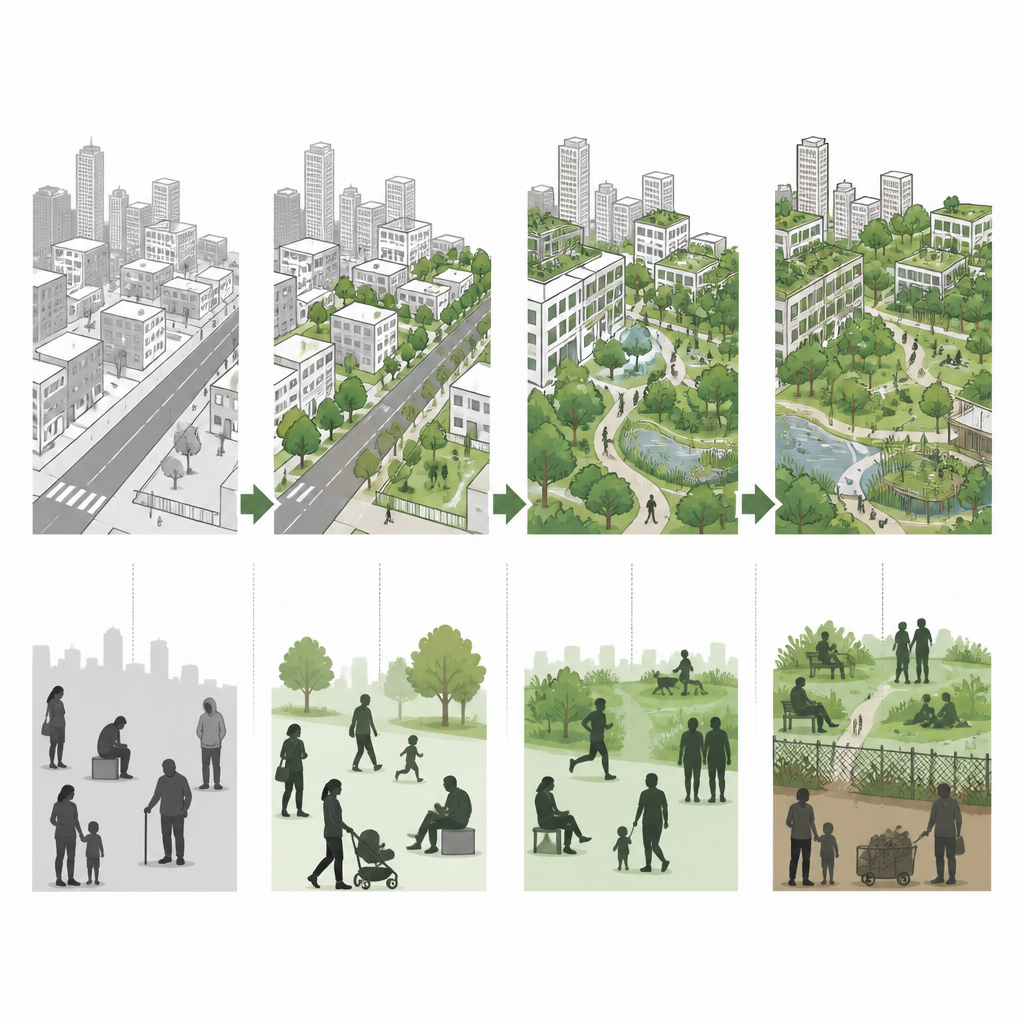
Happiness gains and losses in a greener place
Most long-term residents agreed that many practical aspects of life had improved: they now had apartments with heating and lifts, nearby shops, better schools and improved medical care. However, these gains did not always translate into greater happiness. The survey showed that people who felt their jobs and income had improved were more likely to report feeling happier. Those who spent more time socializing in local green spaces and who found the new landscapes more beautiful also tended to feel happier. By contrast, former farmers were much more likely to say their happiness had fallen since urbanization, even when they lived in better housing, suggesting that losing familiar work and ways of using the land carried a strong emotional cost.
Why fairness looks different through different eyes
The study highlights a striking split between perceptions of economic fairness and ecological fairness. Original residents often judged the economic side of the transformation as fair. Comparing their current urban lives with their earlier rural conditions, they valued secure housing, modern services and new jobs, even if those jobs were sometimes unstable or low paid. Newcomers, who arrived from more developed districts, were less impressed by these changes, having started from a higher baseline. When it came to nature and green spaces, the pattern was reversed. Original residents felt the ecological changes were less fair than newcomers did, because they had lost open access to fields, ponds and wetlands where they once farmed, fished or gathered wild foods. Fences, patrols and rules protecting wildlife now blocked practices that were central to their culture and daily life, while some of the most attractive green areas were enclosed within private housing complexes.
Lessons for fairer green cities
The authors conclude that making cities greener is not enough on its own to ensure that everyone thrives. In Qunli, ecological improvements and restored wildlife went hand in hand with cultural loss and feelings of exclusion for many original residents, even as they welcomed better housing and services. For nature-inclusive urban development to be both environmentally and socially successful, planners need to look beyond averages and ask how different groups experience change. That means involving long-term residents in designing parks, keeping green spaces genuinely public, and weighing new nature projects against the value of traditional landscapes and livelihoods they replace.
Citation: Gao, S., Zhang, W., zu Ermgassen, S.O.S.E. et al. Impacts of nature-inclusive urban development on well-being and fairness perceptions. Nat Cities 3, 416–427 (2026). https://doi.org/10.1038/s44284-026-00425-z
Keywords: urban nature, green gentrification, well-being, ecological fairness, China cities