Clear Sky Science · en
A study of the associations between social isolation and loneliness with sex-specific cancer risk in the UK Biobank
Why Our Social Lives May Matter for Cancer
Most people know that smoking, diet, and exercise can influence cancer risk. But what about our social lives—how often we see friends, whether we live alone, or how lonely we feel? This study followed more than 350,000 adults in the UK to ask a simple but pressing question: can being cut off from others raise a person’s chances of developing cancer, and does this play out differently for women and men?
Being Alone vs. Feeling Alone
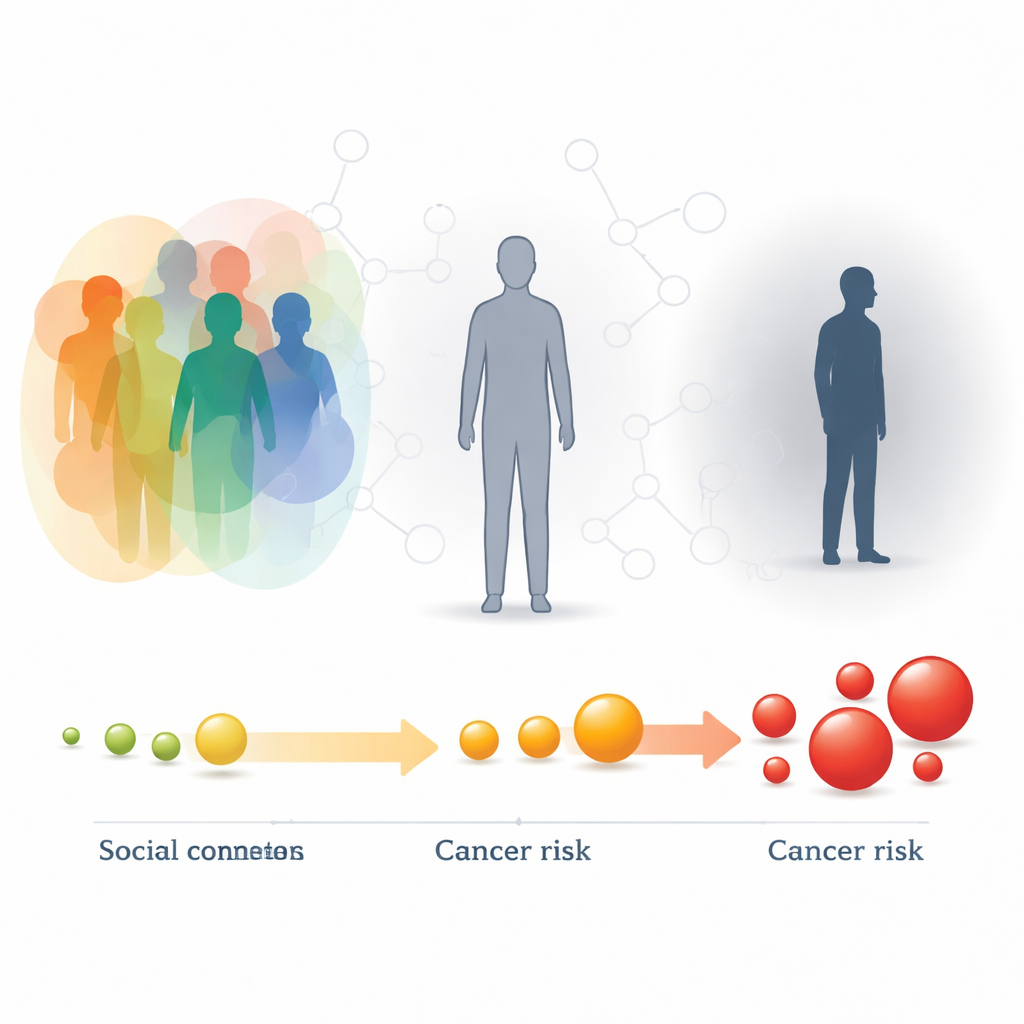
The researchers made a clear distinction between two ideas. Social isolation means having few or infrequent social contacts—living alone, rarely seeing friends or family, and not taking part in group activities. Loneliness, in contrast, is the painful feeling that one’s relationships are not as close or as numerous as one would like, regardless of how many people are actually around. Using answers to standard questions from the UK Biobank—a massive health study—they classified participants as socially isolated or not, and lonely or not, at the start of the study. They then linked these records to national cancer registries to track who developed cancer over more than a decade of follow-up.
What the Long-Term Tracking Revealed
Among the 354,537 adults included, roughly 1 in 17 were socially isolated and 1 in 22 were lonely. Over a median of about 12 years, more than 38,000 participants were diagnosed with cancer. After taking into account many other influences—age, sex, income, smoking, alcohol use, body weight, sleep, mood, and more—the team found that people who were socially isolated had about an 8% higher risk of developing cancer than those who were not isolated. In contrast, simply feeling lonely, without being objectively cut off from others, did not show a clear overall link to cancer risk.
Stronger Effects in Women and Certain Cancers
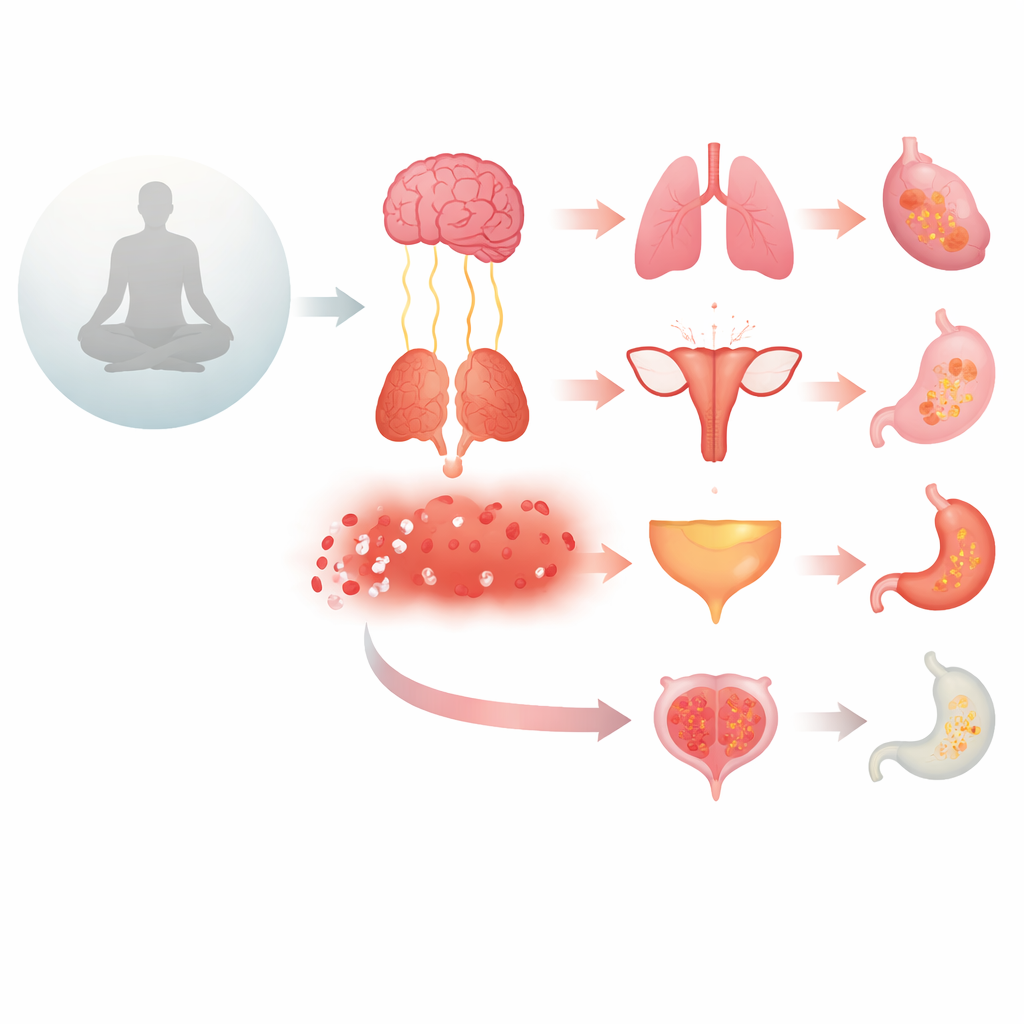
The impact of isolation was not the same for everyone. The link between social isolation and cancer was noticeably stronger in women than in men. Isolated women had higher risks of several specific cancers, including breast, lung, uterine, ovarian, bladder, and stomach cancers. Isolated men showed a clear increase in bladder cancer risk. The study also explored subgroups defined by age, income, education, and work status. Older adults, people without a college degree, retirees, and current drinkers were among those in whom isolation was more clearly tied to increased cancer risk. Loneliness, however, remained a weaker and more mixed signal—showing no overall increase in risk, and even hints of lower risk in some younger, working adults, which the authors suggest may reflect complex coping or lifestyle patterns rather than a true protective effect.
How Daily Life and Inflammation Fit In
Why might being socially cut off influence whether someone gets cancer? The researchers dug into two broad pathways. First, socially isolated participants were more likely to have lower income, live in more deprived areas, smoke, exercise less, and report poorer general health—all well-known risk factors for cancer. When these factors were added into their statistical models, they explained roughly half of the extra cancer risk associated with isolation. Second, the team examined blood markers linked to inflammation, such as white blood cell and neutrophil counts, and composite scores that reflect the body’s overall inflammatory state. These markers partly mediated the connection between isolation and cancer, especially for breast and lung cancers in women and bladder cancer in both sexes. This supports a picture in which long-term social isolation acts as a chronic stressor that nudges the immune system and hormone balance toward a more inflammatory, cancer-promoting state.
What This Means for Prevention
To a layperson, the study’s central message is that being socially isolated is not just an emotional hardship—it is also a measurable health risk, including for cancer. Women, in particular, appear more vulnerable to its effects. The findings suggest that policies and programs that reduce social isolation—by improving economic conditions, making it easier to join social and community activities, and supporting mental well-being—could modestly reduce cancer risk at the population level, alongside classic efforts to curb smoking and improve diet and exercise. Feeling lonely, on its own, is not clearly tied to higher cancer risk in this study, but it remains a serious challenge for mental and physical health. Overall, weaving stronger social connections into public health strategies may be an underappreciated piece of cancer prevention.
Citation: Cheng, J., Wang, R., Feng, Y. et al. A study of the associations between social isolation and loneliness with sex-specific cancer risk in the UK Biobank. Commun Med 6, 200 (2026). https://doi.org/10.1038/s43856-026-01429-5
Keywords: social isolation, loneliness, cancer risk, inflammation, public health