Clear Sky Science · en
Dual targeting of topoisomerase I and DNA G-quadruplexes enhances senescence and chemosensitivity in colorectal cancer
Why this new cancer strategy matters
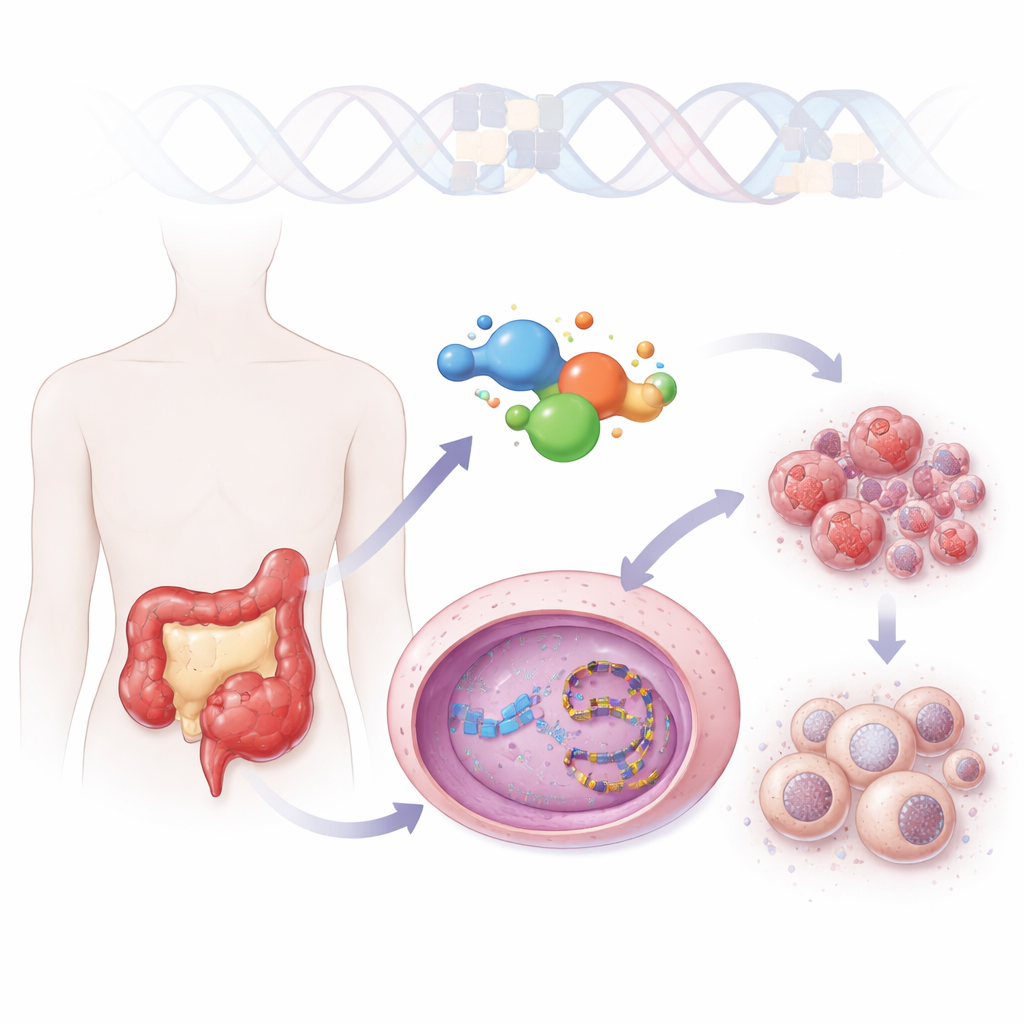
Many people with colorectal cancer eventually stop responding to standard chemotherapy, allowing tumors to grow despite aggressive treatment. This study describes a new drug candidate, called ZBH-01, designed to attack cancer cells on two critical fronts at once: it damages their DNA and also shuts down a key engine of their immortality. By combining these actions in a single, more soluble molecule, the work offers a potential way to make stubborn, drug-resistant tumors vulnerable again.
A fresh take on an old cancer drug family
Doctors already use a drug called irinotecan for colorectal cancer, but it must be converted inside the body into an active form that is poorly soluble and quickly inactivated. ZBH-01 is built on the same core chemical scaffold but is engineered to avoid these drawbacks. It dissolves far better in water and acts directly without needing metabolic activation. In tests across multiple cancer cell lines, ZBH-01 was as potent as the best existing irinotecan metabolite and clearly stronger than irinotecan itself, even at lower doses. Structural modeling showed that ZBH-01 clamps onto the same DNA–processing enzyme, topoisomerase I, but forms extra contacts that stabilize the enzyme stuck on DNA, increasing the stress on the cancer cell’s genetic material.
Hitting cancer where it keeps its youth
Cancer cells often maintain their ability to divide indefinitely by overactivating telomerase, an enzyme that protects the ends of chromosomes. The researchers focused on the DNA “switch” that controls telomerase’s main component, hTERT. This region can fold into unusual four-stranded shapes known as G-quadruplexes, which tend to slow or block gene activity. Using high-resolution NMR and other biophysical methods, the team found that ZBH-01 stacks neatly onto one end of the hTERT G-quadruplex. In doing so, it stabilizes this folded structure and makes it harder for powerful growth-driving proteins, such as MYC and SP1, to bind and turn the hTERT gene on.
Forcing damaged cells into permanent retirement
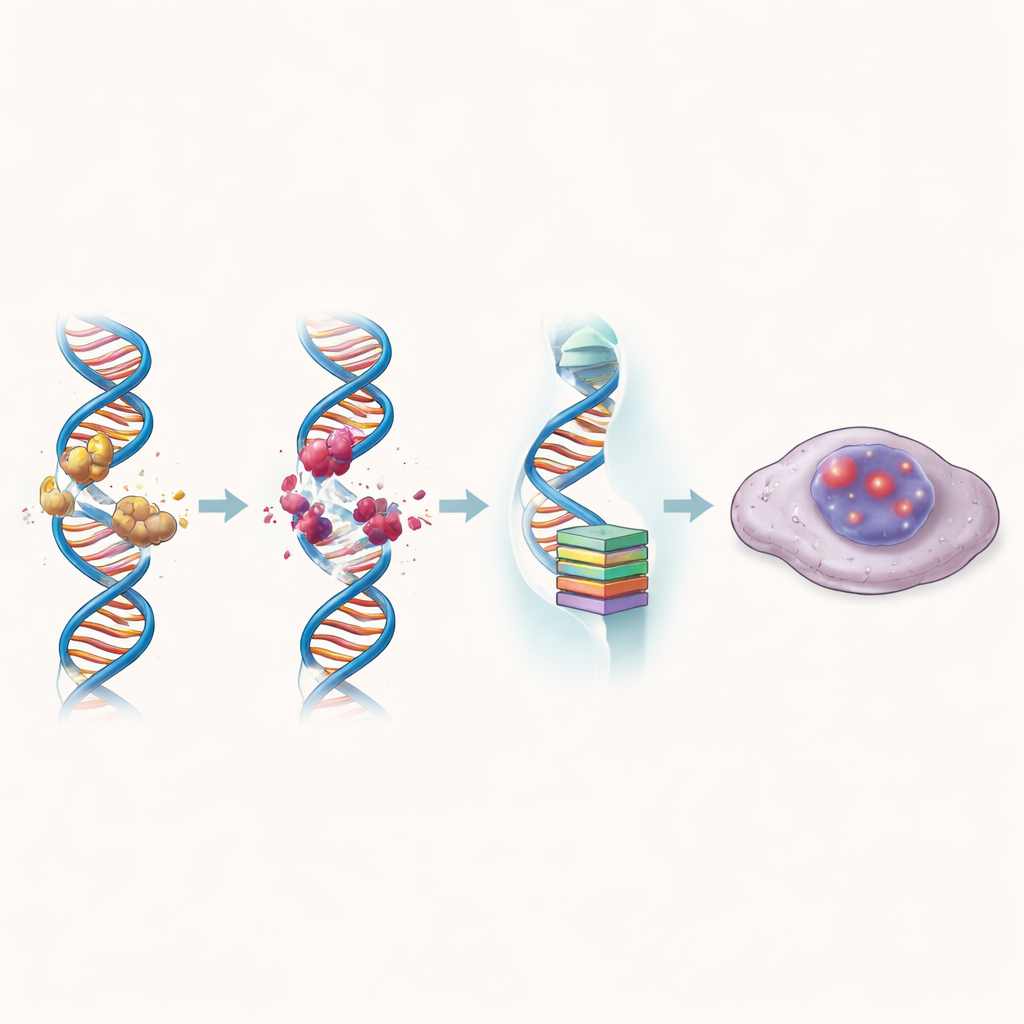
When colorectal cancer cells were exposed to ZBH-01, their gene activity patterns shifted dramatically toward pathways linked to DNA damage, aging, and cell-cycle arrest. The drug increased markers of broken DNA and shortened telomeres, the protective caps on chromosomes, more strongly than comparison compounds. At the same time, it sharply lowered the levels of hTERT and several other genes that normally push cells to keep dividing. As a result, many treated cells entered cellular senescence: a state where they remain alive but are permanently locked out of the division cycle. These senescent cells accumulated chemical and structural hallmarks of “shut down” nuclei and formed far fewer colonies over time.
Overcoming resistance to common chemotherapy
A key test for any new colorectal cancer therapy is whether it can help when standard drugs fail. The authors examined cells that had become resistant to cisplatin or 5-fluorouracil, two widely used agents. In both resistant models, ZBH-01 was far more effective than irinotecan or its active metabolite, cutting the dose needed to curb growth by up to dozens of times. When combined with cisplatin or 5-fluorouracil at carefully chosen concentrations, ZBH-01 worked synergistically: together, the drugs killed resistant cells more efficiently than either could alone. The dual-action molecule also reduced the activity of several genes that help cells pump drugs out or repair chemotherapy-induced damage, hinting that it may blunt multiple resistance tricks at once.
What this could mean for future treatments
By uniting DNA damage and telomerase suppression in a single, well-behaved molecule, ZBH-01 offers a blueprint for next-generation cancer drugs that tackle tumor survival from more than one angle. In laboratory models, this strategy not only slowed cell growth but pushed cancer cells into irreversible senescence and restored sensitivity to other chemotherapies. While much work remains—including safety studies and animal and human testing—the research suggests that thoughtfully designed dual-target drugs could help outmaneuver the adaptability that makes colorectal cancer so difficult to treat.
Citation: Li, Y., Ji, D., Jia, Y. et al. Dual targeting of topoisomerase I and DNA G-quadruplexes enhances senescence and chemosensitivity in colorectal cancer. Commun Biol 9, 552 (2026). https://doi.org/10.1038/s42003-026-09801-w
Keywords: colorectal cancer, chemoresistance, telomerase, DNA damage, targeted therapy