Clear Sky Science · en
Defining and reporting treatment dropout in blended therapy for mental health: scoping review and analysis
Why stopping therapy early matters
When people seek help for depression or anxiety today, their treatment may blend traditional face-to-face sessions with online exercises, apps, and self-guided tools. Many do not finish what they start, but it turns out that even the simple question of who “dropped out” is surprisingly hard to answer. This study looks closely at how researchers define treatment dropout in these mixed online–in‑person programs, and shows that different definitions can paint very different pictures of success or failure. Understanding this matters for anyone who wants mental health care that is both effective and realistic about how people actually use it.
Two ways of getting help, one hard question
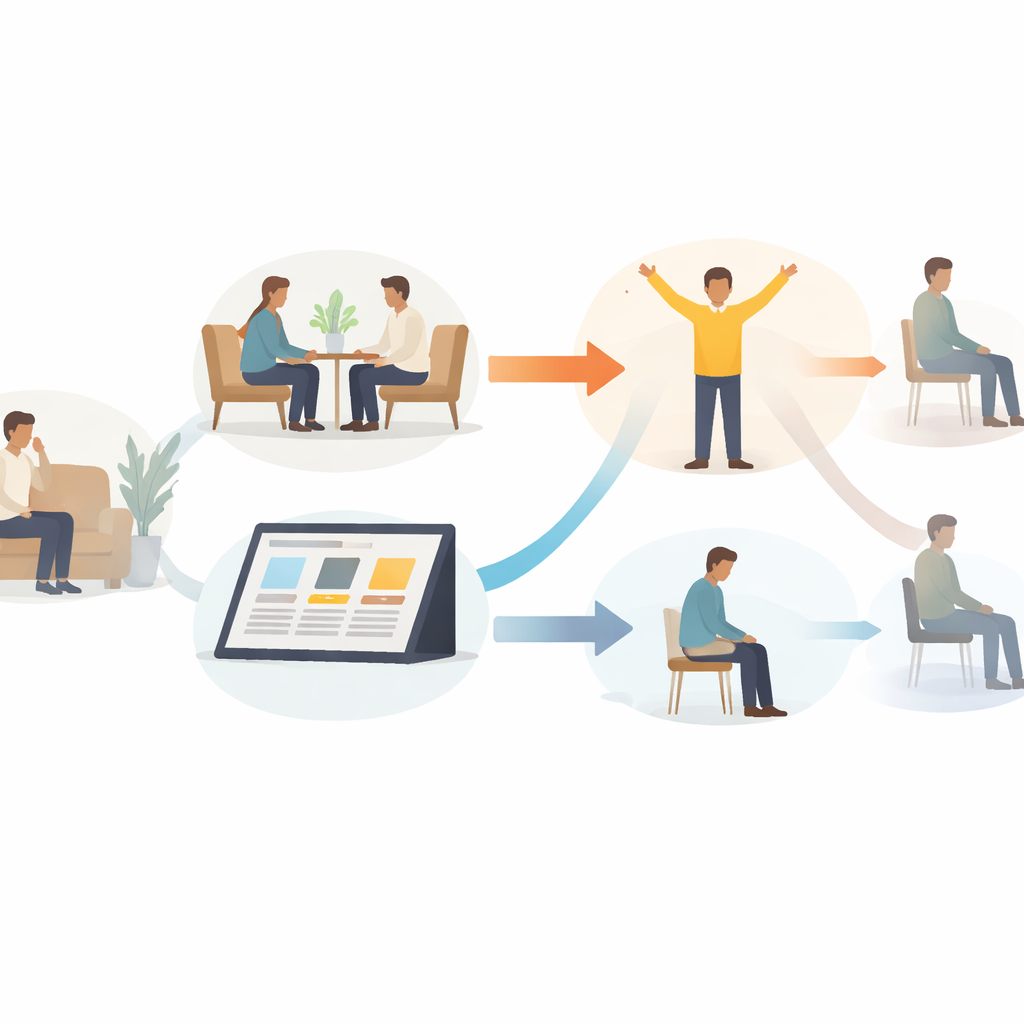
Blended therapy tries to offer the best of both worlds: the human connection of in‑person psychotherapy plus the flexibility of digital tools that people can use at home. In classic office-based therapy, dropout usually means a person stops coming before the agreed number of sessions. In online programs, it is often defined by how many modules someone completes. But when both formats are combined, things get messy. Is someone a dropout if they stop using the app but keep seeing their therapist? Or if they finish only half of the online content yet feel much better? To untangle this, the authors first reviewed the scientific literature to see how other teams have drawn this line.
How scientists currently count who leaves
The review found just 14 blended-therapy studies that clearly spelled out how they defined dropout. These studies fell into three camps. Some only looked at face‑to‑face sessions, often counting anyone who attended less than a certain share of planned visits as a dropout. Others focused only on the digital side, for example requiring people to start or complete all online modules. A third group combined both elements, usually by asking that a set percentage of the combined in-person and digital content be completed. Thresholds varied widely—from half of the material to every last module—showing that there is no shared rulebook. A few studies used more nuanced ideas, such as whether a patient explicitly said they wanted to stop.
Putting the definitions to the test
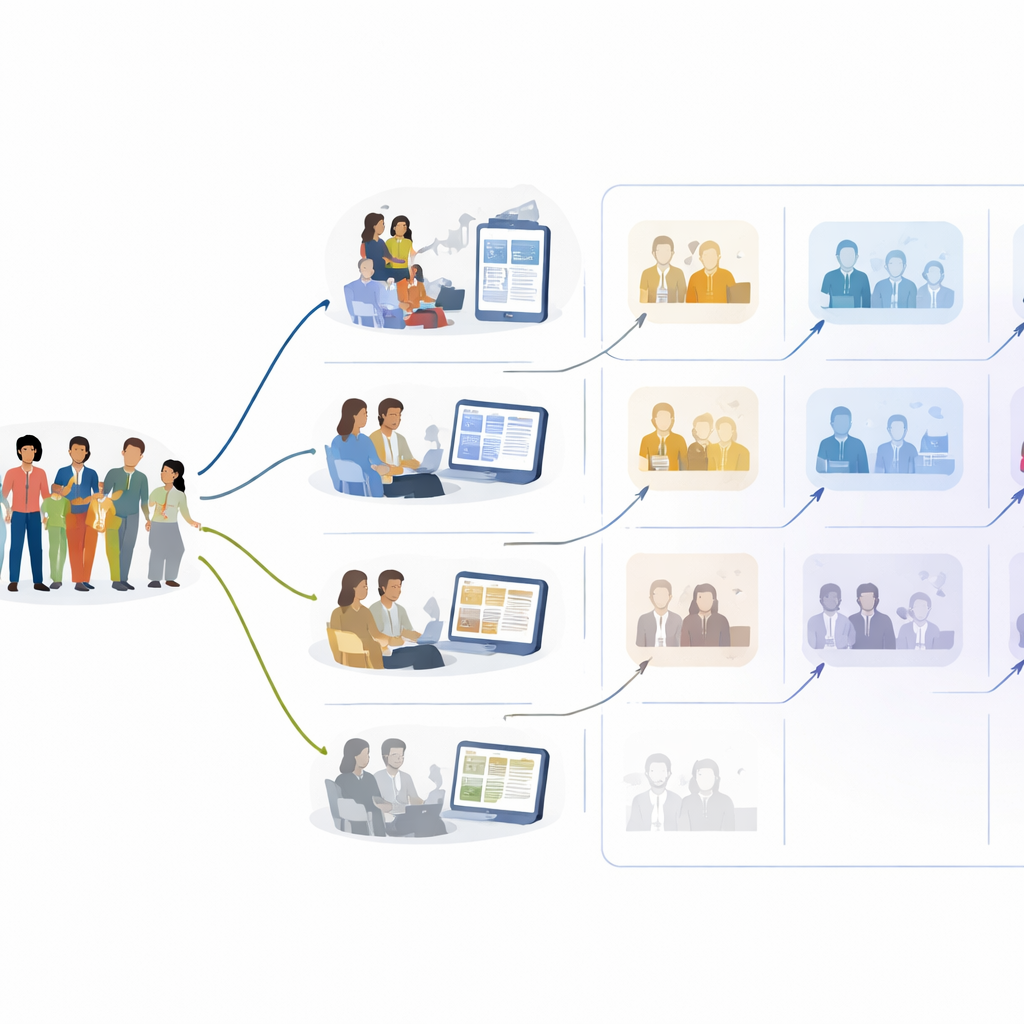
The authors then took five of these definitions and applied them to real-world data from a large German trial of blended therapy embedded in routine outpatient care. In this study, therapists used a flexible online toolkit alongside ordinary sessions, tailoring which digital chapters each patient received. One definition relied only on therapists’ judgment of whether treatment ended earlier than planned. Another counted anyone who did not finish all assigned digital content as a dropout. Three others combined therapist judgment with different thresholds of digital completion (100%, 75%, or 50%). The results were striking: depending on which rule was used, the percentage of people labeled as dropouts ranged from about half to almost everyone. Definitions that focused only on digital use classified far more people as dropouts than those that included the therapist’s view.
What dropout means for well‑being
The team also examined how these different dropout labels related to people’s symptoms of depression and anxiety, and to their satisfaction with life, measured at the start of treatment and six months later. Across all definitions, those who ended up classified as dropouts tended to start out with more severe symptoms and lower life satisfaction. Under some definitions—especially those that combined therapist judgment with at least moderate digital engagement—these differences were large enough to be statistically reliable both at the beginning and at follow‑up. In other words, people who were struggling more were also more likely to disengage. At the same time, the study’s detailed usage data showed that some people who used the digital tools only minimally still continued face‑to‑face therapy, while others actively requested extra online modules. Simple “all-or-nothing” cutoffs on digital use missed these important nuances.
Why a one‑size‑fits‑all rule does not work
By clustering patients into groups based on how they used the online platform, the researchers found patterns ranging from heavy digital use with frequent therapist contact to very minimal engagement. Yet almost all of these groups were labeled as mostly “dropouts” under the stricter definitions. This suggests that counting only modules or only sessions can badly overstate how many people truly abandon treatment. It also ignores situations where patients stop because they feel “good enough,” a reason that previous work has identified as common and not necessarily negative. The study argues that future research needs richer information: how central the digital component is to the program, how much engagement is expected, when exactly people disengage, and whether symptoms are improving at that time.
What this means for people seeking help
For someone considering blended therapy, the key takeaway is that “dropout” is not a simple yes-or-no label. Many people dip in and out of online tools while still benefiting from regular sessions with their therapist, and some stop early because they already feel better. This study shows that depending on how researchers draw the line, the very same program can look either highly fragile or reasonably robust. The authors conclude that studies should always state clearly how they define dropout, and should report digital and face‑to‑face disengagement separately. Doing so will make research findings easier to compare and, ultimately, help clinicians and policymakers design blended therapy that keeps people engaged in the ways that matter most for their mental health.
Citation: Eicher, S.C., Fenski, F., Behr, S. et al. Defining and reporting treatment dropout in blended therapy for mental health: scoping review and analysis. npj Digit. Med. 9, 245 (2026). https://doi.org/10.1038/s41746-026-02546-0
Keywords: blended therapy, treatment dropout, digital mental health, psychotherapy engagement, online modules