Clear Sky Science · en
GLUD1 supports ovarian cancer progression by counteracting anoikis via ARAF/MEK/ERK signaling
Why this research matters
Ovarian cancer is often discovered only after it has silently spread throughout the abdomen, making it one of the deadliest cancers affecting women. This spread depends on cancer cells that break away from the ovary, float in abdominal fluid, and still manage to stay alive even though they are no longer anchored to surrounding tissue. The study behind this article uncovers a key helper molecule that allows these drifting cells to resist cell death and seed new tumors, pointing to fresh ideas for how doctors might one day stop the cancer from spreading.
How wandering cancer cells cheat death
Most healthy cells must stay attached to their local support structure; when they lose that grip, they undergo a self-destruct program known as “anoikis.” Ovarian cancer cells in the abdominal cavity, however, cluster into tiny spheres that survive without attachment and can later stick to new surfaces. The researchers combed through large gene-expression databases, focusing on genes linked both to cell death resistance and to amino acid use. One gene, called GLUD1, clearly stood out: it was more active in ovarian tumors than in normal tissue, especially in samples taken from metastatic sites. Higher GLUD1 levels in patients were strongly linked to shorter overall survival and quicker return of disease, suggesting that this molecule helps tumors progress. 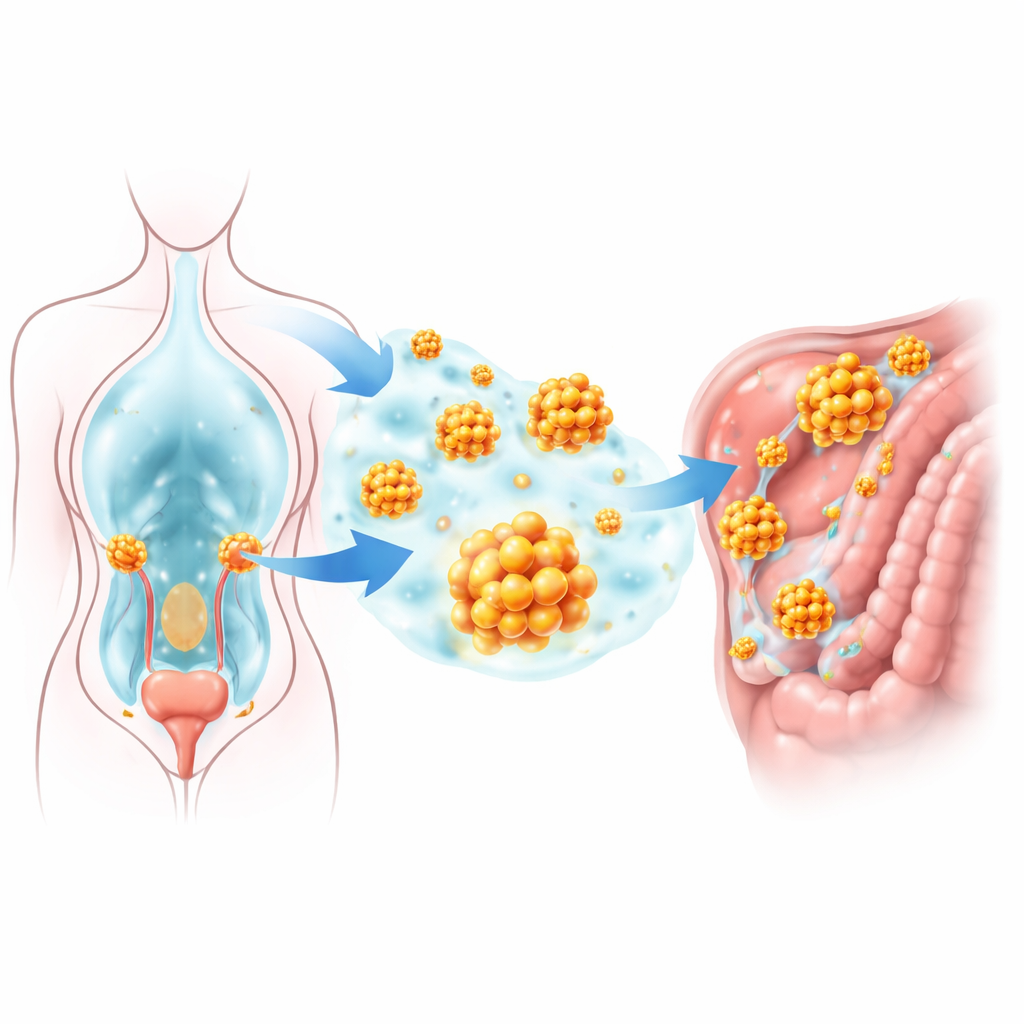
A hidden accomplice in tumor spread
To move beyond statistical links, the team manipulated GLUD1 levels in ovarian cancer cell lines grown in the lab. When they reduced GLUD1, free-floating cell clusters shrank, cancer cells died more readily in suspension, and the cells became less able to migrate in standard migration tests. When they boosted GLUD1, the opposite happened: cells resisted death and moved more aggressively. In mice injected with ovarian cancer cells inside the abdomen, silencing GLUD1 led to fewer tumor nodules on organs such as the spleen and liver, slower tumor growth, and longer survival. Tumor samples from these mice showed more dying cells and fewer dividing ones, reinforcing the idea that GLUD1 is critical for keeping detached cancer cells alive long enough to form new colonies.
A protective partnership inside cancer cells
The investigators then asked how GLUD1 exerts this life-preserving influence. Using protein-hunting methods, they discovered that GLUD1 physically binds to another protein called ARAF, part of a well-known chain of signals that drives cell survival and growth. Within cancer cells, GLUD1 and ARAF sit together mainly in the cell fluid rather than in energy-producing structures, hinting at a signaling role. When GLUD1 was reduced, ARAF levels dropped, while its close relatives BRAF and CRAF were unchanged. This loss of ARAF was accompanied by weaker activity in the downstream MEK/ERK pathway and a shift toward pro-death proteins. Re-introducing ARAF into GLUD1-deficient cells restored much of the survival signaling and reduced cell death, showing that ARAF is a major go-between linking GLUD1 to resistance against anoikis. 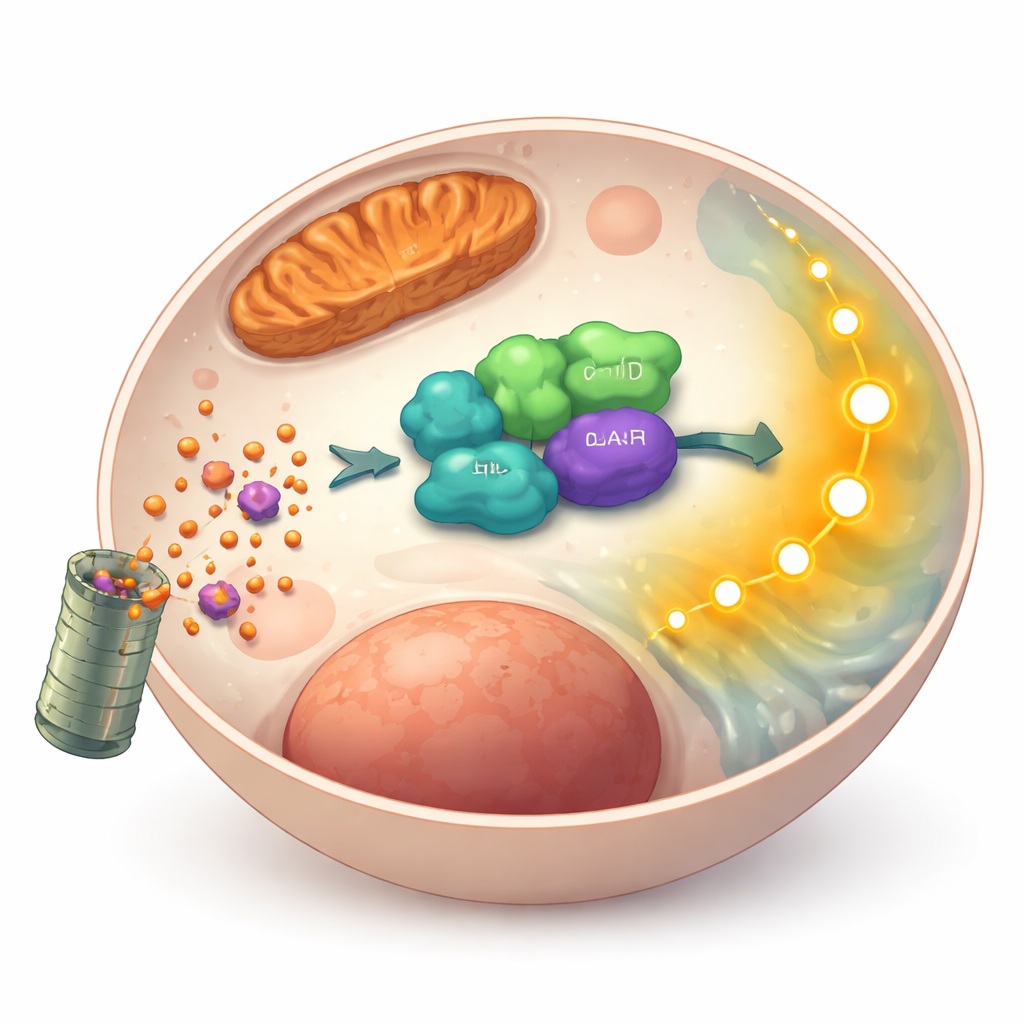
How GLUD1 shields a key signal
Digging deeper, the team found that GLUD1 acts like a bodyguard that prevents ARAF from being tagged and destroyed by the cell’s protein-recycling system. When this recycling machinery was chemically blocked, the drop in ARAF seen after GLUD1 loss was reversed. Time-course experiments showed that ARAF decayed much faster when GLUD1 was missing, and biochemical tests revealed heavier “tagging” of ARAF for disposal. Overexpressing GLUD1 reduced these tags. Together, the results indicate that GLUD1 stabilizes ARAF by blocking its breakdown, thereby keeping the survival signal switched on in detached ovarian cancer cells. Interestingly, although GLUD1 is best known for helping process the nutrient glutamine, adding back one of its metabolic products could only partly restore ARAF and its signaling, suggesting that GLUD1’s protein-protecting role is at least as important as its enzyme activity in this context.
What this could mean for future treatment
By revealing how GLUD1 shields ARAF and keeps survival pathways active, this study exposes a vulnerable point in the life cycle of wandering ovarian cancer cells. If drugs could be developed to dampen GLUD1’s stabilizing effect on ARAF—or to block the downstream MEK/ERK signals—they might force detached cancer cells to undergo anoikis instead of forming new tumors in the abdomen. Because GLUD1 also plays central roles in normal cell metabolism, any such treatment would need to carefully balance benefits and side effects. Still, the discovery of this GLUD1–ARAF partnership offers a clearer map of how ovarian cancer spreads and highlights a promising set of molecular targets for therapies aimed at stopping the disease before it can take root throughout the body.
Citation: Feng, H., Chen, Y., Wu, G. et al. GLUD1 supports ovarian cancer progression by counteracting anoikis via ARAF/MEK/ERK signaling. npj Precis. Onc. 10, 151 (2026). https://doi.org/10.1038/s41698-026-01349-6
Keywords: ovarian cancer, metastasis, anoikis resistance, GLUD1, cell survival signaling