Clear Sky Science · en
The quality characteristics of air-dried cured meat (Grison) processed from cattle, buffalo, and camel: a comparative study
Why this dried meat matters
Air-dried meats like the Swiss-style delicacy Grison are valued for their long shelf life, rich flavor, and convenience. This study asks a simple but important question: what happens when you make this traditional product not only from cattle, but also from buffalo and camel? By comparing how each meat behaves during curing and drying, the researchers show how animal choice can change nutrition, texture, color, and taste in ways that matter to both producers and consumers.
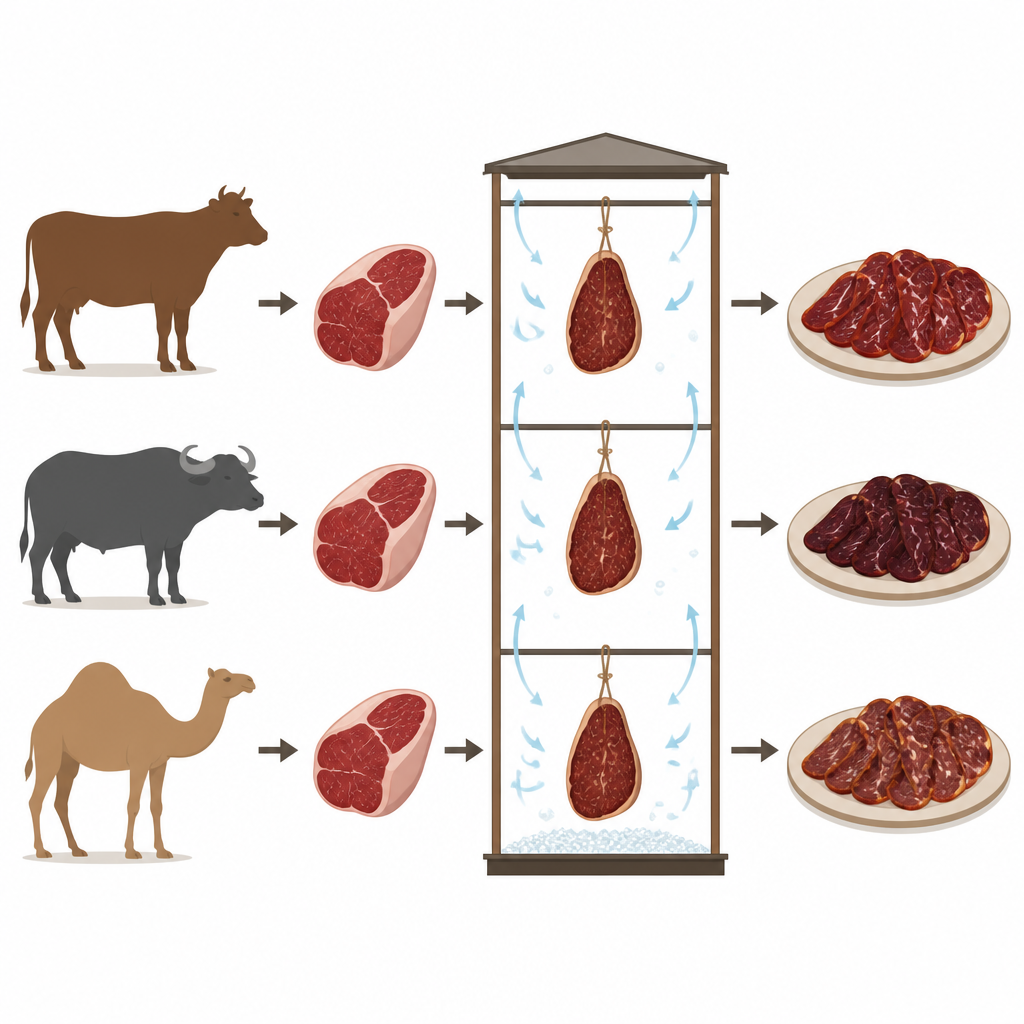
Turning fresh meat into a travel friendly food
Grison starts as large, lean cuts from the hind leg that are heavily salted, seasoned with spices, and left to cure in the cold. After nearly two weeks of curing, the meat is pressed and then hung in a carefully controlled room where cool air removes moisture over time. This slow drying concentrates nutrients and flavors while making the product safe to store without refrigeration. In this experiment, the same recipe and conditions were used for topside cuts from cattle, buffalo, and camel so that any differences in the final product could be traced back mainly to the meat itself.
How the three meats differ on paper
Before and during curing, the scientists tracked basic traits such as water, protein, fat, and mineral content, as well as measures linked to freshness and safety like acidity, fat oxidation, salt, and leftover curing salts. Camel meat started out with more moisture and minerals but less protein and fat than the others. As curing and drying went on, all meats lost water and became denser in nutrients, yet camel based Grison ended up the leanest, with relatively high moisture and mineral levels. Cattle Grison remained the fattest, while buffalo sat in between for many measures but tended toward higher protein and lower fat. Camel meat also held a slightly higher acidity level and more remaining curing salts, which can help limit some forms of fat damage.
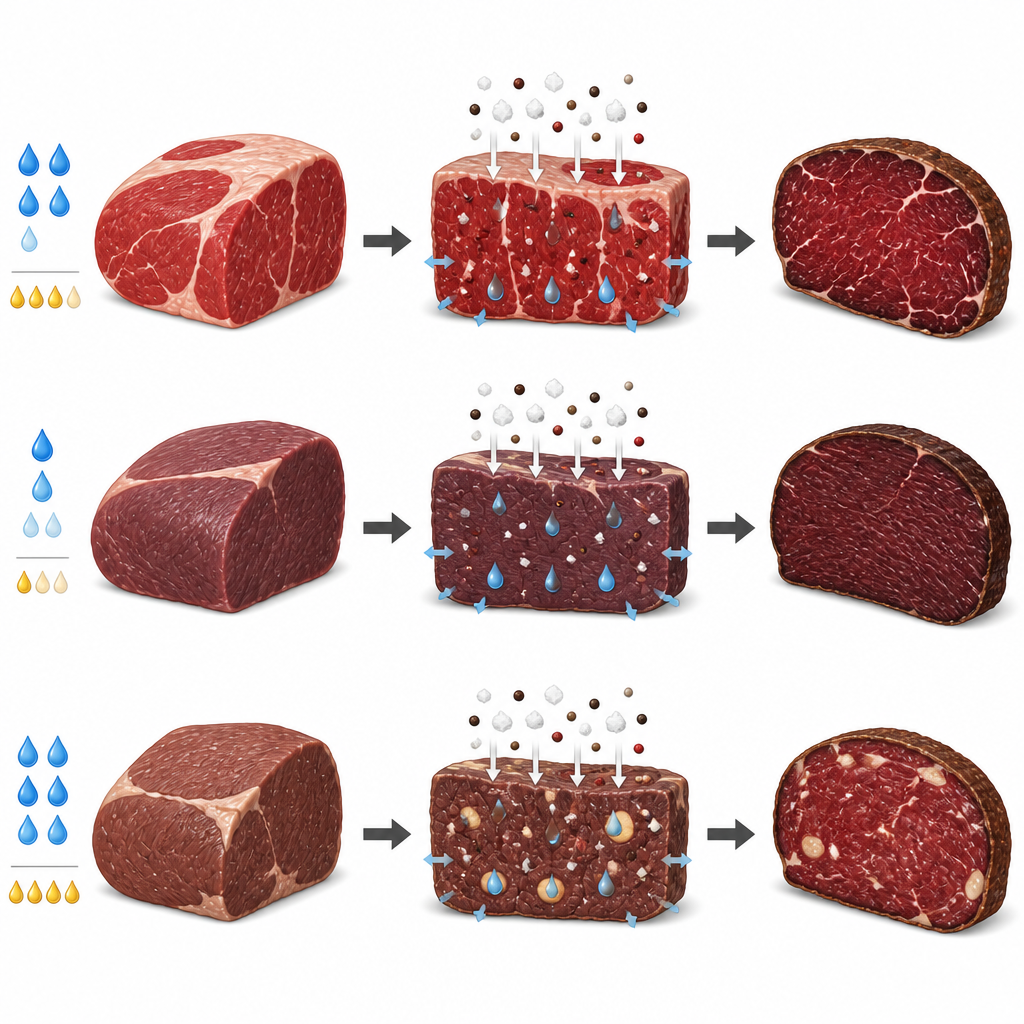
Color, bite, and flavor on the plate
The team measured color with instruments and then invited a trained tasting panel to judge slices for color, flavor, juiciness, tenderness, and overall liking. Cattle Grison came out lighter and slightly more yellow, reflecting its higher fat and lower water content. Camel Grison looked darker and redder, with stronger color saturation, something often linked to higher pigment levels and the way curing salts interact with the meat. Buffalo Grison was also dark but did not match camel’s appealing redness. When it came to bite, buffalo Grison was clearly the toughest, showing the highest force needed to cut through it, followed by camel, with cattle the most tender by this measure.
What tasters preferred
Human judges largely agreed with the instruments. Camel Grison received the highest scores for color and flavor, and its juiciness and tenderness were rated on par with traditional cattle Grison. Buffalo Grison scored lowest for juiciness, tenderness, and overall acceptability, matching its higher toughness values. The authors suggest that the lean structure, muscle fibers, and connective tissue in buffalo meat make it harder to soften during curing and drying, while camel’s combination of moisture, minerals, and natural protective compounds seems to help maintain color and limit off flavors from fat breakdown.
What this means for future dried meats
For people interested in using a wider range of animals to make traditional style dried meats, this study shows that camel is a promising stand in for cattle, offering similar or better color and flavor with less fat. Buffalo can also be used, but its tougher bite and lower juiciness may require adjustments in processing to better please consumers. The authors note that future work should look at food safety microbes, fat types, and how quality changes during storage, but their findings already give producers a roadmap for turning non traditional meats into attractive, shelf stable products.
Citation: Gouda, M.A., Mohamed, M.A., Emara, M.M.T. et al. The quality characteristics of air-dried cured meat (Grison) processed from cattle, buffalo, and camel: a comparative study. Sci Rep 16, 16436 (2026). https://doi.org/10.1038/s41598-026-54134-7
Keywords: air-dried meat, cured meat, Grison, camel meat, buffalo meat