Clear Sky Science · en
Assessment of jaw muscle activity, bite force and clinical findings in patients with severe tooth wear and matched controls
Why worn-down teeth matter
Many people grind or clench their teeth at night without realizing it. Over the years, this can leave teeth flattened, chipped, and sensitive, affecting both comfort and appearance. Dentists have long suspected that powerful nighttime jaw forces are a main culprit. This study set out to test that assumption directly by measuring jaw muscle activity and bite force during sleep in people with severe tooth wear and comparing them with people whose teeth were barely worn.
Who took part in the study
The researchers recruited 60 adults from Sweden: 30 patients with clearly visible, severe tooth wear thought to be mainly due to tooth-to-tooth contact, and 30 age- and sex-matched volunteers with little or moderate wear. All participants were carefully examined with a structured tooth wear system that records not just how damaged the teeth are, but also habits, diet, and possible medical factors. People with conditions or medicines that strongly affect sleep or movement were excluded to keep the focus on ordinary sleep-time jaw activity.
How the jaw was monitored at night
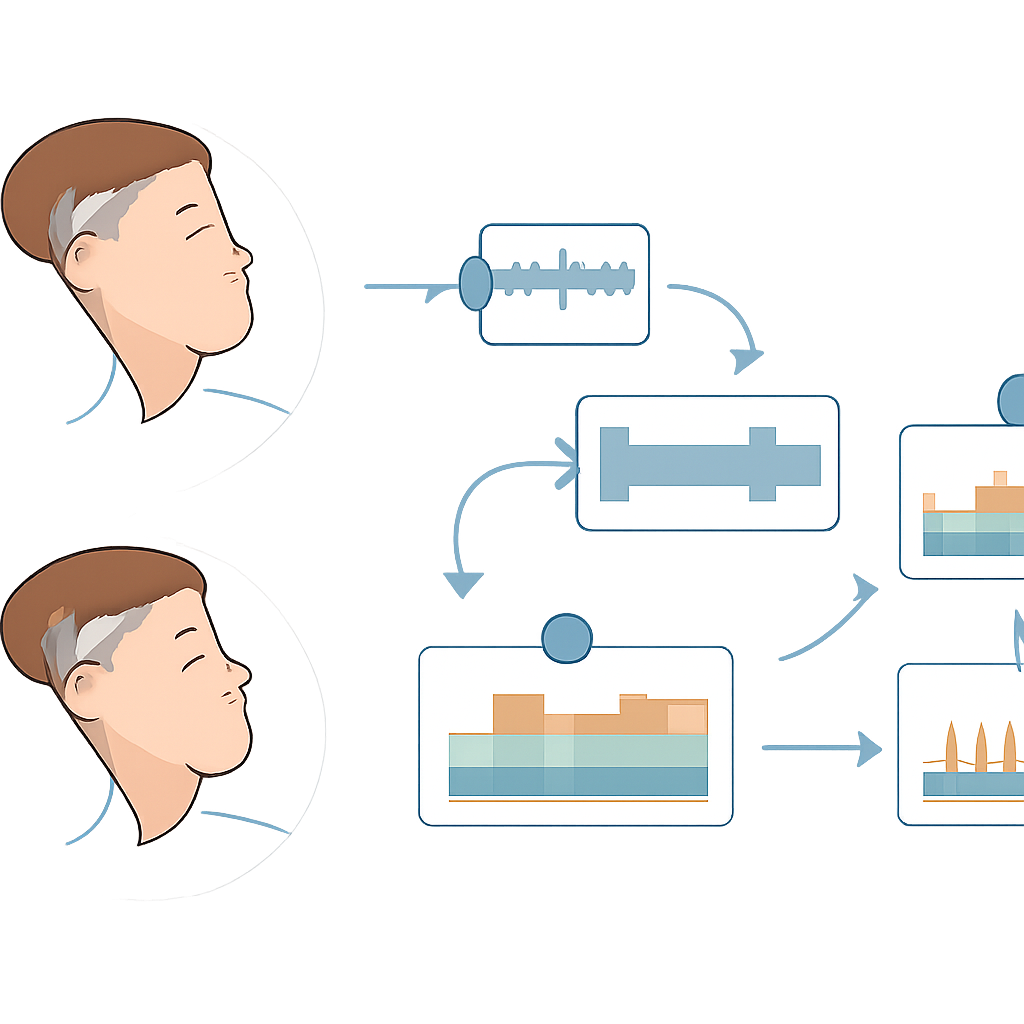
To find out what really happens while people sleep, the team used a small electronic sensor placed over a jaw muscle on the temple. Before bedtime, each participant bit on a custom device at several effort levels so the sensor could learn how their individual muscle signals relate to actual bite force. Then, over several nights at home, the device recorded every burst of jaw muscle activity during sleep. From these recordings, the researchers calculated how many activity bursts occurred per hour, how long each burst lasted, the total "work" done by the muscle, and an estimate of the accumulated bite force through the night. They also measured each person’s maximum bite force while awake and collected saliva samples to assess flow, acidity, and buffering capacity.
What the measurements revealed
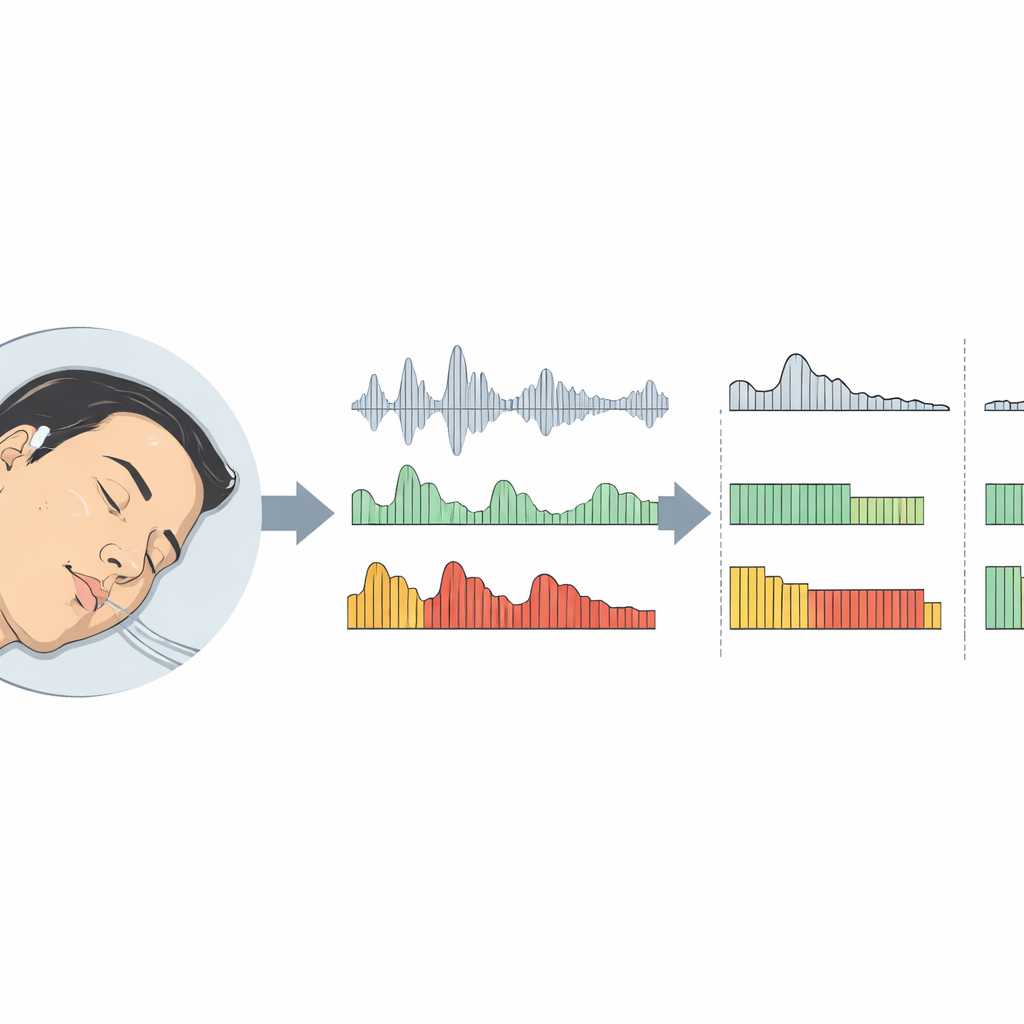
Surprisingly, people with badly worn teeth did not show higher total nightly bite force, greater muscle work, or stronger maximum bite force when awake than the control group. In other words, the overall mechanical load from the jaw muscles looked very similar between the two groups. What did differ was the pattern of activity: those with severe wear had more frequent bursts of jaw muscle activity per hour, but each burst tended to be shorter than in the control group. This suggests that the way forces are distributed across the night may differ, even if the total amount of work done is comparable.
The role of saliva and other everyday factors
The study also examined lifestyle and bodily factors that could influence how easily teeth wear down. Diet, acid intake, alcohol use, exercise, reflux problems, and medicines that can dry the mouth were similar in both groups. However, people with severe tooth wear had slightly lower unstimulated saliva flow. Because saliva helps lubricate the teeth and neutralize acids, a drier mouth could increase friction when teeth slide against each other and reduce natural protection of the tooth surface. Still, the difference was modest, and stimulated saliva, acidity, and buffering ability were not clearly different between groups.
What this means for understanding tooth wear
The findings challenge the simple idea that severe tooth wear is mainly the result of stronger or much greater bite forces during sleep. Instead, the results point toward a more complex picture where patterns of muscle activity, subtle changes in saliva, and other mechanical and chemical influences interact over many years. For patients and clinicians, this means that worn teeth are unlikely to have a single, clear-cut cause such as “strong bruxism” alone. Protecting teeth may therefore require a broad approach that considers night-time jaw activity, mouth dryness, dietary acids, and restorative treatment together, rather than focusing solely on reducing bite force.
Citation: Erkapers, M., Segerström, S., Svensson, P. et al. Assessment of jaw muscle activity, bite force and clinical findings in patients with severe tooth wear and matched controls. Sci Rep 16, 13008 (2026). https://doi.org/10.1038/s41598-026-49563-3
Keywords: tooth wear, sleep bruxism, bite force, jaw muscles, saliva flow