Clear Sky Science · en
Pawsitive impact: exploring associations between pet keeping and connection to nature
Why our pets may change how we see the outdoors
Many people feel that their pets bring them closer to the natural world, but until recently this idea rested mostly on intuition and personal stories. This study asks a simple question with big implications: do people who live with certain kinds of pets actually feel more connected to nature than people without pets, and if so, which animals matter most? The answers help us understand not just our relationships with animals, but also how everyday routines might quietly shape our care for the environment.
Feeling part of the natural world
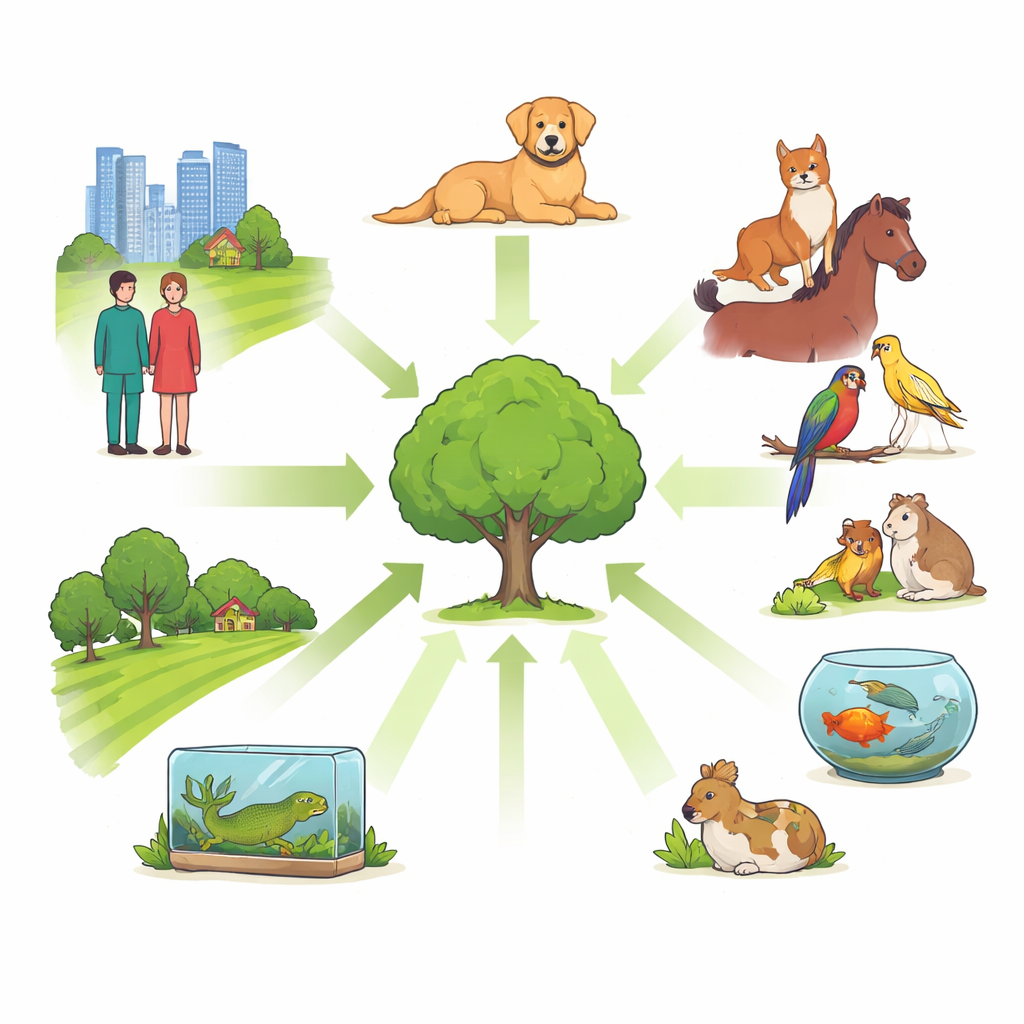
The researchers focused on a psychological idea called “connection to nature,” which captures how strongly people feel that they are part of nature rather than separate from it. Earlier work has shown that a stronger sense of connection to nature is linked to better health, lower stress, and more environmentally friendly behavior. People who feel close to nature are generally more willing to protect it, whether that means supporting conservation, choosing greener habits, or simply spending more time outdoors. Yet it has been unclear how much everyday contact with companion animals contributes to this feeling.
Different pets, different daily lives
Not all pets shape our days in the same way. Walking a dog several times a day often means visiting parks, forests, or green spaces, while feeding fish or caring for a terrarium animal can happen entirely indoors. With this in mind, the team surveyed 2,548 adults in Germany about their pets, their sense of connection to nature, their age, gender, and whether they lived in a large city or a smaller town or village. They grouped animals into seven types: dogs, cats, horses, other small mammals such as rabbits or hamsters, birds, fish, and terrarium animals like reptiles or amphibians. Using statistical models, they then examined how each pet type related to people’s self-reported connection to nature.
Dogs stand out, others fade after closer look
The first round of analyses suggested that dog, cat, and horse keepers felt more connected to nature than people without pets, while keepers of other mammals, birds, fish, or terrarium animals did not differ much from non-keepers. However, when the researchers looked more closely, only dog keeping remained consistently linked to a higher connection to nature. The apparent boost for cat owners largely disappeared once age was taken into account: older adults tended both to feel more connected to nature and to be more likely to keep cats. Similarly, the higher scores among horse keepers were explained by gender, because women—who in this study were more likely to ride or keep horses—also tended to report a stronger connection to nature in general.
What everyday routines might be doing
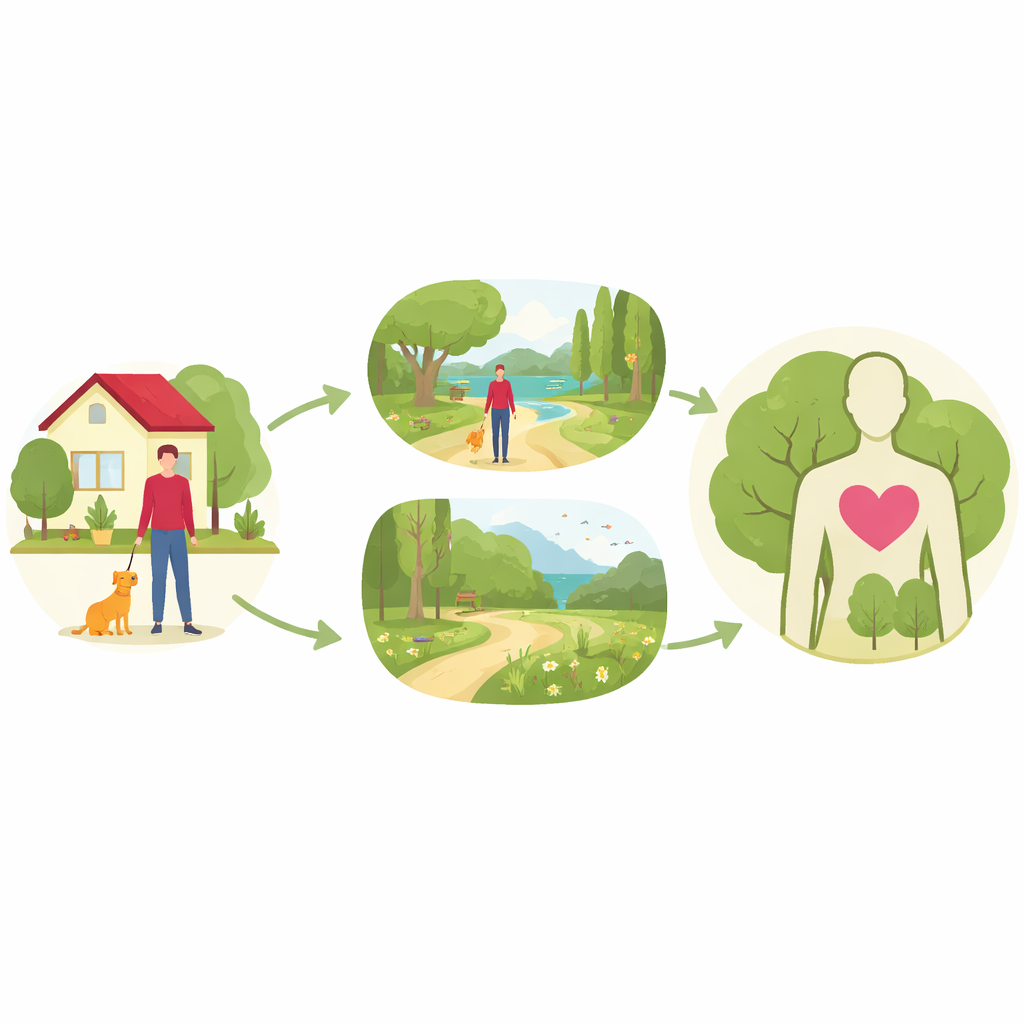
Dog keepers showed a modest but reliable increase in connection to nature compared with people without pets, even after accounting for age, gender, and place of residence. One likely explanation is simple: dogs usually need daily walks, often in parks, forests, or other green spaces. Regular time outdoors is already known to strengthen people’s bond with nature, and dog walking naturally builds this into daily life. In contrast, many other pet types can be kept with little or no contact with outdoor environments, which may explain why their keepers did not show a similar pattern in this study.
Limits and open questions
The study has several caveats. It focused on adults living in Germany, many of whom had good access to urban green spaces, so the results may not look the same in countries with different cultures or city layouts. Some pet groups, such as horse, bird, fish, and terrarium keepers, were relatively small, which makes it harder to detect subtle differences. Most importantly, the research is observational: it cannot tell whether keeping a dog increases a person’s connection to nature, or whether people who already feel close to nature are simply more likely to choose a dog and enjoy outdoor activities.
What this means for pet lovers and nature
Overall, the study suggests that not all pets bring people closer to nature in the same way. Among the animals examined, dogs were the only type consistently linked with feeling more connected to the natural world, likely because they nudge their human companions into frequent outdoor experiences. Other pets may offer companionship and joy, but they do not automatically deepen our bond with nature. For readers, the message is both simple and hopeful: everyday relationships with animals—especially dogs—can play a meaningful role in how we experience and value the living world around us, but turning those moments into a stronger connection still depends on how we choose to engage with nature itself.
Citation: Kleespies, M.W., Schneider, S., Delic, J. et al. Pawsitive impact: exploring associations between pet keeping and connection to nature. Sci Rep 16, 11381 (2026). https://doi.org/10.1038/s41598-026-47211-4
Keywords: pets and nature, dog ownership, nature connectedness, human–animal relationships, environmental behavior