Clear Sky Science · en
Comparison of and risk factors for early and late pulmonary embolism in patients after major cancer surgery
Why this matters for people facing cancer surgery
Pulmonary embolism is a blood clot that travels to the lungs and can be life threatening. People with cancer who need major surgery face a higher chance of this complication. This study asks a practical question that matters to patients, families, and clinicians alike: do clots that appear soon after surgery differ from those that appear later, and can we spot who is most at risk in each case?
Blood clots in the lungs after cancer surgery
Pulmonary embolism happens when a clot blocks blood flow in the vessels of the lungs. It is one of the most common serious heart and vessel emergencies after heart attack and stroke, and it is a major cause of death in the hospital. Cancer itself makes blood more likely to clot, and major operations add further stress through tissue injury, long time on the table, changes in blood pressure, and time spent in bed afterward. Yet, until now, few studies have separated clots that happen in the first days after surgery from those that arise later in the hospital stay.
How the researchers studied early and late clots
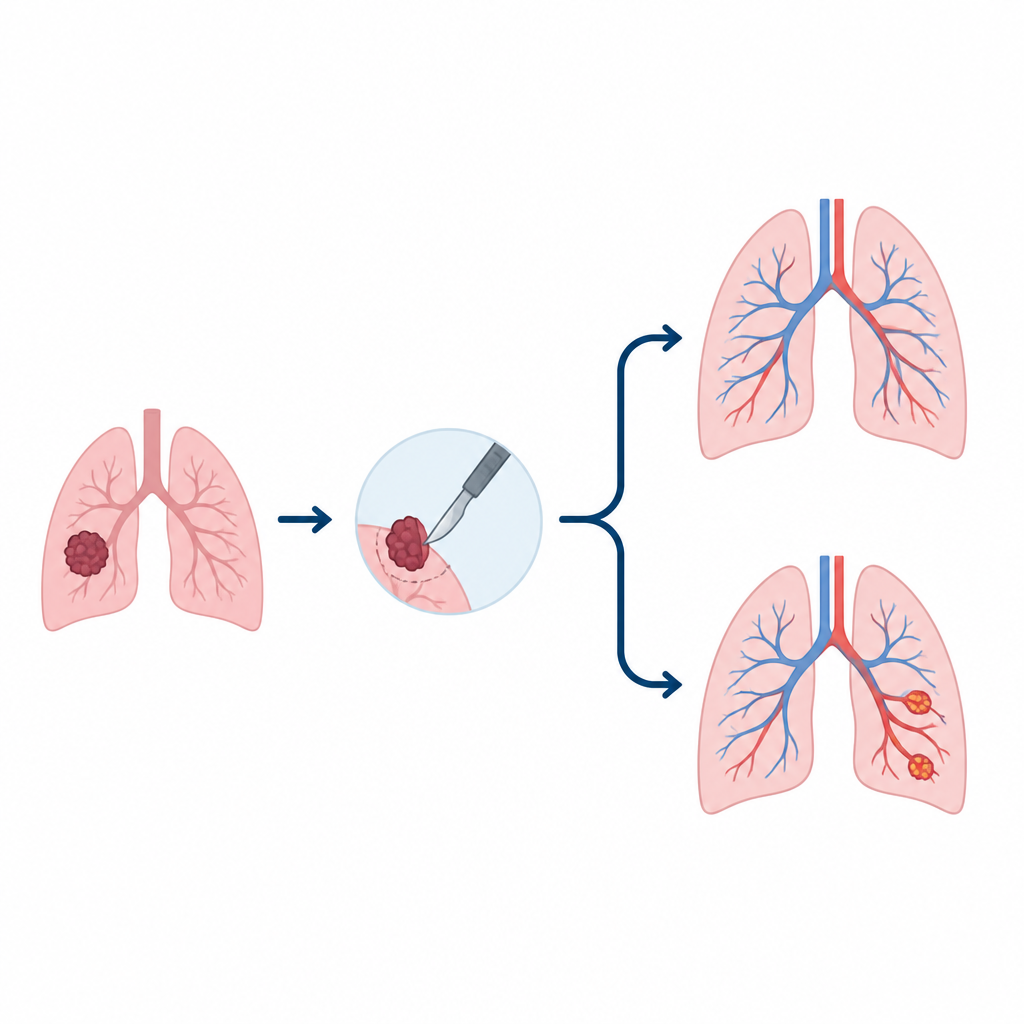
The team reviewed records from more than 45,000 people with cancer who had major chest, belly, or pelvic surgery at a large cancer hospital in China between 2016 and 2022. Eighty two patients developed pulmonary embolism confirmed by imaging. The researchers labeled clots found within three days of surgery as early and those found after three days as late, based on patterns seen in studies of injured trauma patients. For each patient with a clot, they selected two similar patients of the same age and cancer type who had surgery but did not develop clots. They then compared many features, including body size, blood pressure during surgery, blood loss, infections, and lab tests before and after surgery.
What differed between early and late events
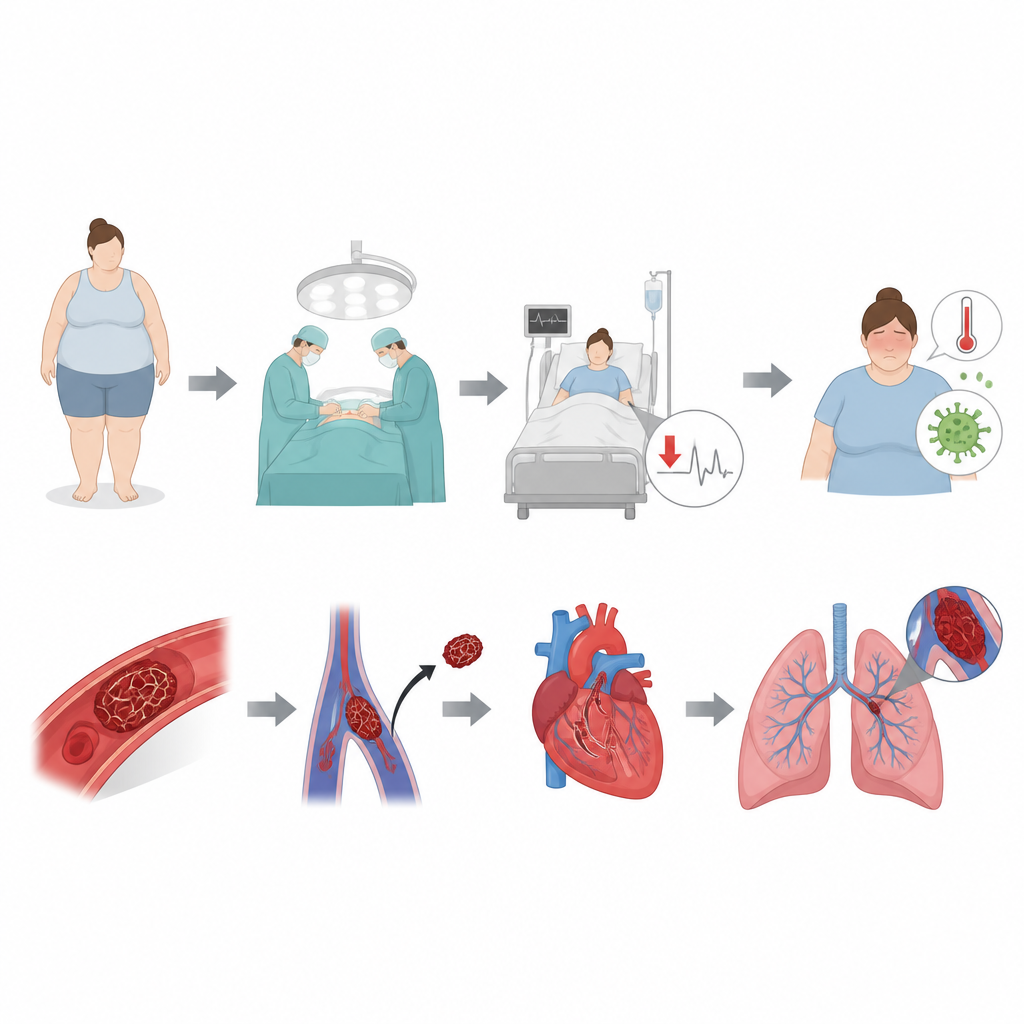
Among the 82 patients with clots, 36 had early events and 46 had late events. Overall, basic traits such as age, sex, and stage of cancer were similar between the early and late groups. But people with late clots were more likely to have had open surgery instead of minimally invasive surgery, to have lost more blood, to need transfusions, and to develop severe infections after the operation. When the researchers used statistical methods to sort through overlapping factors, they found that early clots were linked most strongly to higher body mass index, longer periods of low blood pressure during surgery, and higher levels of a blood test called D dimer shortly after surgery. Late clots, in contrast, were tied to severe infection after surgery and to higher D dimer levels as well.
Clues from blood tests and blood pressure
D dimer is a fragment produced when the body breaks down a blood clot. High levels signal that clotting and clot breakdown are active somewhere in the body, though not always in the lungs. In this study, higher D dimer levels after surgery were associated with both early and late pulmonary embolism, making it a potential early warning sign in patients with cancer who have just had a major operation. Low blood pressure during surgery was another key signal for clots that appeared in the first three days. The authors suggest that long periods of reduced blood flow may injure vessel walls, slow circulation, and promote clot formation even before patients have spent much time in bed.
What this means for patients and care teams
The study suggests that early and late lung clots after major cancer surgery may arise for somewhat different reasons. Extra body weight, long spells of low blood pressure in the operating room, and early surges in D dimer levels point to risk in the first few days. Later in the stay, severe infections and ongoing high D dimer levels become more important warning signs. While the work was done at a single hospital and cannot answer every question, it supports a simple message for lay readers: careful monitoring of blood pressure during surgery, prompt detection and treatment of infections, and early clot prevention in high risk patients could help reduce the danger of pulmonary embolism after cancer surgery.
Citation: Li, Y., Zhao, L., Zhao, Q. et al. Comparison of and risk factors for early and late pulmonary embolism in patients after major cancer surgery. Sci Rep 16, 15884 (2026). https://doi.org/10.1038/s41598-026-47115-3
Keywords: pulmonary embolism, cancer surgery, blood clots, postoperative complications, D-dimer