Clear Sky Science · en
Autoimmune disease in offspring of mothers with metabolic dysfunction-associated steatotic liver disease (MASLD): a nationwide cohort study
Why this study matters for families
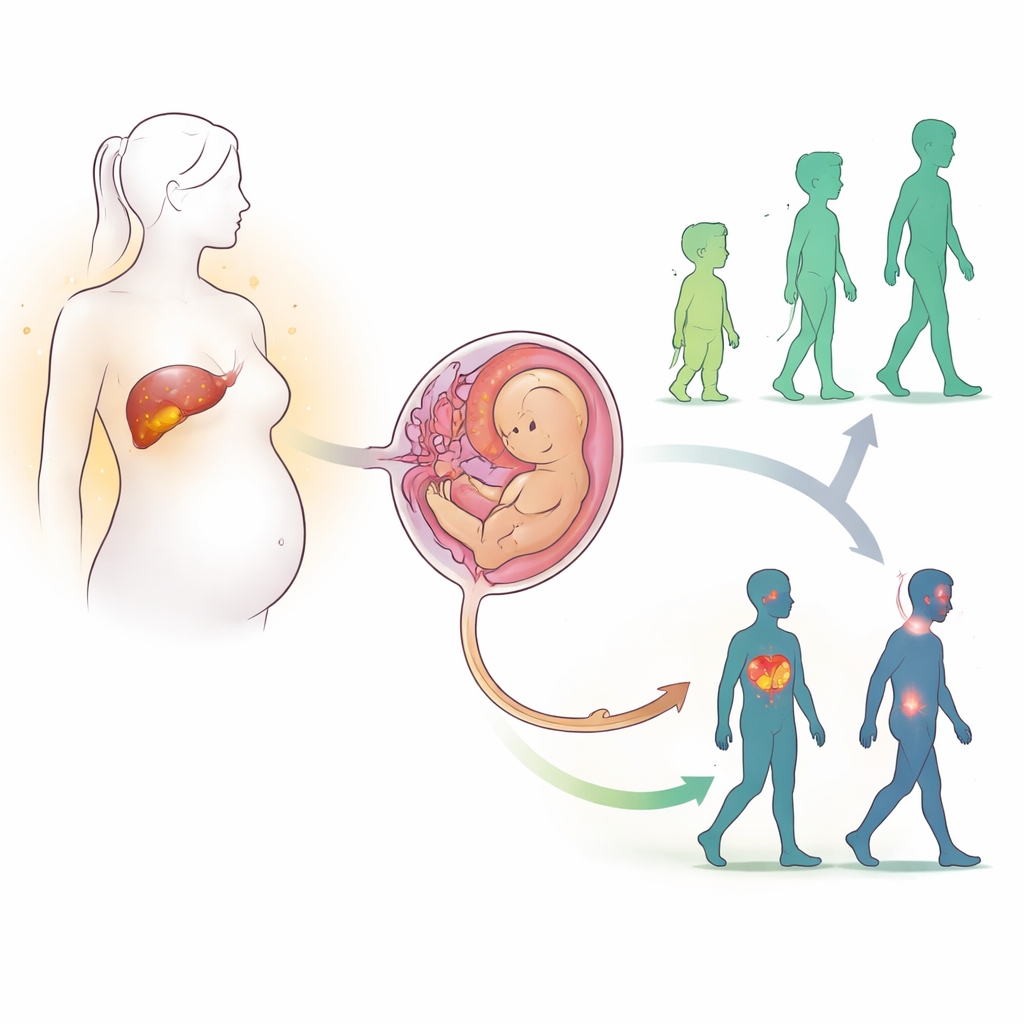
Many women today are living with fatty liver linked to obesity and metabolic problems, a condition now called metabolic dysfunction-associated steatotic liver disease (MASLD). Because pregnancy is a time when the mother’s immune system must carefully adapt to protect both her and the baby, doctors worry that a chronically inflamed liver might subtly reprogram the baby’s developing immune system and raise the child’s chance of autoimmune diseases later in life. This study asks a simple but important question: do children born to mothers with MASLD actually go on to develop more autoimmune diseases?
The health question behind fatty liver in pregnancy
MASLD, formerly known as non-alcoholic fatty liver disease, has become one of the most common liver problems worldwide and is increasingly seen in women of childbearing age. In MASLD, fat builds up in the liver and can progress to more severe forms involving scarring and inflammation. Pregnancy itself requires finely tuned immune changes so the mother’s body accepts the fetus while still fighting infection. Researchers have proposed that chronic inflammation from MASLD during pregnancy might disrupt this balance, altering how the fetus’s immune system is wired and possibly setting the stage for autoimmune diseases such as type 1 diabetes, celiac disease, or inflammatory bowel disease.
A nationwide look at mothers, babies, and later illness
To explore this, Swedish researchers used a powerful national system that links pathology reports, birth records, hospital visits, and prescription data for nearly the entire population. They identified 239 children born between 1992 and 2017 whose mothers had biopsy-proven MASLD before or during pregnancy, and matched them with 1,131 children whose mothers had no known MASLD but were similar in age, birth year, and number of previous births. The team then followed all of these children for a median of about 18 years, tracking new diagnoses of 22 different autoimmune diseases using hospital and specialist clinic records, and in some analyses, medications typically used to treat autoimmune conditions.
What the researchers found in the children
Over nearly two decades of follow-up, autoimmune diseases were uncommon in both groups. Among children exposed to maternal MASLD, 15 out of 239 (around 6%) developed an autoimmune disease, compared with 40 out of 1,131 (about 4%) in the comparison group. When the researchers used statistical models that accounted for other important factors—such as the mother’s education, weight, smoking, metabolic conditions like diabetes or high blood pressure, and whether she herself had an autoimmune disease—the difference between the groups was not statistically meaningful. In other words, the data did not support a clear increase in overall autoimmune disease risk in children exposed to MASLD in the womb.
Digging deeper into disease severity and definitions
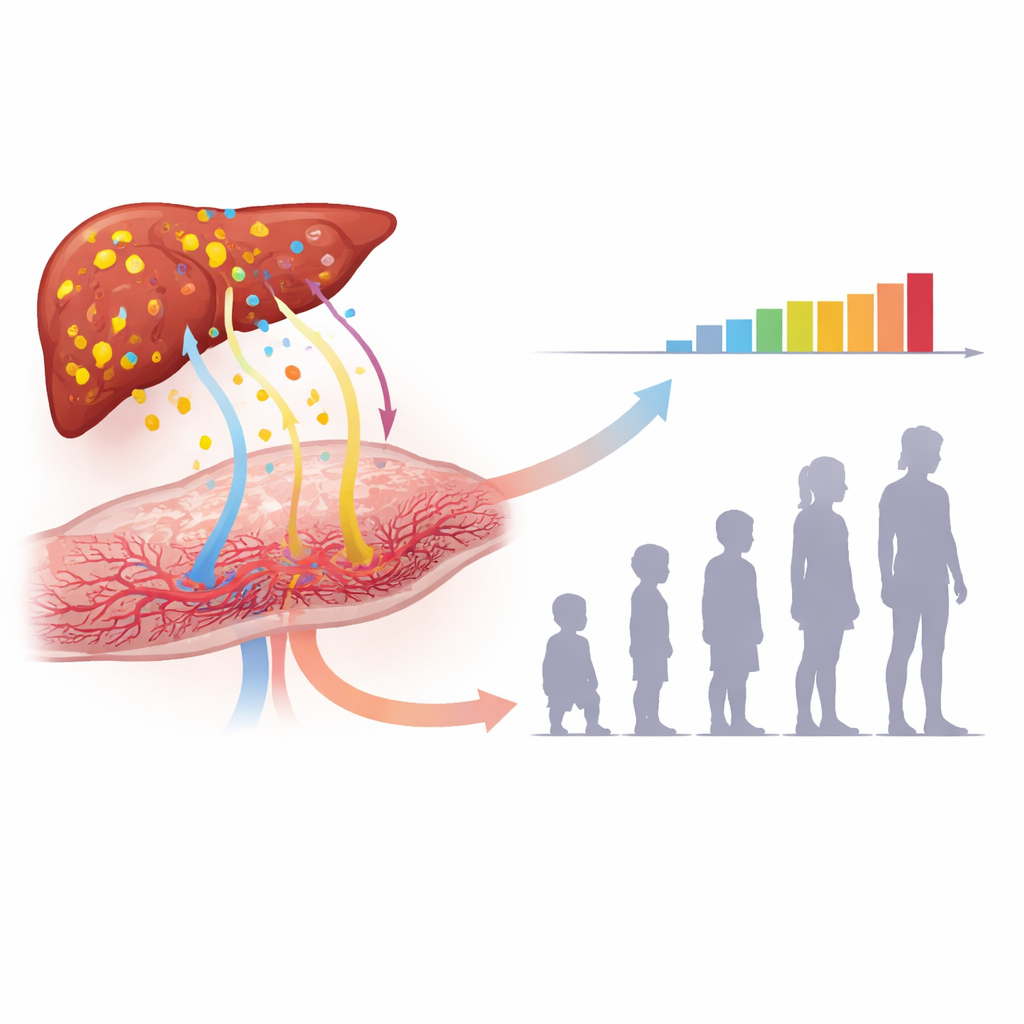
The team also checked whether the severity of the mother’s liver disease mattered. Most mothers had simple fat buildup in the liver, while a smaller group had more advanced, inflamed, or scarred livers. Children of mothers with more severe MASLD showed a somewhat higher estimated risk of autoimmune disease than those whose mothers had simple steatosis, but the numbers were small and the differences could easily be due to chance. When the researchers tightened the definition of autoimmune disease to require repeat diagnoses, they again found no link with maternal MASLD. When they broadened the definition to also include certain immune-related medications, the estimated risk went up slightly, but still did not reach the level scientists consider clear evidence of a real effect.
What this means for parents and clinicians
Overall, this large, carefully conducted study suggests that having MASLD during pregnancy does not clearly raise a child’s risk of developing autoimmune disease by early adulthood, even though MASLD itself is closely tied to inflammation and immune imbalance. While a very small increase in risk cannot be entirely ruled out—especially for specific autoimmune conditions—the findings are generally reassuring for women with MASLD who are pregnant or considering pregnancy, and for their healthcare providers. At present, the evidence does not support special autoimmune disease screening for children solely because their mothers had MASLD, though continued long-term research in larger groups will be important as both MASLD and autoimmune disorders become more common.
Citation: Marxer, C.A., Ebrahimi, F., Bergman, D. et al. Autoimmune disease in offspring of mothers with metabolic dysfunction-associated steatotic liver disease (MASLD): a nationwide cohort study. Sci Rep 16, 12217 (2026). https://doi.org/10.1038/s41598-026-46246-x
Keywords: fatty liver in pregnancy, autoimmune disease in children, maternal health and offspring, MASLD long-term outcomes, Swedish cohort study