Clear Sky Science · en
Bis-glycinate bound zinc supplementation in sows modulates sows and piglets gut microbiota and reduces piglet diarrhea incidence
Why piglet gut health matters
For pig farmers, diarrhea in newborn piglets is more than a messy problem. It stunts growth, raises vet costs, and can lead to deaths, especially around the second week of life. At the same time, heavy use of traditional zinc supplements to control diarrhea has raised concerns about environmental buildup and long-term animal health. This study explores whether a different, more readily absorbed form of zinc given to mother pigs can quietly reshape gut germs in both sows and piglets and, in doing so, lower diarrhea without relying on very high zinc doses.
A gentler way to give zinc
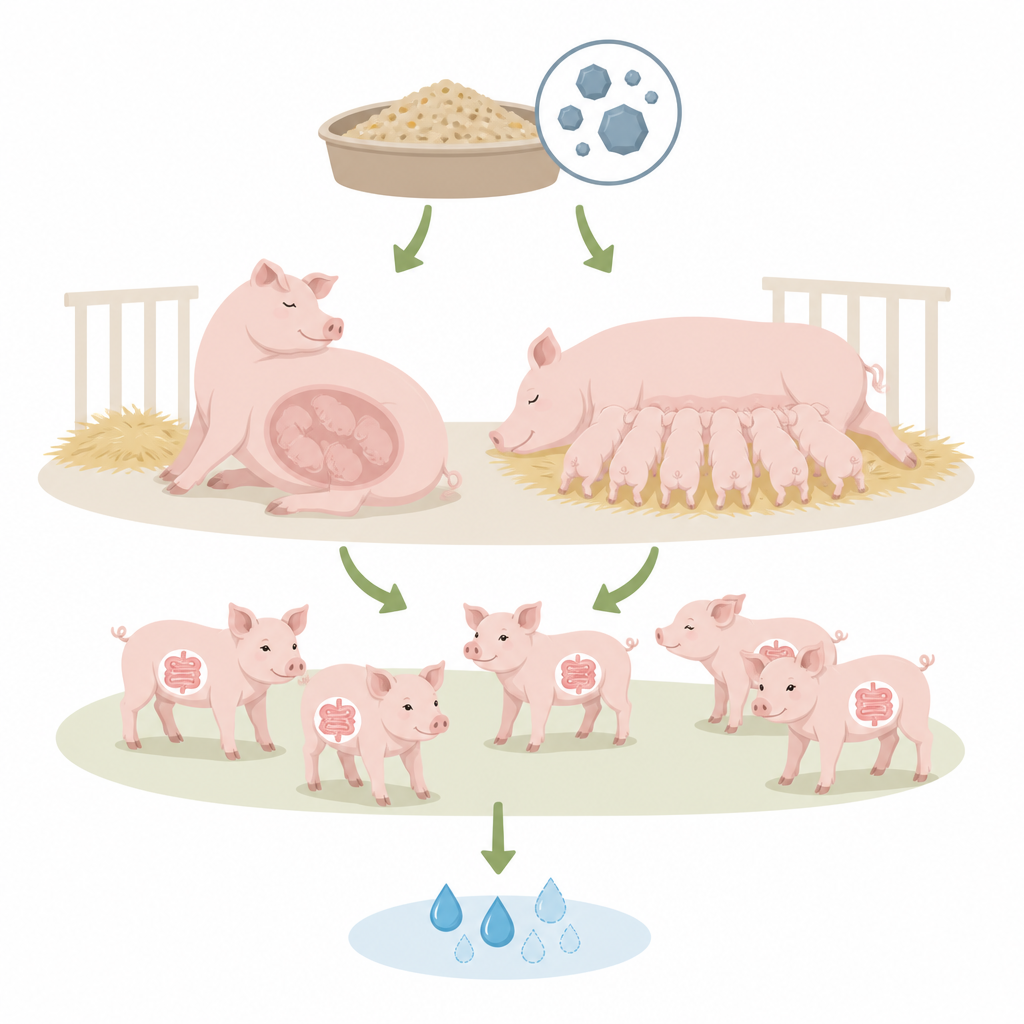
The researchers focused on an organic zinc compound called bis-glycinate bound zinc, in which zinc is carried by two small amino acids. This form is thought to be absorbed more efficiently than standard inorganic zinc. On a commercial farm in Thailand, 36 pregnant crossbred sows were split into two groups late in pregnancy. One group stayed on the usual diet, while the other received the same feed plus a small top-up of bis-glycinate bound zinc from day 85 of pregnancy until three weeks after farrowing. The team tracked litter size, piglet body weight from birth to day 21, and scored piglet droppings at several ages to see how often diarrhea occurred.
Peeking into the gut community
To understand what was happening inside, the scientists collected fecal samples from the sows and one selected piglet per litter at different times. Using DNA sequencing of bacterial marker genes, they cataloged which microbes were present and how evenly they were distributed. They looked at three key features: how many different types of bacteria lived in the gut, how balanced their proportions were, and how these patterns changed over time. This allowed them to compare the internal ecosystems of sows on the standard diet versus those receiving the organic zinc, and to see how these differences might echo in their suckling piglets.
Healthier balance without extra growth
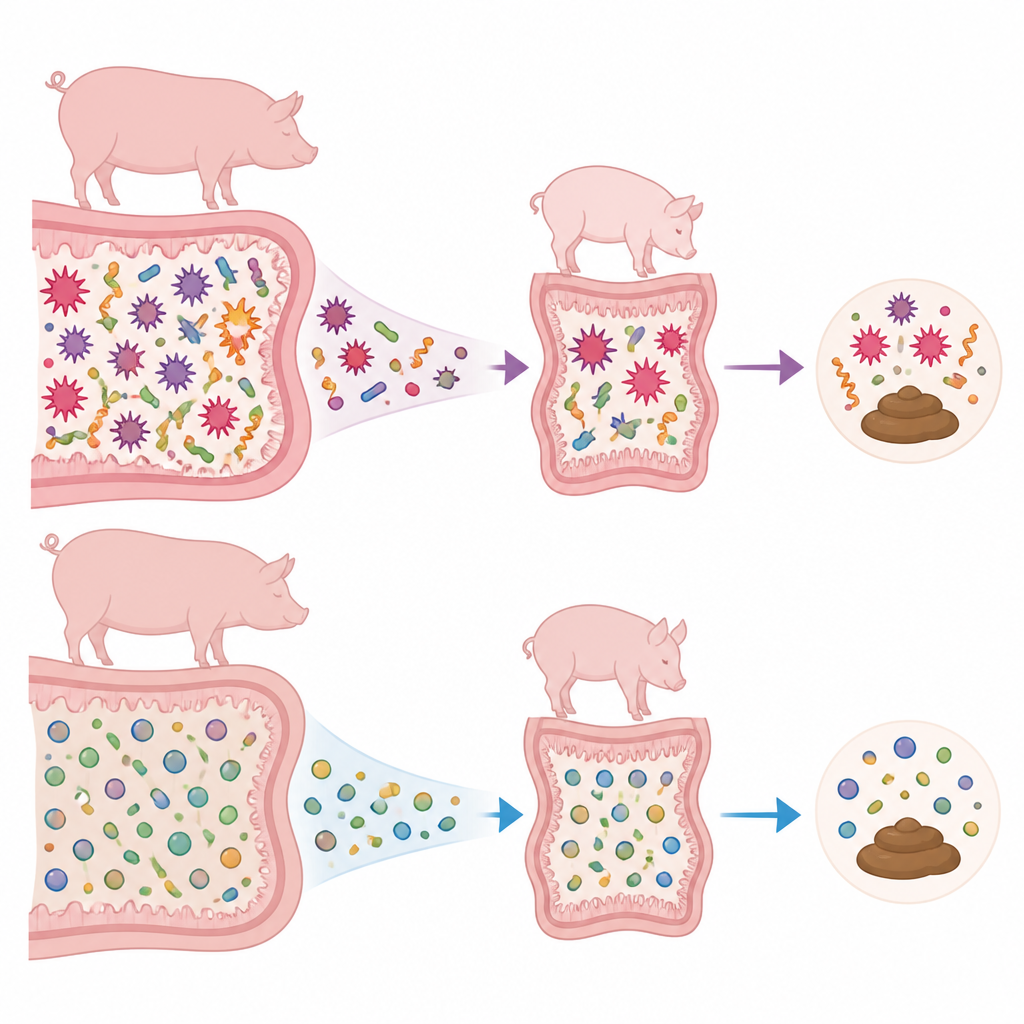
The added zinc did not make piglets heavier; body weights from birth to three weeks were similar between groups. But it did make a difference to health. By day 21, piglets nursing from zinc-supplemented sows had a markedly lower rate of diarrhea than those nursing from control sows. In the mothers, the extra zinc led to a gut community that was less crowded with many rare bacterial types yet more evenly shared among a stable core of species. Major bacterial groups shifted, with fewer Firmicutes and more Bacteroidetes, and the overall composition changed less dramatically during lactation than in unsupplemented sows, suggesting a calmer, more stable microbial environment.
Shaping early life microbes in piglets
Even though the piglets themselves did not receive direct zinc supplements, their gut bacteria reflected their mothers’ diets. Early on, piglets from supplemented sows had more of certain bacterial families linked to gut development and fiber use, such as Ruminococcaceae. By day 21, they showed lower levels of Spirochaetes, a group that includes known diarrhea-associated germs, while certain fiber-loving bacteria became more common. Analyses of the overall patterns connected these microbial shifts to piglet body weight at several ages, hinting that changes in the invisible gut community may support growth even when the scale does not yet show big differences.
What this means for farms
In simple terms, giving mother pigs a modest amount of bis-glycinate bound zinc late in pregnancy and during nursing appeared to steady their gut germs and gently steer their piglets’ gut communities toward a healthier balance. This did not make piglets bigger in the first three weeks, but it did make them less likely to develop diarrhea at weaning age, a critical period for survival and later performance. The findings suggest that targeted maternal supplementation with a more bioavailable form of zinc could offer a practical tool to improve piglet gut health while reducing reliance on heavy doses of traditional zinc, with potential benefits for both animal welfare and the environment.
Citation: Somboonna, N., Ruampatana, J., Kamolklang, P. et al. Bis-glycinate bound zinc supplementation in sows modulates sows and piglets gut microbiota and reduces piglet diarrhea incidence. Sci Rep 16, 15440 (2026). https://doi.org/10.1038/s41598-026-46189-3
Keywords: piglet diarrhea, zinc supplementation, gut microbiota, sows, organic minerals