Clear Sky Science · en
Changes in body mass index and waist circumference as predictors of incident prediabetes: the Aichi Workers’ Cohort Study
Why small changes on the scale matter
Many people think that as long as they do not have diabetes, a little weight gain is harmless. This study of Japanese office workers challenges that assumption. It shows that slow, steady increases in body weight and waist size over several years can quietly push people toward prediabetes, a hidden early stage of blood sugar trouble that often leads to type 2 diabetes. Because weight and waist measurements are easy and inexpensive to track, the findings suggest that routine monitoring could help catch metabolic problems early, when lifestyle changes are most effective.
Watching workers over time
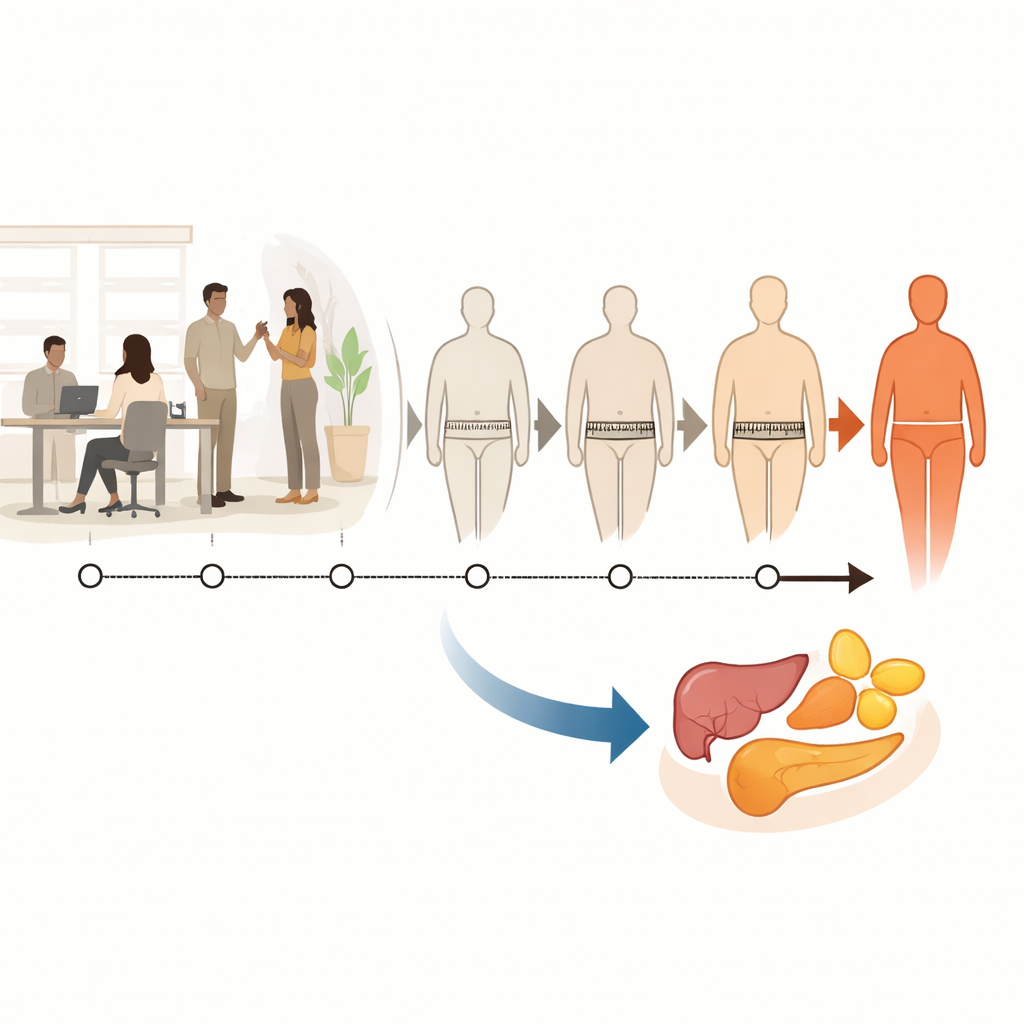
The researchers used data from the Aichi Workers’ Cohort Study, which follows local government employees in central Japan. From more than 5,600 workers who took part in a 2013 health survey, they focused on 2,754 adults who did not yet have prediabetes or diabetes. For each person, they had annual measurements of weight, height, and waist size from 2008 to 2013. This allowed them to calculate how quickly each worker’s body mass index (a ratio of weight to height) and waist circumference were changing over those years, rather than looking at a single snapshot in time.
Linking body changes to blood sugar
After establishing each person’s trend in overall body size and waist size, the team followed them from 2013 through mid-2022. During this period, participants continued to receive regular health checkups that included fasting blood sugar tests and, for many, a long-term blood sugar marker called HbA1c. Prediabetes was defined by widely used cutoffs for these tests. Over a median follow-up of seven years, 846 people—about three in every ten participants—developed prediabetes or diabetes. The researchers then compared the rate of new prediabetes across different patterns of weight and waist change, while accounting for age, sex, initial body size, physical activity, smoking, drinking, sleep, family history of diabetes, and use of blood pressure or cholesterol medicines.
What steady weight gain signals
The analyses showed that people whose body mass index rose more quickly from 2008 to 2013 were more likely to develop prediabetes later on. For every typical step up in the pace of BMI gain, the risk of prediabetes increased by about 12 percent, even after taking starting weight and many lifestyle factors into account. A similar pattern emerged for waist size: workers whose waists expanded faster also faced a higher risk. Those whose waists actually shrank slightly over time had about a 20 percent lower risk than those whose waists stayed relatively stable. These results held up in several extra checks, such as removing people who rapidly progressed straight from normal blood sugar to diabetes, or those with only short follow-up.
Younger adults and hidden fat
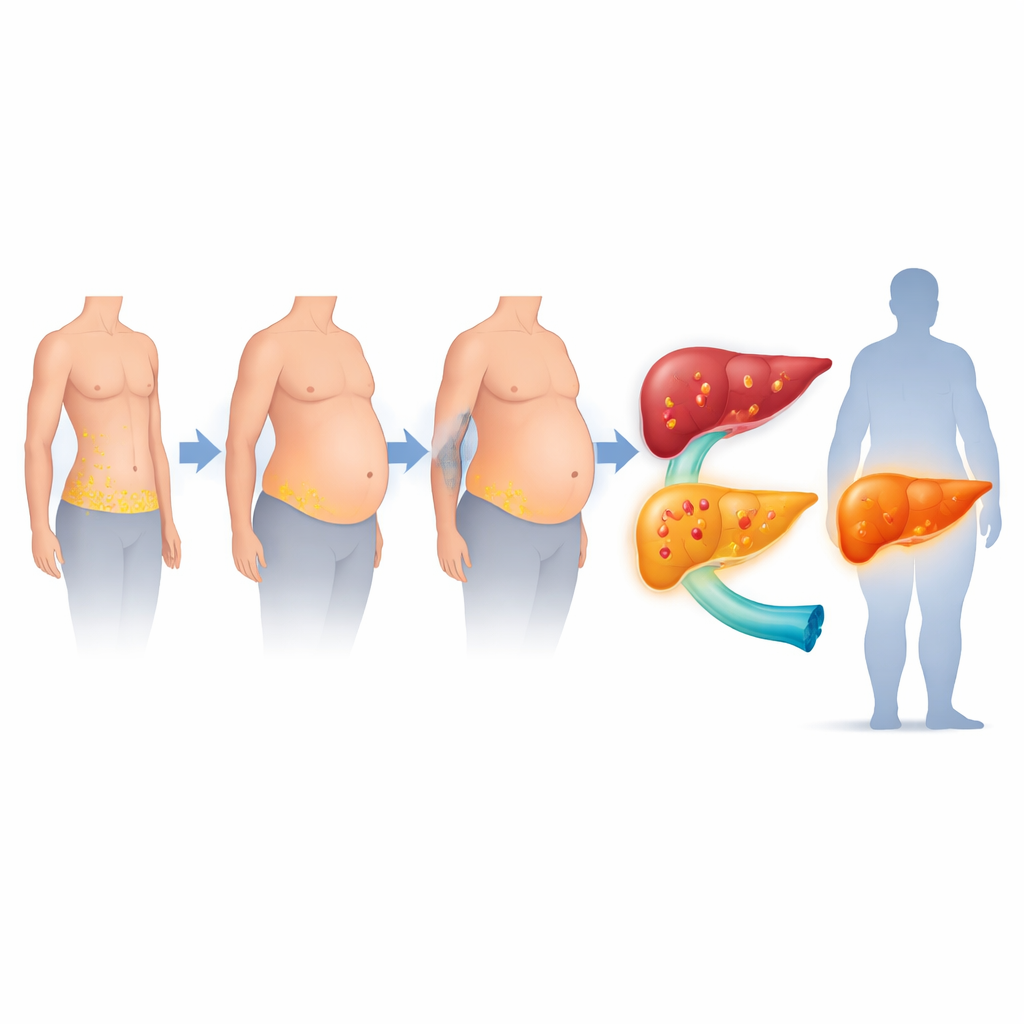
The link between rising body measurements and future prediabetes was particularly clear in workers under 50 years old. Among these younger adults, even modest annual gains in weight or waistline were tied to higher risk, whereas the pattern was weaker and not clearly significant in older participants. The authors suggest that gradual fat buildup, especially in and around the liver, may make the body less responsive to insulin, the hormone that controls blood sugar. Because the study captured only a slice of adult life, it may have missed even steeper weight gains that occurred earlier, which could mean the true impact of long-term weight change is even stronger than observed.
What this means for everyday health
Overall, the study concludes that not only how much a person weighs, but also how their weight and waistline change year after year, can foreshadow prediabetes. For working-age adults who tend to have fairly stable lifestyles, small yearly gains that seem unimportant can add up to meaningful metabolic risk. The good news is that body mass index and waist circumference are simple, low-cost measures that can be checked at home or during routine workplace health exams. Tracking these numbers over time, and acting early when they creep upward, could help people and clinicians intervene with diet, activity, and sleep changes before blood sugar problems become harder to reverse.
Citation: Nuamah, H.G., Song, Z., Takada, M. et al. Changes in body mass index and waist circumference as predictors of incident prediabetes: the Aichi Workers’ Cohort Study. Sci Rep 16, 10538 (2026). https://doi.org/10.1038/s41598-026-45909-z
Keywords: prediabetes, body mass index, waist circumference, weight gain, Japanese workers