Clear Sky Science · en
Exploring resilience as a moderator of social media appearance activity and body image concerns in adolescents
Why this topic matters to everyday life
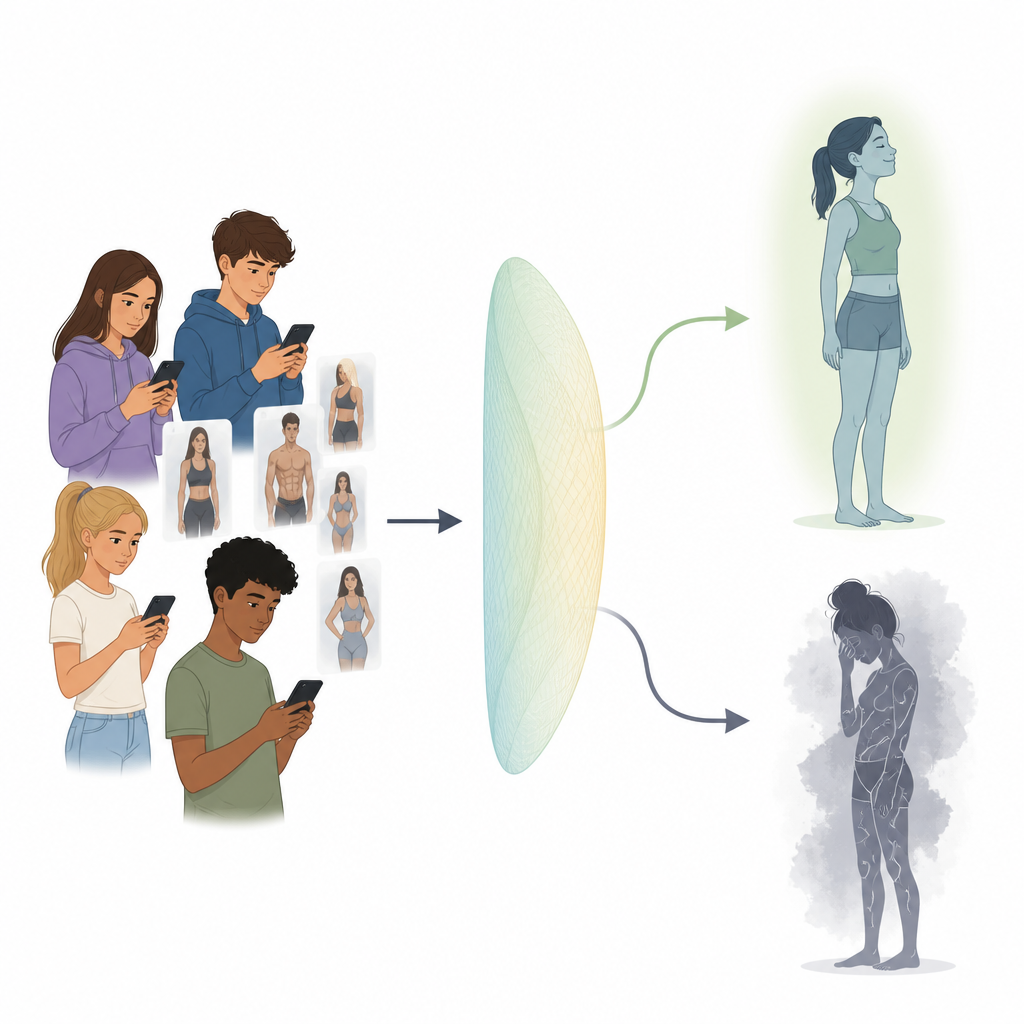
For many teenagers, scrolling through photos and videos is part of daily life, but seeing endless "perfect" bodies online can quietly shape how they feel about their own. This study looks at whether certain coping skills, often called resilience, actually protect teens from feeling worse about their bodies when they engage with appearance focused content on social media or whether the story is more complicated than it seems.
Social media looks and how teens feel
Visual platforms such as Instagram and TikTok encourage what the authors call appearance activity. This includes posting or liking workout and diet content, browsing friends’ fitness or beauty posts, and paying close attention to how people look in photos. Earlier research shows that such activity is linked to lower satisfaction with one’s body and a stronger habit of judging oneself from the outside, almost as if watching one’s body through other people’s eyes. These body image concerns can go hand in hand with anxiety, low mood, shame, and unhealthy eating behaviors.
What the researchers set out to test
The study followed 885 adolescents aged 15 to 19 in Czechia who completed detailed questionnaires at school. The researchers measured how often teens took part in appearance activity on social media, how good they felt about their bodies, and how much they tended to view themselves mainly in terms of looks. They also measured two types of resilience: tuning out idealized bodies in media, and brushing off hurtful comments about appearance. The key question was whether these coping tendencies would soften the link between appearance focused social media use and body image concerns, and whether this might differ for girls and boys.
Surprising patterns in coping with ideal images
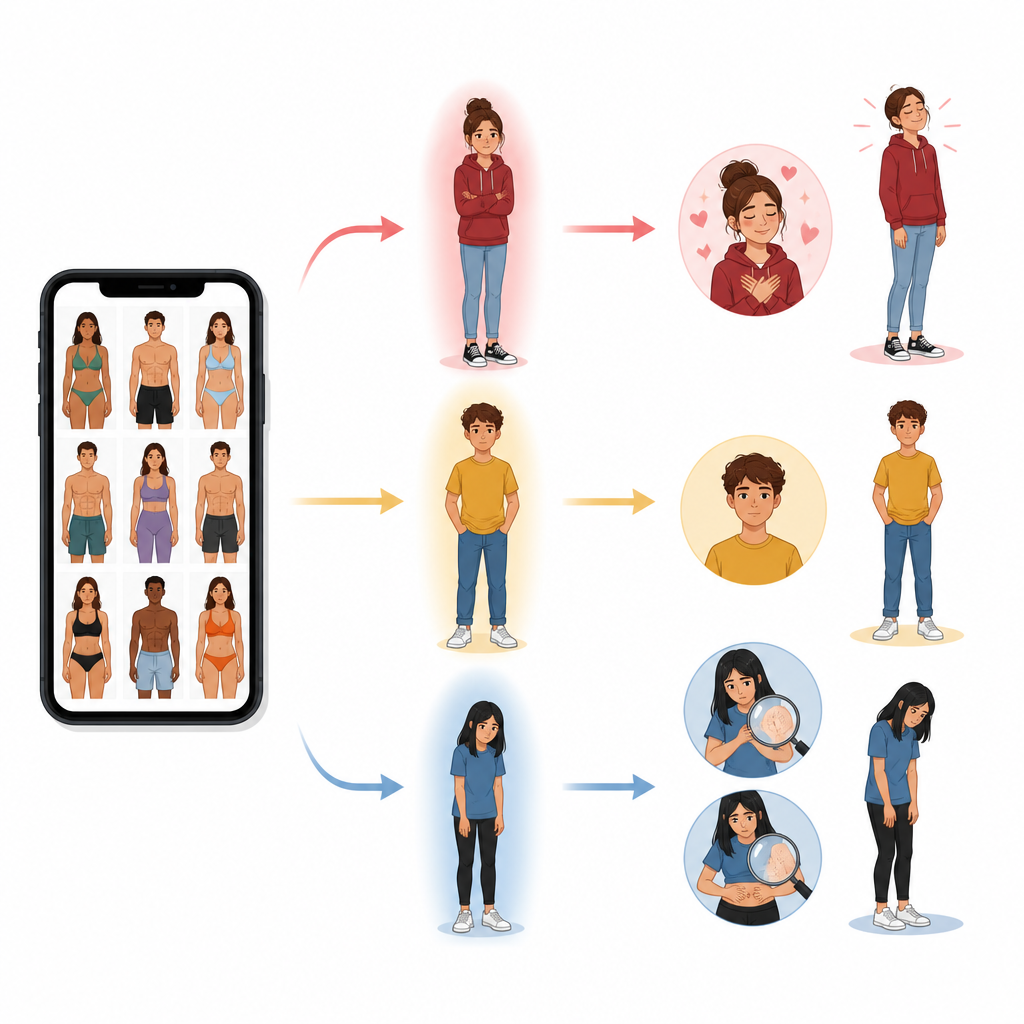
The results suggested a mixed picture. Teens who more often engaged in appearance activity tended to feel worse about their bodies and to focus more on how they look, particularly girls. Those who reported being better at dismissing negative comments about their looks generally had slightly higher body esteem and lower self objectification. However, resilience to idealized bodies in media behaved in an unexpected way. Teens who said they were more likely to distract themselves from idealized images or not take them seriously also reported lower body esteem and higher self objectification overall. When these teens frequently engaged with appearance content, their body concerns were stronger, not weaker. In contrast, adolescents with lower levels of this kind of resilience sometimes reported higher body esteem and less self objectification when they engaged more with appearance content.
Boys, girls, and similar struggles
The patterns were broadly similar for boys and girls. Girls generally showed slightly lower body esteem and more self focused on appearance, but the way resilience worked did not differ much by gender. In both groups, being able to shrug off negative comments was linked to somewhat better body image, yet this did not reliably change how social media activity and body concerns were related. The type of resilience aimed at ideal media bodies seemed especially tangled: rather than clearly protecting teens who were deeply immersed in appearance content, it sometimes coincided with greater worry about looks.
What this means for helping teens
To a lay reader, the main takeaway is that telling teens simply to "be resilient" in the face of perfect bodies online may not be enough and may not always work as expected. Coping skills like ignoring hurtful remarks can be helpful, but resilience to idealized images appears to grow partly out of prior negative experiences with body image and heavy exposure to such content. This makes it hard to know whether resilience is shielding teens or is a sign that they have already struggled. The authors argue that future work should track teens over time and look more closely at how they actually use coping strategies online. Understanding when and how resilience truly protects teens could guide more nuanced education and support around social media and body image.
Citation: Kvardova, N., Literova, A. & Machackova, H. Exploring resilience as a moderator of social media appearance activity and body image concerns in adolescents. Sci Rep 16, 16171 (2026). https://doi.org/10.1038/s41598-026-45442-z
Keywords: adolescent body image, social media use, appearance activity, resilience, self-objectification