Clear Sky Science · en
Utilization of eye care services and associated factors among adults with diabetes mellitus attending a tertiary teaching hospital in Northern Uganda
Why this matters for people living with diabetes
For millions of people living with diabetes, vision loss is a silent threat that can creep in long before symptoms appear. This study from Northern Uganda asks a simple but crucial question: how many adults with diabetes are actually getting their eyes checked, and what helps or hinders them from doing so? The answers shed light on how knowledge, schooling, and time spent living with diabetes can make the difference between preserving sight and facing avoidable blindness.
Seeing the problem behind silent vision loss
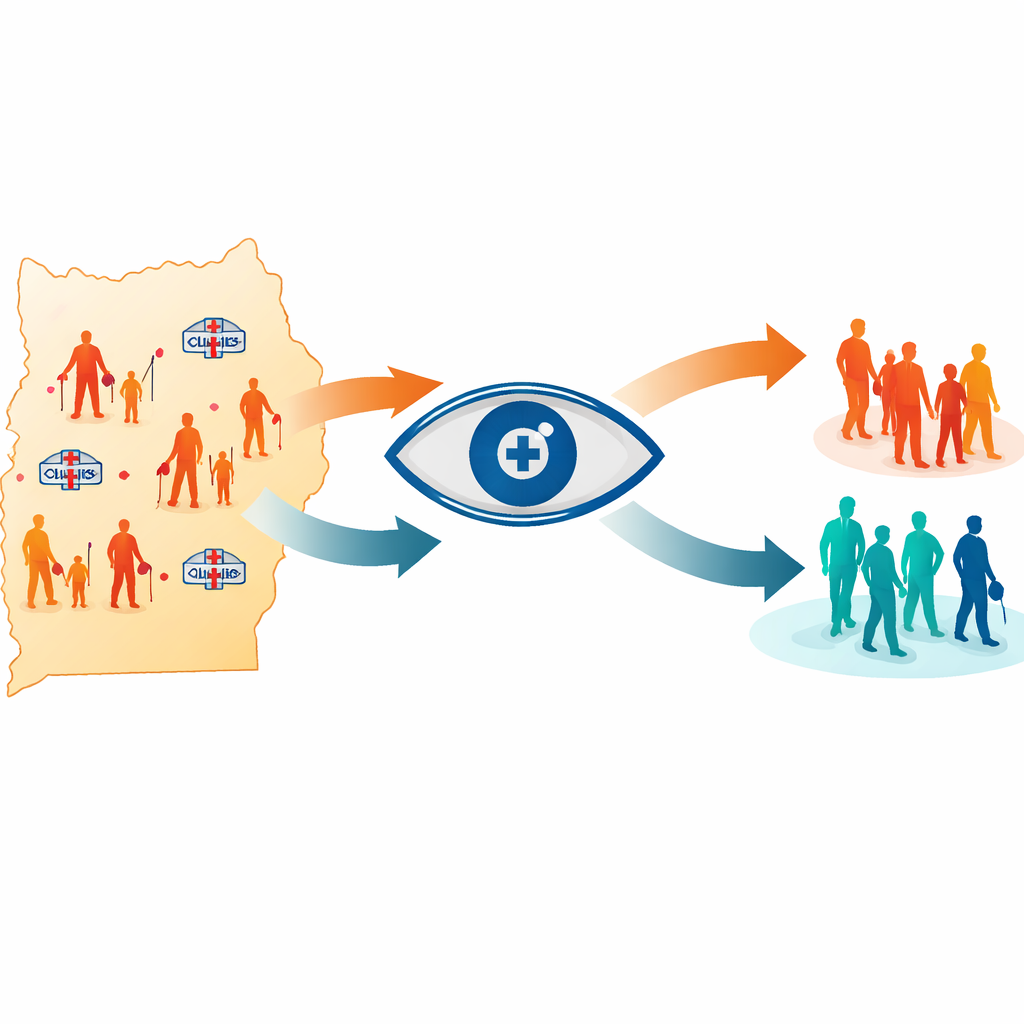
Diabetes is rising worldwide, and one of its most serious complications is damage to the tiny blood vessels at the back of the eye, a condition known as diabetic retinopathy. This damage can lead to blurred vision and blindness, but it often develops quietly, without pain, and can be detected early only through regular eye exams. Health guidelines recommend that people with diabetes have at least one eye examination within five years of diagnosis. Yet, across much of sub-Saharan Africa, very few people with diabetes ever see an eye specialist. In Northern Uganda, where communities still live with the after-effects of conflict and limited health infrastructure, understanding who gets eye care—and who does not—is especially important.
How the study was carried out
Researchers worked at Gulu Regional Referral Hospital, a public teaching hospital that runs a weekly clinic for people with diabetes. Between January and November 2024, they interviewed 419 adults aged 18 and above who were receiving regular diabetes care. Using a structured questionnaire in English or the local Luo language, they collected information on age, gender, schooling, income, distance from a health facility, type and duration of diabetes, other illnesses, and what participants knew about diabetes-related eye disease. The key question was straightforward: had they had an eye check-up in the past five years? The team then used statistical methods to see which factors were linked to actually having had an eye exam.
Who is getting their eyes checked—and who is not
The study found that fewer than half of the participants—about 47 percent—had received at least one eye check-up in the previous five years. Most of the group were women, middle-aged or older, and living with type 2 diabetes. Many had very limited income and almost half lived more than five kilometers from the nearest health facility. When those who had never been examined were asked why, a number mentioned cost and long waiting times, but some simply did not know they should have their eyes checked or felt there was “no need.” At the same time, around six in ten participants were aware that diabetes can harm the eyes, though relatively few could name specific eye conditions.
Education, years with diabetes, and knowledge as turning points
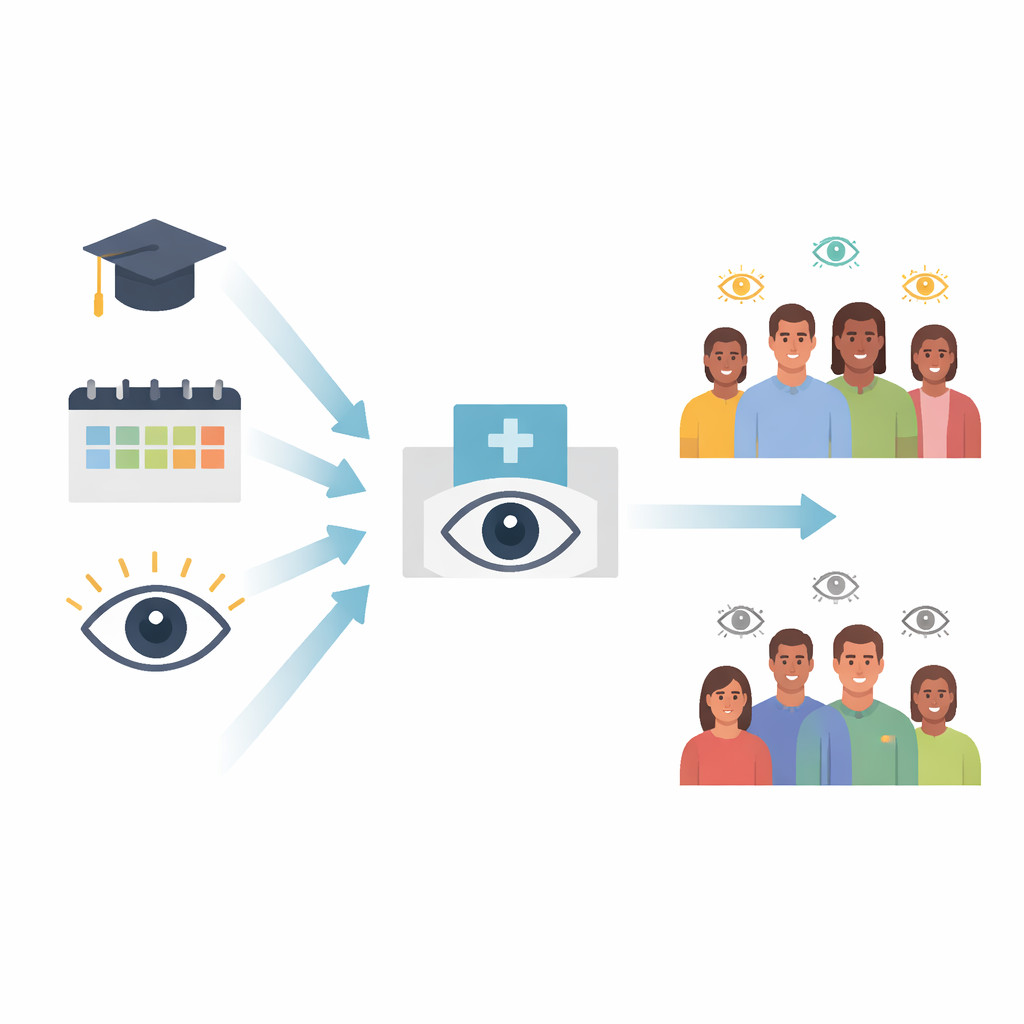
When the researchers looked more closely at the numbers, three patterns stood out. First, education: people who had reached secondary school or higher were much more likely to have had an eye exam than those who had never been to school. Second, time living with diabetes mattered. Compared with those diagnosed within the past year, people who had lived with diabetes for between one and five years, five to ten years, or more than ten years all had higher odds of having seen an eye care provider. Third, simple awareness that diabetes affects the eyes increased the chances of using eye care services. In contrast, factors that might seem important—such as age, gender, income level, religious affiliation, employment status, and even distance from a health facility—did not show a strong link to whether someone had been examined.
What this means for protecting sight
The findings suggest that in this setting, what people know and how long they have lived with diabetes may be more powerful drivers of eye care use than money or geography alone. People who have had diabetes for longer are more likely to experience symptoms, return frequently to clinics, and hear messages about complications. Those with more schooling may find it easier to understand health information and act on recommendations. The authors argue that diabetic clinics should not work in isolation from eye services. Instead, they recommend building routine eye screening into diabetes care, and stepping up clear, targeted education so that every person with diabetes understands that regular eye checks are essential—even before vision becomes blurred. By closing this knowledge and service gap, health systems in Northern Uganda and similar regions could prevent a great deal of avoidable visual impairment and help people with diabetes keep their sight for longer.
Citation: Alem, T., Okello, M.O., Ochieng, J. et al. Utilization of eye care services and associated factors among adults with diabetes mellitus attending a tertiary teaching hospital in Northern Uganda. Sci Rep 16, 14225 (2026). https://doi.org/10.1038/s41598-026-44861-2
Keywords: diabetic retinopathy, eye screening, Northern Uganda, health service use, diabetes complications