Clear Sky Science · en
Lifetime stressor exposure, executive functioning, and internalizing symptoms during emerging adulthood
Why stress in young adults matters
Depression and anxiety often surge during the late teen and early twenties years, just as many people are leaving home, starting higher education, or entering the workforce. This study asks a simple but important question for this age group: do emotional problems during this time relate more to hardships faced in childhood, or to stressful events happening right now, in early adulthood, and does brain-based thinking ability help explain this link?
Looking at stress across the life story
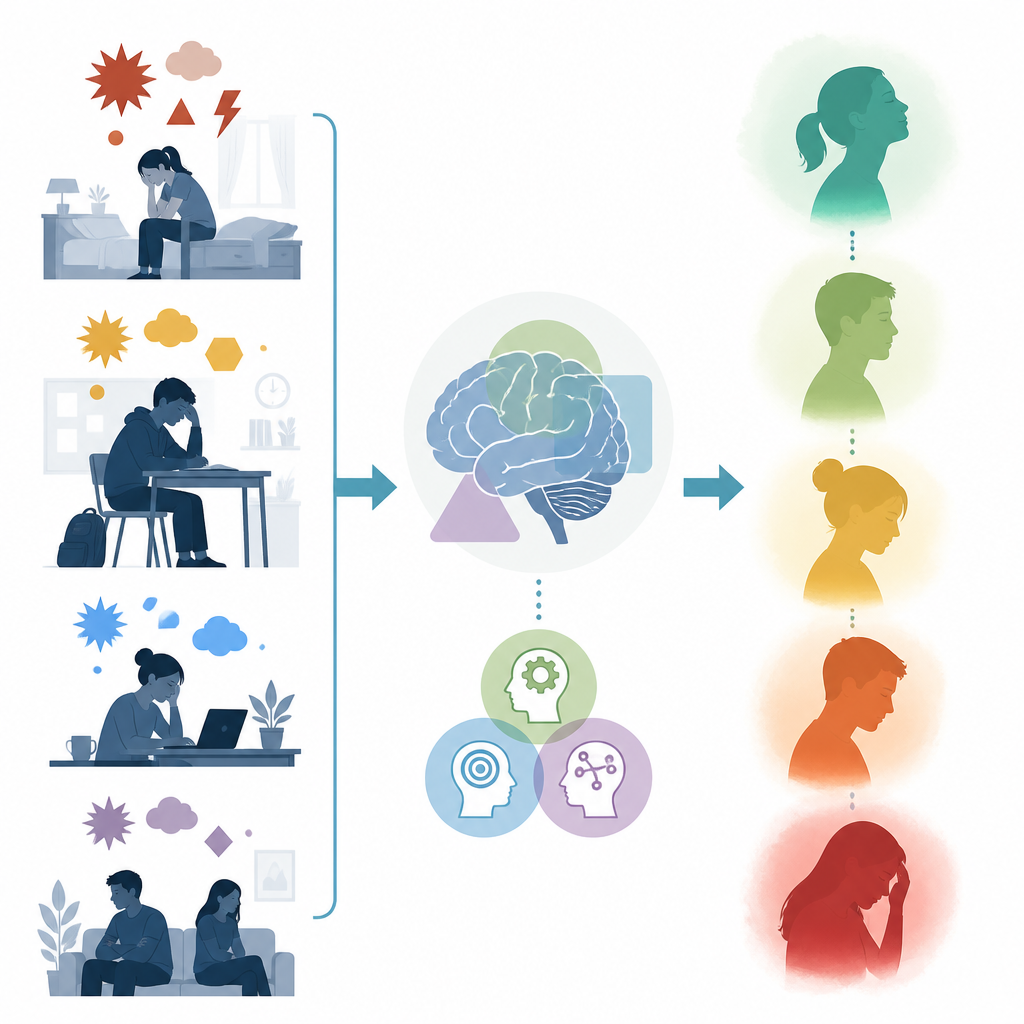
The researchers surveyed 203 young adults aged 18 to 24 about the difficult events they had faced both before age 18 and since turning 18. Using a detailed online interview called the Stress and Adversity Inventory, participants reported a wide range of stressors, such as family conflict, money worries, or health problems. The team counted how many such events occurred in childhood and in early adulthood, and also how severe participants felt these experiences were. They then measured current symptoms of depression and anxiety using a standard distress questionnaire.
Testing everyday thinking skills
To see whether thinking skills might form a bridge between life stress and emotional health, participants also completed a set of computer-based tasks that tap into executive functioning. These tasks measured abilities like holding information in mind, planning ahead, switching attention, and learning new rules. Instead of relying on people’s own ratings of how well they think, the study used performance scores from these tasks to build an overall picture of each person’s executive functioning in everyday problem-solving terms.
Which stress matters most right now
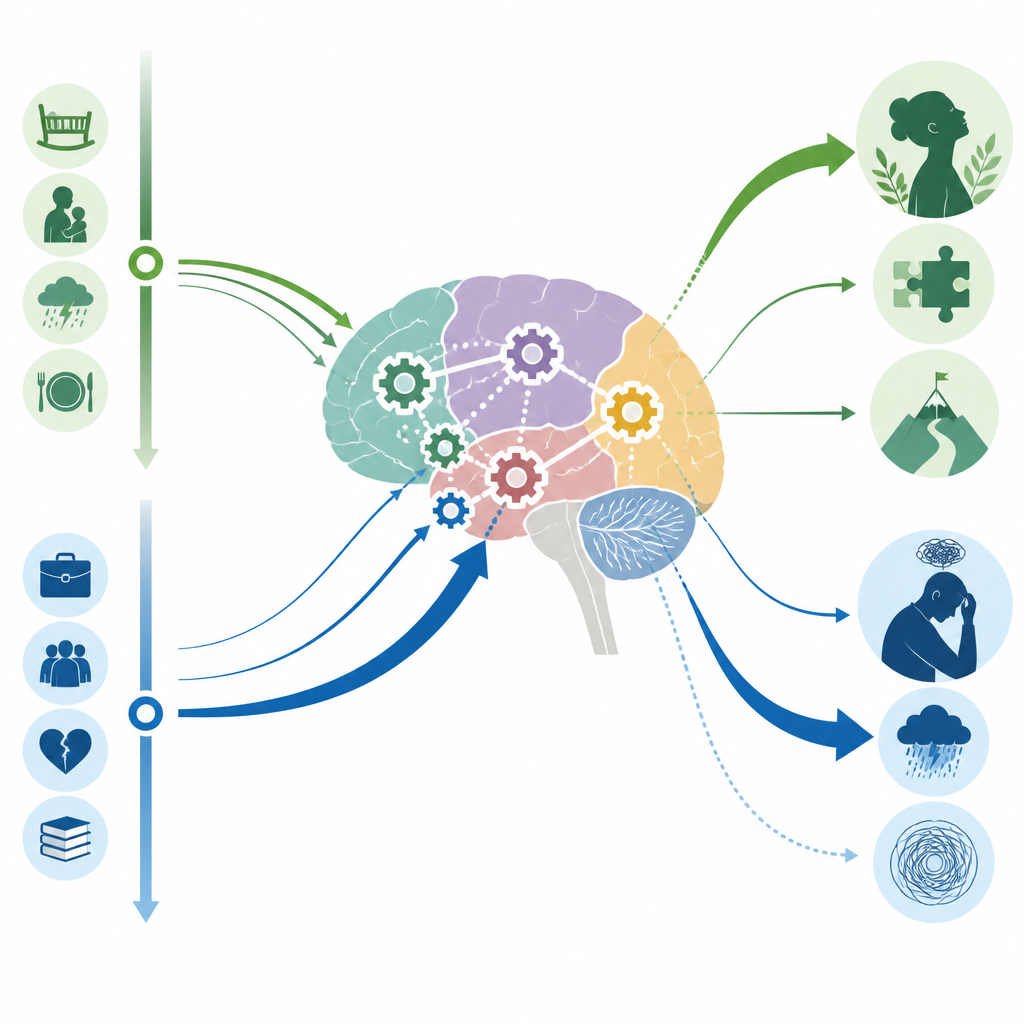
When the researchers looked at childhood and adulthood adversity separately, both were linked to higher levels of depression and anxiety symptoms in emerging adulthood. However, when they placed childhood and adulthood adversity into the same statistical model, a clearer picture emerged. Only stress experienced in early adulthood remained strongly tied to current emotional distress, while the unique contribution of childhood adversity faded. This pattern fits a “recency” view, in which more recent hardships weigh most heavily on present-day mood, at least during this life stage.
Surprising findings about thinking and stress
The team expected that greater adversity would go hand in hand with weaker executive functioning and that this, in turn, would help explain why stress relates to emotional problems. Instead, they found no evidence that executive functioning acted as a middle link between stress and internal distress. Even more unexpectedly, higher levels of childhood adversity were modestly associated with better performance on the thinking tasks, while adulthood adversity showed no clear tie to these skills. This pattern hints that some young adults who grew up with hardship may develop certain cognitive strengths that help them navigate demanding or unpredictable environments.
What this means for young adults
Overall, the study suggests that for people in their late teens and early twenties, recent and ongoing stress may be more tightly connected to depression and anxiety than distant childhood experiences, even though early hardship still matters. At the same time, the thinking skills measured here did not explain why adversity and internal distress go together, and childhood adversity was linked to slightly stronger, not weaker, performance on these tasks. For a layperson, the takeaway is that supporting young adults through current life challenges could be especially important for emotional well-being, while also recognizing that some cognitive abilities may adapt in complex ways to earlier stress.
Citation: Wright, L., Rebello, G., Browne, D.T. et al. Lifetime stressor exposure, executive functioning, and internalizing symptoms during emerging adulthood. Sci Rep 16, 15593 (2026). https://doi.org/10.1038/s41598-026-44738-4
Keywords: emerging adulthood, stress, depression, executive functioning, childhood adversity