Clear Sky Science · en
Beyond iron deficiency: A comprehensive national survey of anaemia etiology in Sri Lankan young adults
Why tired blood matters
Anaemia—often called “tired blood”—is one of the world’s most common health problems, especially in young people. It can cause fatigue, poor concentration, and increased illness, yet many people assume it always comes from not getting enough iron. This study from Sri Lanka took a national look at young adults and asked a deeper question: when someone is anaemic, how often is iron really to blame, and how often are other hidden causes at work?
Looking across a nation
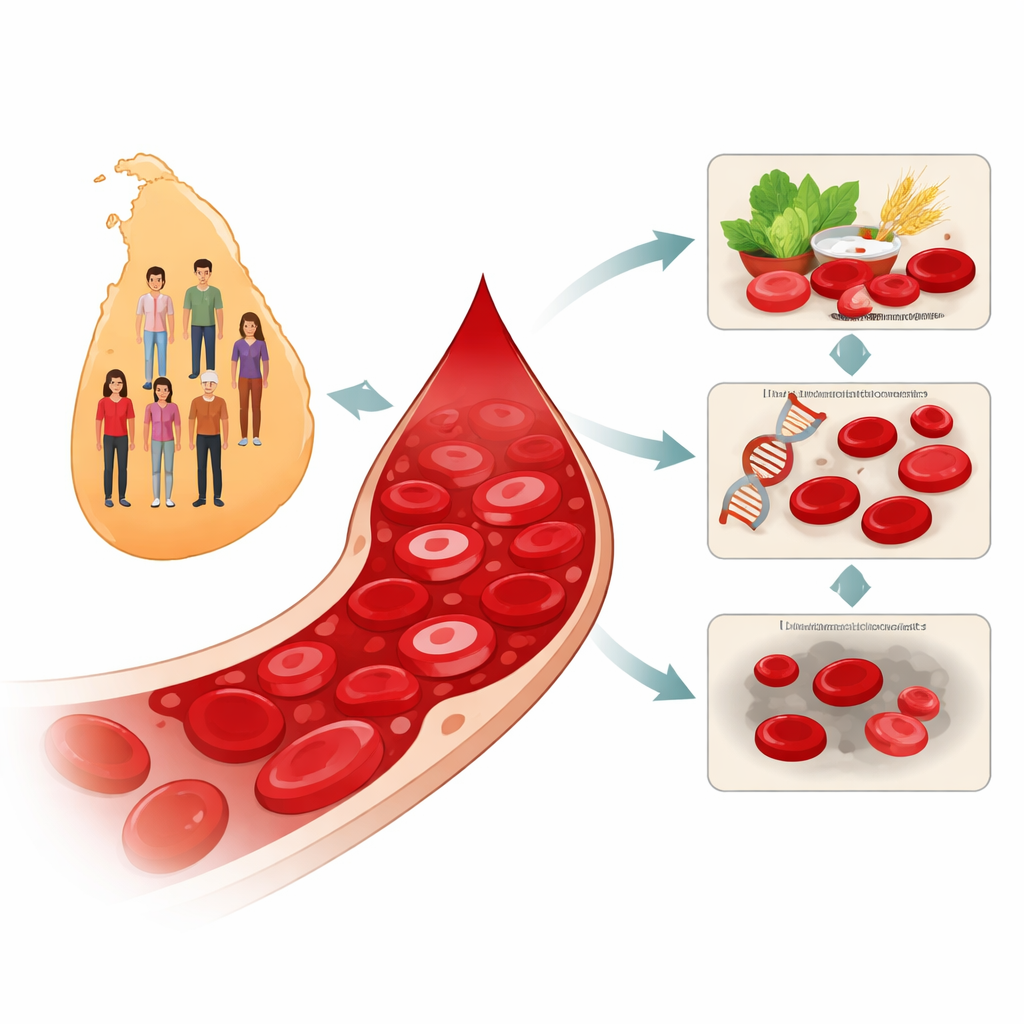
Researchers surveyed 1,800 young adults aged 18 to 30 from all nine provinces of Sri Lanka using a carefully planned sampling strategy. Each volunteer answered health questions and provided a blood sample. The team first checked who had anaemia using standard cut-offs for haemoglobin, the oxygen-carrying protein in red blood cells. They then followed a step-by-step testing pathway, starting with common nutritional problems and moving on to more specialised tests only when needed. This approach allowed them to estimate how widespread anaemia really is in the community and to untangle the mix of reasons behind it.
How common is anaemia?
The study found that 15 percent of these young adults were anaemic—a clear public health issue, but lower than some earlier reports had suggested. Most cases were mild, and anaemia was far more frequent in women (about one in four) than in men (about one in twenty). Rates varied somewhat between ethnic groups but not dramatically across provinces. These findings support the idea that earlier, higher estimates may have overrepresented particularly vulnerable pockets of the population, while this survey gives a more balanced nationwide picture.
More than just missing iron
Iron deficiency was still the single biggest cause, responsible for roughly half of all anaemia cases. But other vitamin shortages also mattered: low folate and vitamin B12 together accounted for more than 40 percent of cases. Many people had more than one deficiency at the same time. The researchers also found that a sizeable minority of anaemic individuals carried inherited changes in their haemoglobin genes—such as thalassaemia traits or other haemoglobin variants. However, these carrier states were usually mild on their own and often appeared alongside nutritional problems, meaning they rarely explained anaemia by themselves.
Chasing the unexplained cases
Even after checking iron, folate, vitamin B12, and common haemoglobin traits, about 17 percent of anaemic participants still had no clear diagnosis. The team invited these “uncharacterised” individuals back for repeat testing. Some no longer had anaemia, suggesting that their earlier low levels were temporary—perhaps due to minor infections or day-to-day variation. For those with persistent anaemia, the researchers ran advanced tests on red blood cell enzymes and membranes, as well as whole-exome sequencing to scan many genes at once. This deeper dive uncovered a possible case of hereditary spherocytosis, a disorder where fragile, sphere-shaped red cells break down early, and genetic changes suggestive of rare conditions like congenital dyserythropoietic anaemia and dyskeratosis congenita. These findings point to uncommon inherited problems that would never be seen with basic screening alone, though the authors stress that many of these gene changes still need further confirmation.
What this means for everyday health
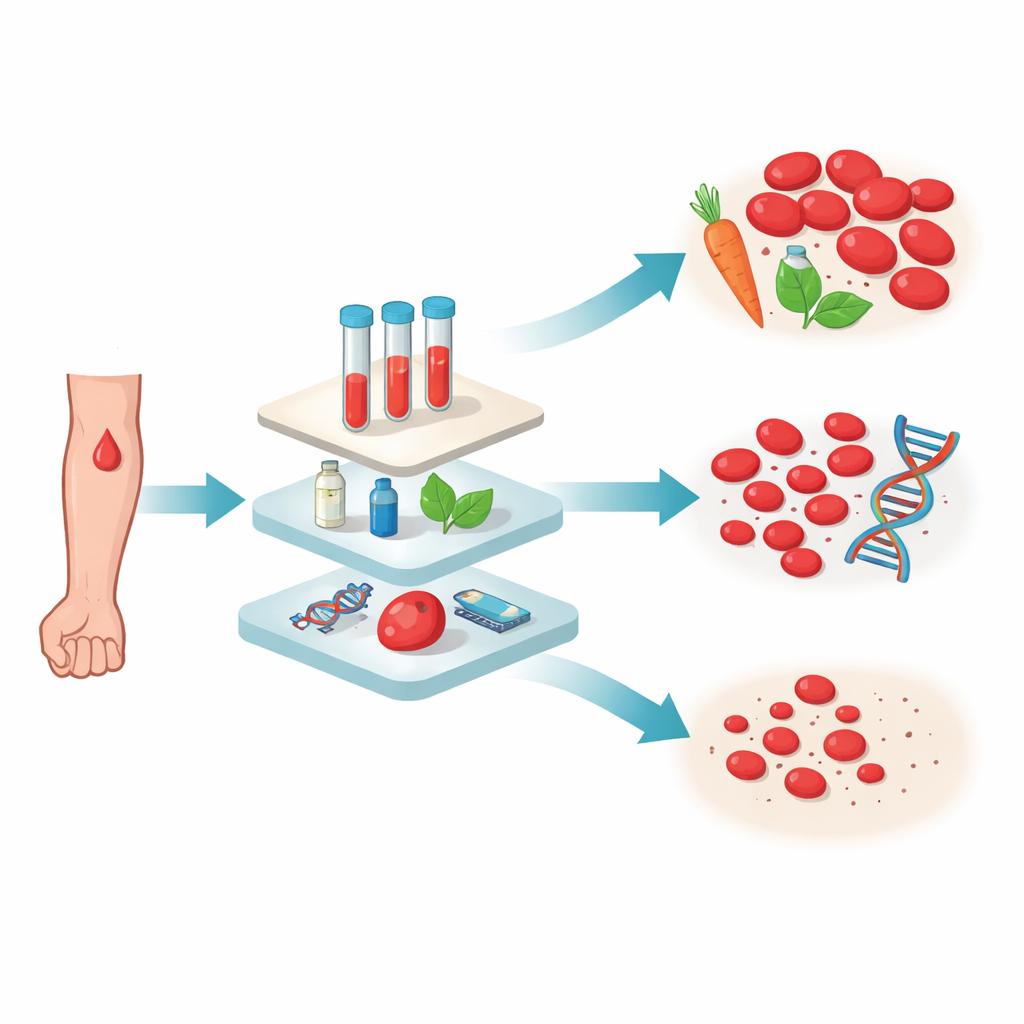
For a lay reader, the take-home message is that anaemia in young adults is common, mostly mild, and usually linked to nutrition—but not always in simple ways. Many people have overlapping vitamin shortages, and some carry silent inherited traits that can worsen low blood counts when combined with poor diet or illness. A small but important group have rarer genetic conditions that only show up when doctors look beyond routine tests. The study suggests that public health efforts in Sri Lanka and similar countries should continue to focus on improving diet and iron intake, while also recognising that a “one-size-fits-all” explanation does not fit everyone. When anaemia persists or seems unusual, broader testing that considers other vitamins and inherited blood disorders can make the difference between a vague label and a precise, actionable diagnosis.
Citation: Amarasingha, D., Silva, R., Perera, L. et al. Beyond iron deficiency: A comprehensive national survey of anaemia etiology in Sri Lankan young adults. Sci Rep 16, 14134 (2026). https://doi.org/10.1038/s41598-026-44168-2
Keywords: anaemia, iron deficiency, Sri Lanka, young adults, inherited blood disorders