Clear Sky Science · en
Evaluation of depression, anxiety, and stress levels during the internship clinical training process of dentistry students
Why the mental health of dental trainees matters to everyone
Most people meet dentists only as confident professionals in white coats, but before they reach that stage, dental students go through years of demanding training. This study lifts the curtain on what those years feel like from the inside, focusing on how much depression, anxiety, and stress dental interns experience during their clinical internships—and why that matters for both their well-being and the quality of care patients receive.
The high-pressure leap from classroom to clinic
In Türkiye, dental education typically lasts five years. The fourth year marks a turning point, when students move from practicing on models to treating real patients under supervision. They rotate through eight specialties, from children’s dentistry to complex tooth replacements, while juggling new responsibilities: applying detailed knowledge, learning precise hand skills, managing patient fears and expectations, and meeting clinic requirements. The authors suspected that this intense transition might heavily tax students’ mental health, especially during the early stages of clinical work.

Taking the pulse of students’ mood and stress
The researchers surveyed 126 fourth- and fifth-year dental interns at a Turkish university during the middle of their final clinical term, a period focused mainly on patient care rather than exams. Students filled out an anonymous questionnaire that captured their age, gender, financial support, exam preparation, and how satisfied they felt with relationships with classmates and faculty. They also rated how difficult they found each clinical specialty and completed a standard mental health scale that measures levels of depression, anxiety, and stress over the previous week. This allowed the team to see not just how common these problems were, but how they related to year of study, money worries, and social connections.
Striking levels of emotional strain
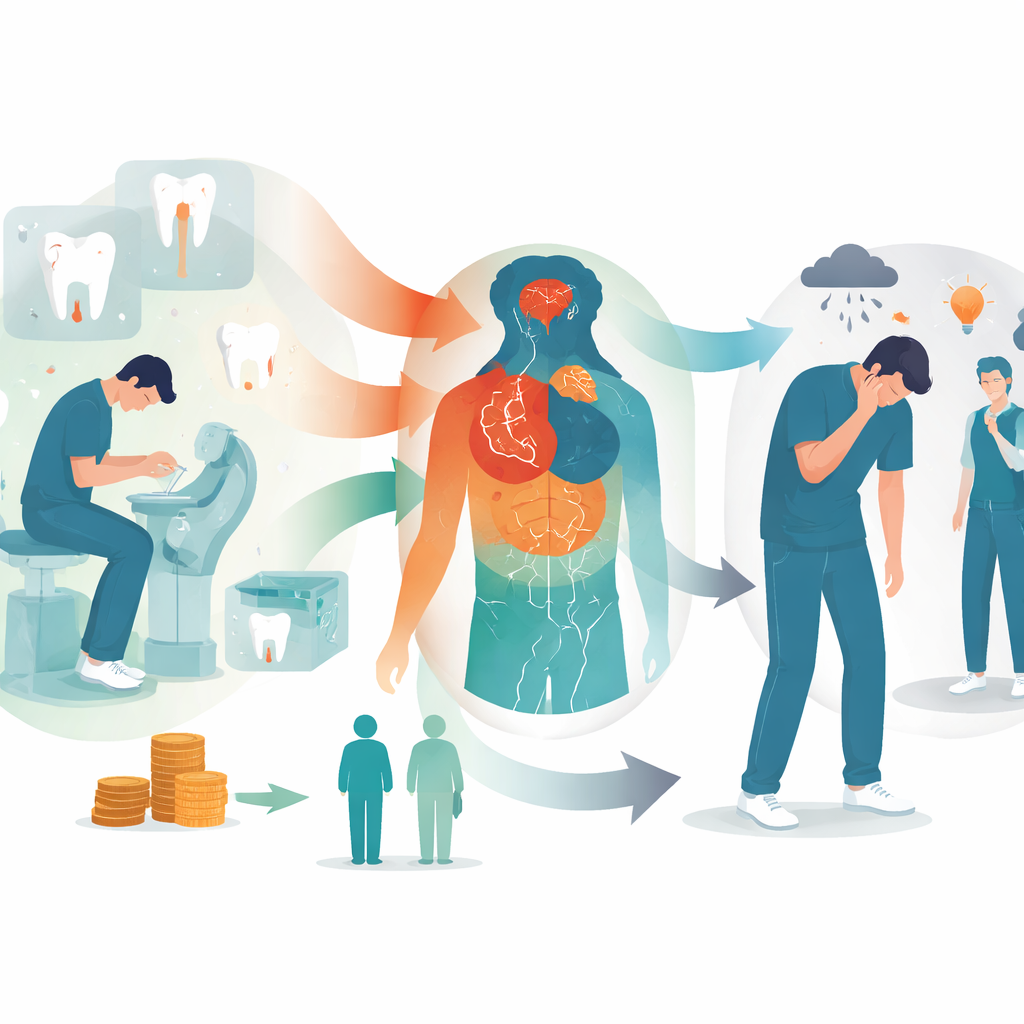
The picture that emerged was sobering. On average, students showed relatively high scores for depression, anxiety, and stress, and a large share fell into the most severe categories—about two in five for anxiety and nearly one in three for depression. Fourth-year interns, who were newer to direct patient care, reported substantially higher emotional strain than fifth-year students across all three measures. This pattern suggests a powerful “transition shock” when students first enter the clinic: they must suddenly combine theory, delicate manual work, and real patient responsibility, which appears to trigger especially intense worry and tension.
How gender, money, and relationships shape distress
The study also found that not all students were affected in the same way. Female students, on average, reported higher depression, anxiety, and stress than male students, echoing patterns seen in many countries and disciplines. Financial security played a clear role: those without family financial support showed more depression and stress, hinting that money worries amplify the burden of long, demanding clinical days. Social dynamics mattered as well. Students who felt satisfied only with their peers—but not with their teachers—reported the highest emotional strain. By contrast, those who felt supported by both faculty and classmates showed noticeably lower distress, suggesting that a trusting, approachable teaching staff can buffer the pressures of clinical work.
When specific specialties feel overwhelming
Not every part of the internship was equally stressful. Students who rated prosthodontics—where they design and fit crowns, bridges, and other complex replacements—as especially difficult also tended to report higher depression, anxiety, and stress. This field often involves multi-step treatments, fine technical detail, and high cosmetic expectations from patients, which may heighten fear of mistakes and time pressure. Fourth-year interns also perceived several specialties, including oral surgery and orthodontics, as tougher than did fifth-year students, reinforcing the idea that experience and adaptation gradually reduce the psychological load.
What this means for students, schools, and patients
For a lay reader, the core message is clear: many dental students are struggling emotionally during the very years when they learn to care for patients. High levels of depression, anxiety, and stress can sap concentration, cloud judgment, and make patient interactions more difficult. The authors argue that dental schools should treat mental health support as a built-in part of professional training, not an optional extra. They suggest practical steps such as structured programs to ease the transition into clinical work, readily available counseling, training in stress and time management, and stronger financial and mentoring support. By investing in the emotional resilience of dental trainees, schools can help protect students’ well-being and, ultimately, improve the safety and quality of the care that future patients receive.
Citation: Başkan, B., Başkan, H.K. Evaluation of depression, anxiety, and stress levels during the internship clinical training process of dentistry students. Sci Rep 16, 12651 (2026). https://doi.org/10.1038/s41598-026-43715-1
Keywords: dental students, internship stress, depression and anxiety, clinical training, student mental health