Clear Sky Science · en
CD28 co-stimulatory domain enhances efficacy of CER T cell therapy compared to 4-1BB in an ovarian cancer mouse model
Why this research matters for patients
Ovarian cancer is often discovered only after it has quietly spread through the abdomen, and many women with advanced disease still die despite surgery and chemotherapy. Immunotherapy—using the body’s own immune cells to fight cancer—has transformed some blood cancers but has struggled in solid tumors like ovarian cancer. This study explores a new twist on T cell therapy that aims to home in on a receptor commonly found on ovarian cancer cells and asks a practical design question: which internal “engine” inside these T cells makes them better cancer killers?
A new way to steer immune cells
Traditional engineered T cell therapies often rely on man‑made antibody fragments to recognize tumors. Here, the researchers used a different strategy called a chimeric endocrine receptor, or CER. Instead of an antibody, the outside of these T cells carries follicle‑stimulating hormone (FSH), a natural hormone best known for its role in fertility. Many ovarian cancers display the matching follicle‑stimulating hormone receptor (FSHR) on their surface. By giving mouse T cells an FSH‑based receptor, the team directed them specifically toward FSHR‑positive ovarian tumor cells, aiming for precise targeting with minimal damage to normal tissues.
Building a tougher ovarian cancer model
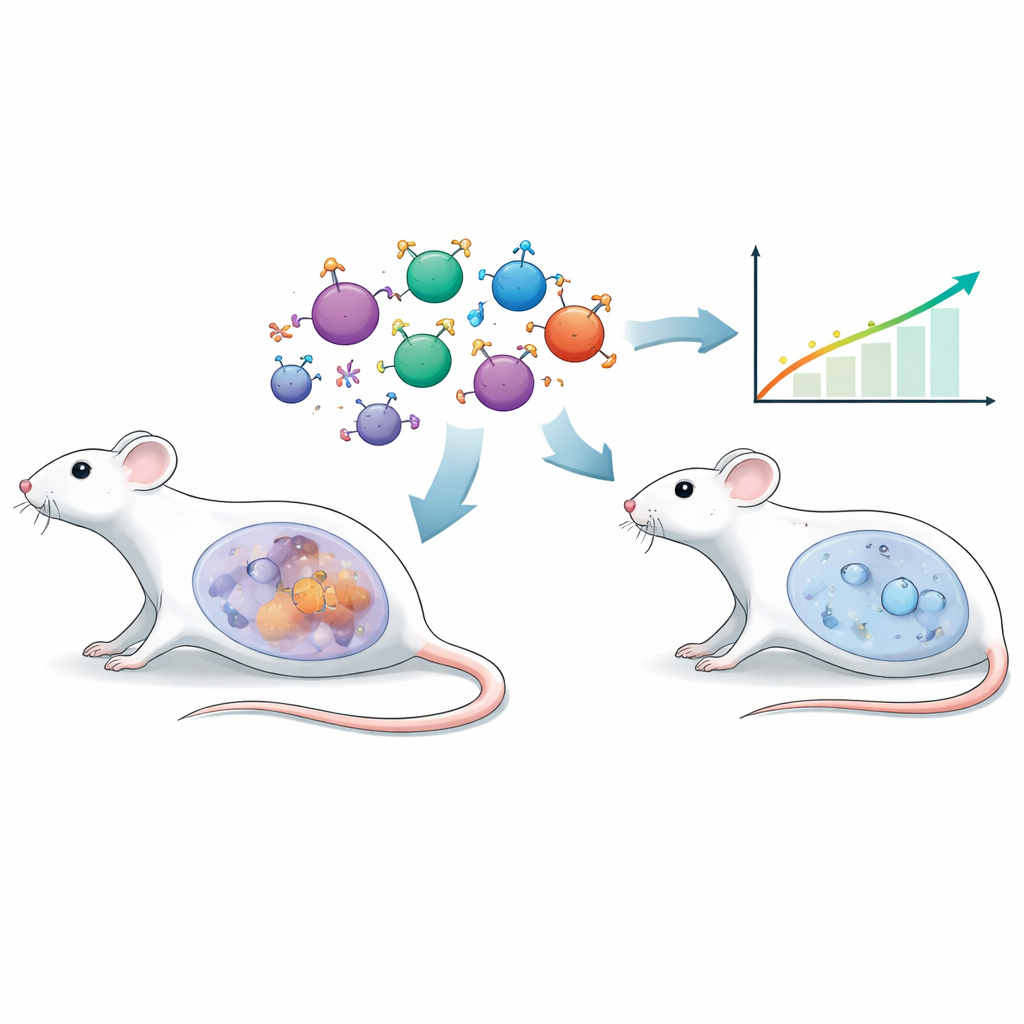
To test this approach in a realistic setting, the scientists used a mouse ovarian cancer line called ID8 and engineered a version that overexpresses FSHR (ID8‑FSHR). When implanted into the abdomen of mice, these FSHR‑rich tumors grew more aggressively than the original line. The animals gained weight faster due to fluid buildup, had higher tumor signals on imaging, and died sooner. Gene activity in the tumors shifted toward cancer‑promoting programs, and the surrounding fluid showed broad changes in proteins and metabolites that signaled a more hostile, immune‑dampening environment. Importantly, cells from ascites fluid of eight women with epithelial ovarian cancer also showed FSHR, supporting the clinical relevance of this target.
Comparing two internal engines in T cells
Inside every engineered receptor is a signaling module that tells the T cell how strongly and how long to respond. The team compared two widely used co‑stimulatory designs—CD28ζ and 4‑1BBζ—within otherwise identical FSH‑CER T cells, alongside a minimal control version. In laboratory dishes, FSH‑CER T cells with the CD28ζ module (called FSH‑28ζ) consistently outperformed those with 4‑1BBζ. They killed FSHR‑positive tumor cells more efficiently, divided more robustly, shifted into memory‑like states associated with lasting immunity, and released higher levels of inflammatory messengers such as interferon‑gamma and tumor necrosis factor. Molecular readouts of signaling strength and activation markers confirmed that the CD28‑based design delivered a more powerful early punch.
Testing the therapy in living mice
When mice bearing ID8‑FSHR tumors received a single infusion of FSH‑CER T cells, the CD28‑equipped cells again stood out. Animals treated with FSH‑28ζ T cells had lower tumor signals, less fluid buildup, and lived significantly longer than those given either 4‑1BBζ or the inactive control cells. At the time of detailed immune sampling, tumor cells were nearly undetectable in the abdominal wash of CD28‑treated mice. However, the study also revealed a downside: by one week after infusion, most of the engineered T cells in the tumor region bore multiple “exhaustion” markers, and overall numbers of CER T cells were low, indicating that the harsh tumor environment was wearing them out despite their superior initial activity.
When tumor fluid fights back
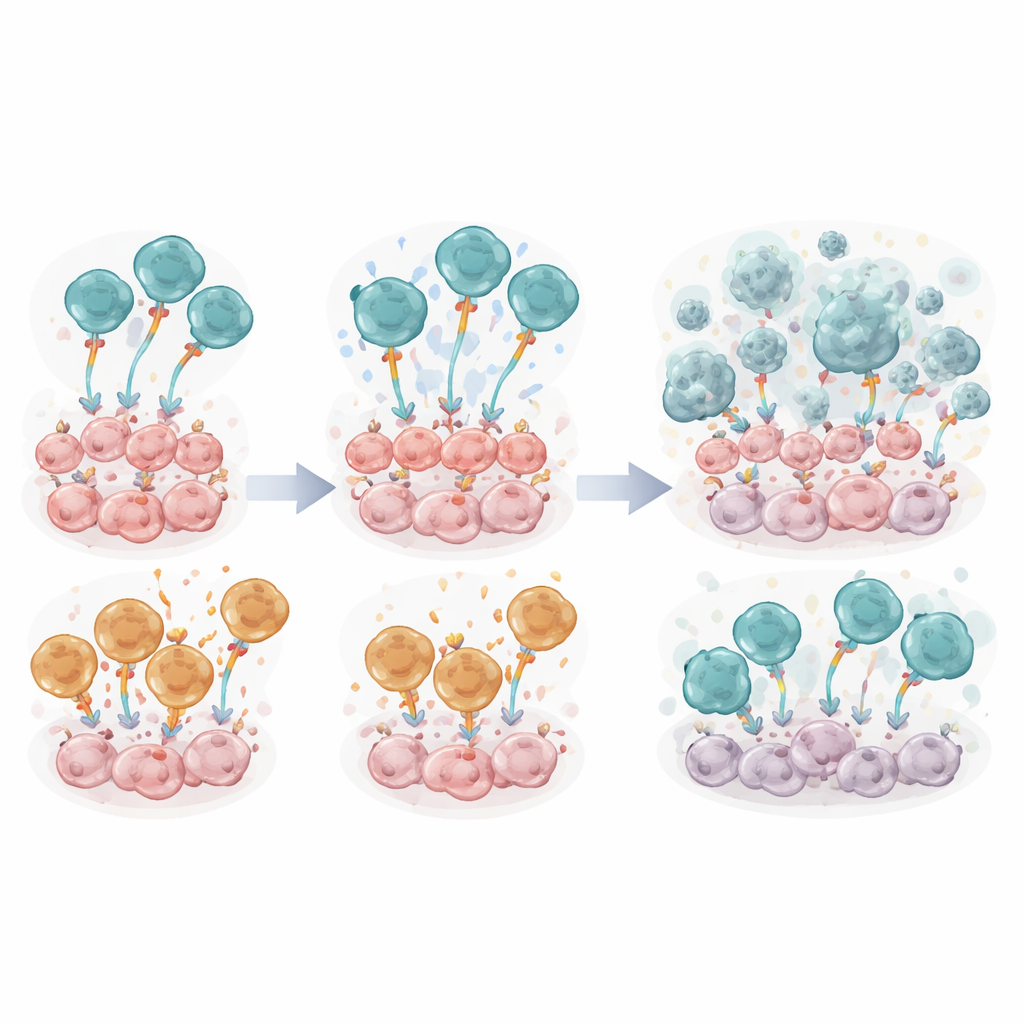
The researchers next asked why the abdominal fluid from FSHR‑positive tumors was so suppressive. When they mixed ascites from these mice into lab cultures, it sharply reduced the killing ability, growth, and signaling of FSH‑CER T cells, especially the 4‑1BBζ version, while having little effect on standard CD19 CAR T cells designed for a different target. Careful protein analysis showed no evidence that tumor cells were shedding FSHR into the fluid to block the receptors. Instead, experiments in immune‑deficient mice that cannot make antibodies pointed to another culprit: factors produced by the animal’s own B or T cells in response to FSHR‑overexpressing tumors, likely including anti‑FSHR antibodies, that interfere specifically with this hormone‑based targeting strategy.
What this means for future treatments
For a lay reader, the main message is that not all engineered T cells are created equal, and the details of their internal wiring matter. In this ovarian cancer mouse model, T cells armed with an FSH‑based receptor and a CD28ζ signaling core were more potent tumor killers and extended survival better than those built with a 4‑1BBζ core. At the same time, the work exposes how the fluid environment around ovarian tumors can sap the strength of these immune cells, possibly through antibodies against the very receptor they target. The study supports CD28‑based FSH‑CER T cells as a promising blueprint for future ovarian cancer immunotherapies, while underscoring that any clinical strategy will need to pair such cells with measures that prevent or reverse immune exhaustion and counteract the tumor’s suppressive milieu.
Citation: Beatty, N.J., Ma, M., Goala, P. et al. CD28 co-stimulatory domain enhances efficacy of CER T cell therapy compared to 4-1BB in an ovarian cancer mouse model. Sci Rep 16, 13068 (2026). https://doi.org/10.1038/s41598-026-43225-0
Keywords: ovarian cancer, T cell therapy, immunotherapy, follicle-stimulating hormone receptor, tumor microenvironment