Clear Sky Science · en
Demirjian’s and Cameriere’s methods for estimating the 18-year legal age threshold using third molar maturity in a Northern Thai population
Why Teeth Can Matter in the Courtroom
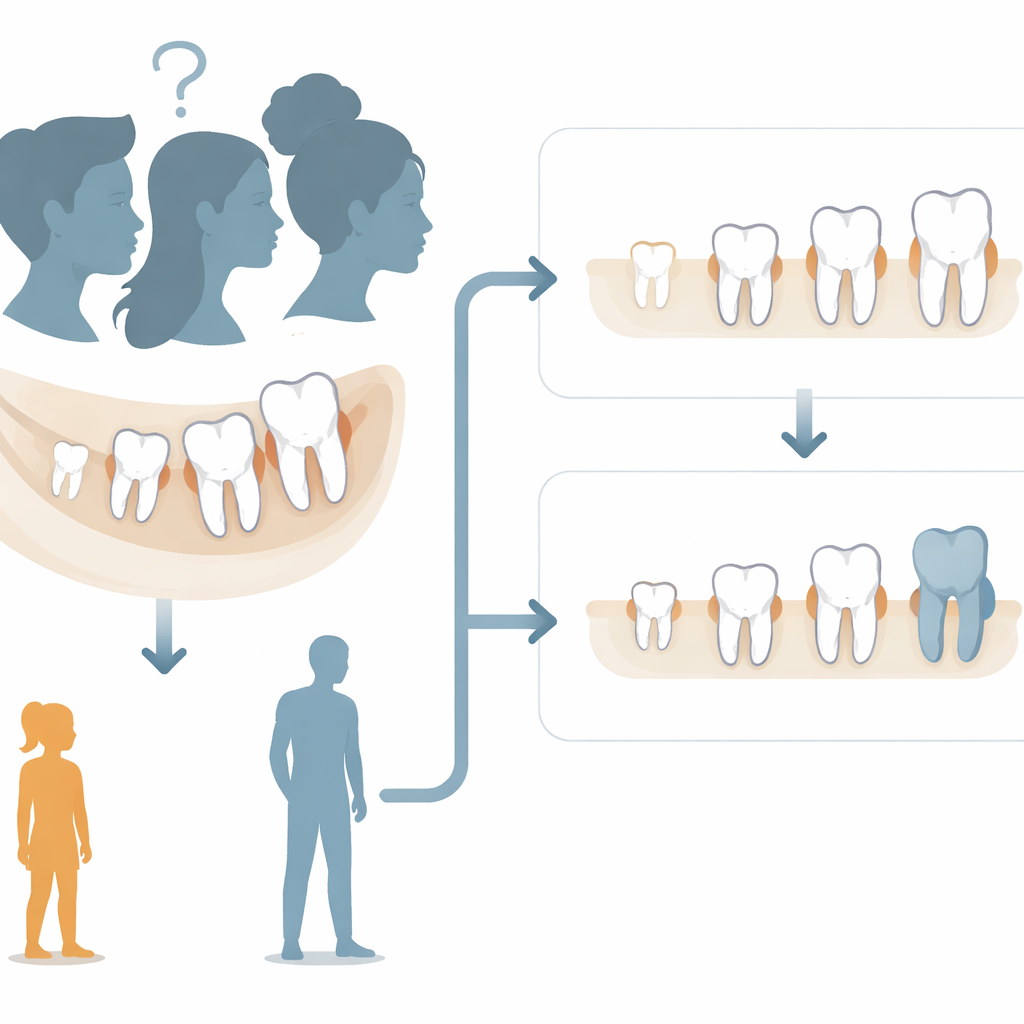
When a young person has no reliable ID, judges and doctors may still need to know whether the individual is legally a child or an adult. In many countries, including Thailand, the age of 18 marks a sharp line that affects criminal responsibility, protection from exploitation and access to services. This study explores how the growth of the wisdom teeth in the lower jaw can help estimate whether someone has likely passed that legal threshold, focusing specifically on young people from Northern Thailand.
Looking at the Last Teeth to Grow
Wisdom teeth, or third molars, are the final teeth to develop, usually during the teenage years and early twenties. Because of this, dentists and forensic experts often turn to X‑rays of these teeth when birth records are missing or doubtful. The researchers in this study examined panoramic dental X‑rays from 260 healthy Northern Thai individuals aged 14 to 23. Their goal was to see how well two established systems, Demirjian’s staging method and Cameriere’s maturity index, could tell whether a person was probably at least 18 years old.
Two Ways to Read a Tooth
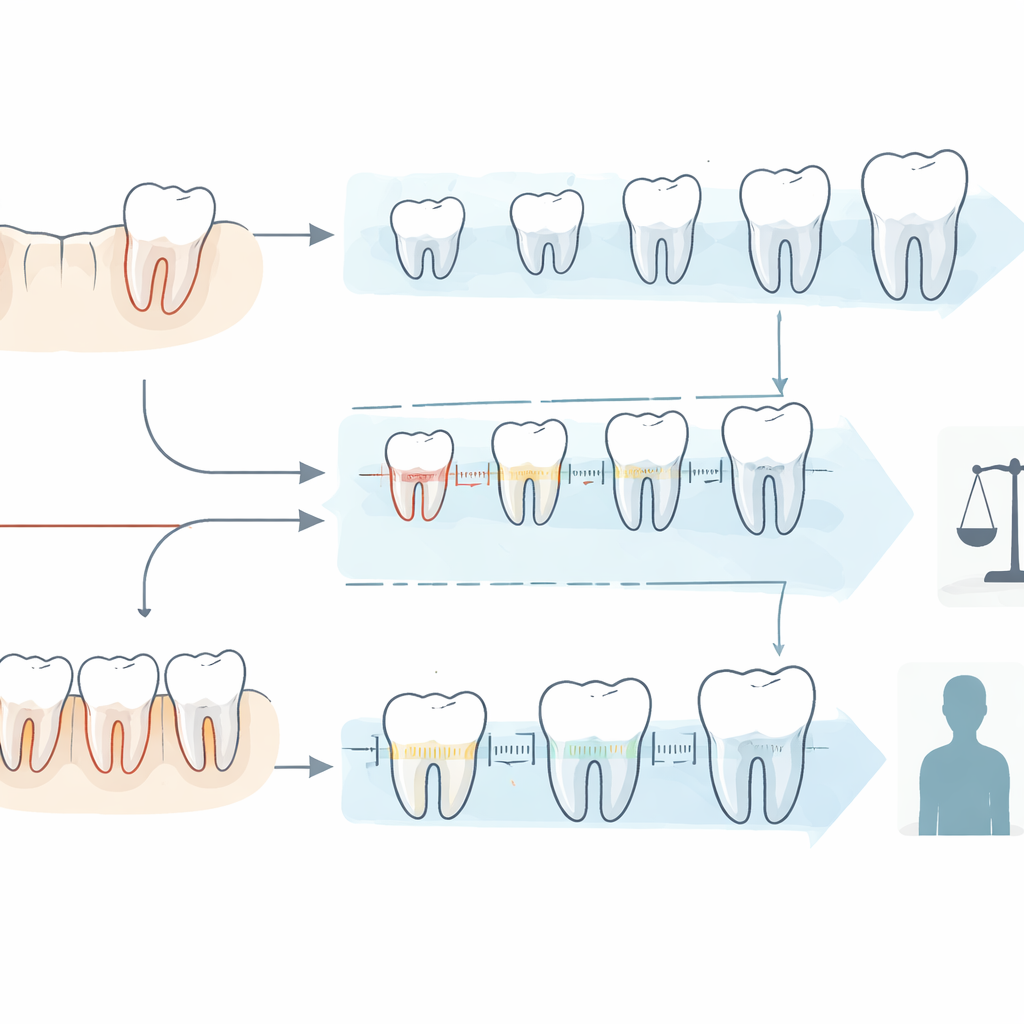
Demirjian’s method treats tooth development like steps in a staircase. Each lower wisdom tooth is placed into one of eight stages, from early crown formation to a fully formed root with the tip completely closed. The final stage, called stage H, has often been linked with adulthood. Cameriere’s approach is more like reading a ruler. It focuses on how open the tips of the roots are, turning that gap into a number called the third molar maturity index. As the tooth matures, these gaps close and the index value shrinks toward zero, allowing cut‑off values to be set for deciding whether someone is likely under or over 18.
Testing Accuracy in Northern Thai Youth
The team calculated a range of diagnostic statistics that, in simple terms, measure how often the methods correctly identify adults while avoiding the serious mistake of classifying children as adults. They found strong links between tooth maturity and actual age for both techniques. Among the Demirjian stages, only the most advanced one, stage H, consistently provided very high confidence that a person was at least 18, although many adults had not yet reached that stage. For Cameriere’s index, a commonly used cut‑off in other countries (a value below 0.08) worked fairly well in this population, but a much lower cut‑off, below 0.02, offered especially strong reassurance that an individual was likely an adult, particularly in males.
Balancing Protection and Certainty
From a legal and ethical standpoint, the cost of wrongly calling a child an adult is higher than the reverse. For that reason, the authors focused on cut‑off points that produced very few “false adults,” even if that meant some adults would still be labeled uncertain. Both Demirjian’s stage H and Cameriere’s stricter index cut‑off showed excellent ability to avoid such errors in this Northern Thai sample. However, these strict thresholds missed many true adults, underlining that wisdom‑tooth‑based estimates, by themselves, cannot provide a perfectly sharp answer for every individual case.
What This Means in Everyday Terms
The study concludes that, in Northern Thai youth, a fully matured lower wisdom tooth or nearly closed root tips strongly suggest that a person has likely reached 18 years of age. Still, because people mature at different rates and because the methods sometimes overlook adults, the authors stress that these dental indicators should only be one part of a broader assessment that may include other scans and physical examinations. In short, X‑rays of wisdom teeth can offer powerful clues—but not final proof—when the justice system must decide whether someone should be treated as a child or an adult.
Citation: Chaipattanawan, N., Chamart, C., Lertromyanant, C. et al. Demirjian’s and Cameriere’s methods for estimating the 18-year legal age threshold using third molar maturity in a Northern Thai population. Sci Rep 16, 12527 (2026). https://doi.org/10.1038/s41598-026-43185-5
Keywords: forensic age estimation, wisdom tooth development, legal adulthood threshold, dental radiography, Northern Thai population