Clear Sky Science · en
Effects of individualized PEEP titration on intraoperative cardiac output in thoracoscopic lung surgery: a prospective randomized trial
Why this matters in the operating room
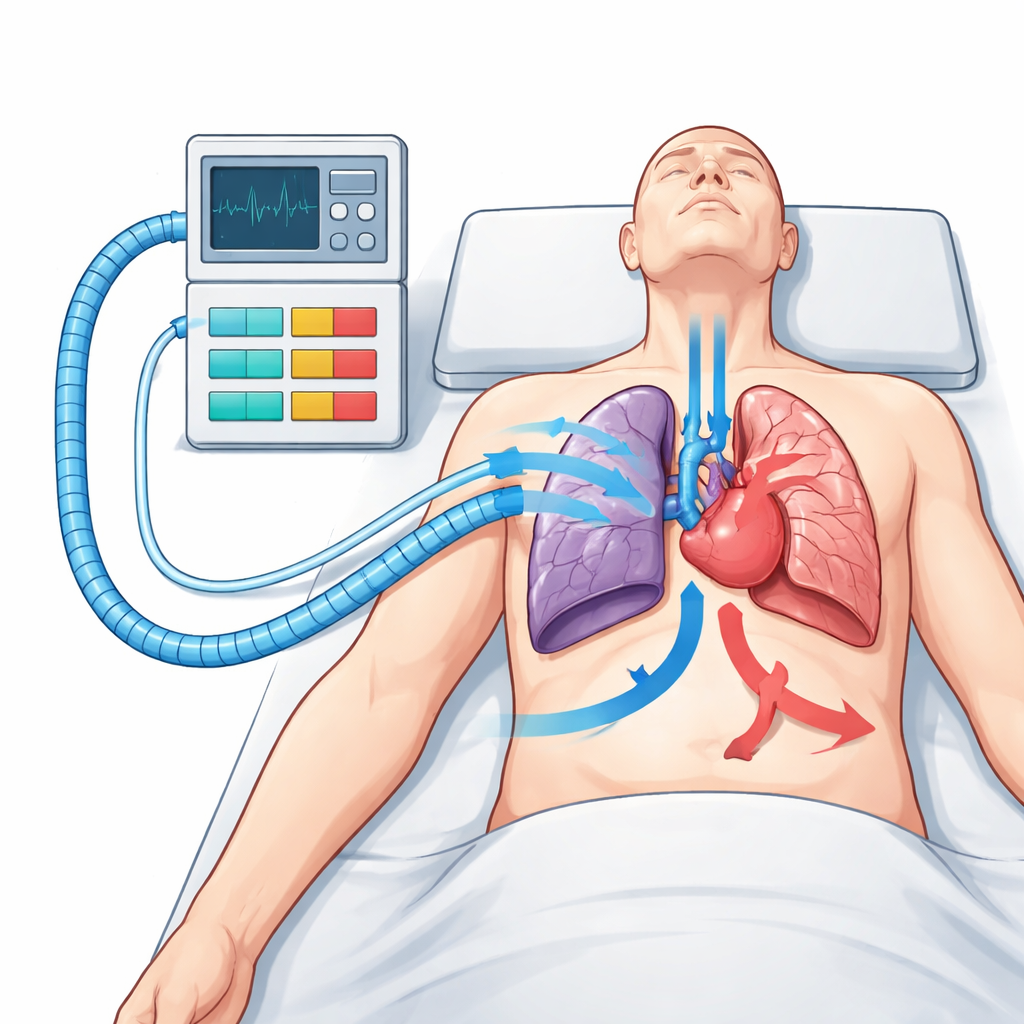
When surgeons remove part of a lung using tiny cameras and instruments, patients must rely on a breathing machine to keep them safe. During these procedures, doctors often inflate only one lung while the other is allowed to collapse to make room to work. How the machine is set can quietly shape not just how well the lung works, but also how well the heart pumps blood and how smoothly patients recover. This study asks a simple but important question: instead of using the same pressure setting for everyone, can tailoring breathing support to each person’s lungs keep the heart stronger and reduce lung problems after surgery?
How doctors usually help patients breathe
In thoracoscopic lung surgery, doctors frequently use one-lung ventilation, where only the lung facing down is ventilated while the other is deflated. To prevent tiny air sacs from collapsing, anesthesiologists apply a small amount of back pressure at the end of each breath, called positive end-expiratory pressure, or PEEP. Traditionally, a modest, fixed PEEP level is chosen for most patients. But people’s chests and lungs differ in stiffness and shape, and a setting that is gentle and helpful for one person may be too weak or too strong for another, upsetting the delicate balance between lung openness, blood flow through the chest, and the heart’s ability to pump.
A tailored way to set the breathing machine
The researchers tested a more personalized way to choose PEEP in 80 adults having video-assisted thoracoscopic lung surgery. Half the patients received the usual fixed PEEP of 5 centimeters of water pressure, while the other half had PEEP carefully tuned during surgery. In this tailored group, doctors briefly raised PEEP to a higher level and then gradually stepped it down while watching how easily the lungs accepted each breath, a measure called dynamic compliance. The PEEP level at which the lungs moved most freely was chosen as that patient’s “best” setting and then kept for the rest of the one-lung ventilation period. Throughout the operation, a minimally invasive monitor tracked cardiac output—the amount of blood the heart pumps each minute—along with other blood pressure and breathing measures.
What happened to the heart and lungs
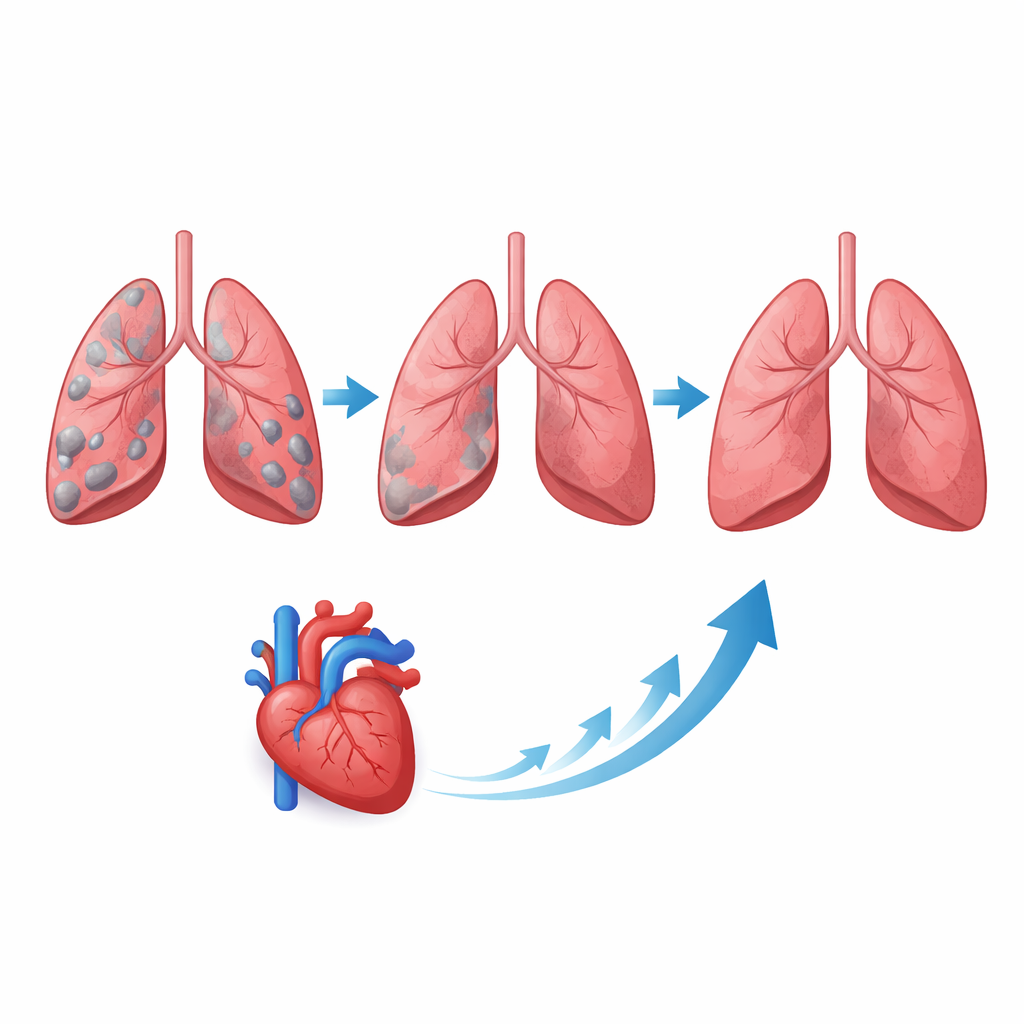
Both groups experienced some drop in cardiac output when one-lung ventilation began, reflecting the strain of surgery and altered chest pressures. But over time, the patients whose PEEP was individualized had clearly stronger heart performance. At 60 minutes and at the end of one-lung ventilation, their hearts pumped more blood per minute than those in the fixed-PEEP group. In the tuning process, the “sweet spot” PEEP values typically fell between 7 and 13 centimeters of water, higher than the standard 5 but still moderate. At these levels, the ventilated lung stayed more open and springy, and the pressure needed to deliver each breath was lower, suggesting less stress and stretch on delicate lung tissue. Importantly, these benefits did not come at the cost of dramatically higher peak pressures or worse carbon dioxide levels.
Fewer breathing problems after surgery
The advantages of individualized PEEP did not end when the operation was over. In the three days after surgery, patients in the standard fixed-PEEP group had more lung-related problems. They more often developed issues such as pneumonia, fluid around the lungs, or areas of collapse visible on imaging. Overall, postoperative pulmonary complications were roughly three times as common in the fixed-PEEP group as in the personalized group, and only patients in the fixed group developed pneumonia. Blood tests of oxygen levels during surgery also tended to favor the individualized group, consistent with better matching of air flow and blood flow within the lungs.
What this means for patients
This study suggests that “one size fits all” settings on the breathing machine may be outdated, at least for thoracoscopic lung surgery. By adjusting end-of-breath pressure to the point where each person’s lung moves most easily, anesthesiologists can help keep more air sacs open, lower the strain on lung tissue, and at the same time support the heart’s ability to push blood through the body. The result is a meaningful boost in cardiac output during a stressful operation and fewer lung complications afterward. While larger, multi-center trials are still needed, these findings point toward a future in which ventilation during surgery is routinely tailored to each patient’s unique lungs, making complex chest operations safer and recovery smoother.
Citation: Zhu, M., Song, T., Bao, Q. et al. Effects of individualized PEEP titration on intraoperative cardiac output in thoracoscopic lung surgery: a prospective randomized trial. Sci Rep 16, 13228 (2026). https://doi.org/10.1038/s41598-026-43122-6
Keywords: thoracoscopic lung surgery, individualized PEEP, cardiac output, one-lung ventilation, postoperative lung complications