Clear Sky Science · en
Pattern of use and awareness of side-effects of non-steroidal anti-inflammatory drugs among general public in Gondar city, North west Ethiopia
Everyday Painkillers and Hidden Risks
Many of us reach for over-the-counter painkillers without a second thought when we have a headache, toothache, or sore joints. This study, carried out in Gondar City in northwest Ethiopia, looks closely at a common group of such medicines—non‑steroidal anti‑inflammatory drugs, or NSAIDs—and asks two simple questions: how often do people use them, and how well do they understand the possible downsides? The answers matter to anyone who has ever taken a pill for pain or fever, because these drugs can quietly harm the stomach, heart, and kidneys when used too often or in the wrong way.

How the Study Was Carried Out
To explore real‑world use, the researchers went door to door across nine neighborhoods that represented both urban and rural parts of Gondar. Using a carefully tested questionnaire, they interviewed 771 adults aged 18 and older. Participants were chosen through a multistep random sampling process so that the group would reflect the city’s population in age, education, jobs, and health conditions. People answered questions about how they used NSAIDs—why they took them, which forms they preferred, where they obtained them—and about what they knew of possible side effects. The team then used statistical methods to see which personal factors were linked to higher use and better or worse awareness.
Who Uses These Drugs and Why
The survey revealed that nearly three out of four respondents had used NSAIDs, showing that these medicines are woven into daily life. Most people took them as tablets or capsules, and more than four in five reported that the drugs eased their symptoms. The leading reasons were dental pain, joint or bone pain, and headaches, reflecting both common short‑term aches and longer‑lasting problems. Yet safe use was far from guaranteed: close to 60% of users did not stick to the dose or schedule they had been given, and many obtained medicines without a prescription or shared them with family and friends. Older adults, retired people, former smokers, and those living with heart or digestive diseases were especially likely to be frequent users—precisely the groups most vulnerable to harm.
What People Know—and Don’t Know—About Side Effects
When it came to awareness, just over half of participants said they were informed about NSAID side effects, and a similar share could be classified as having good knowledge based on their answers. Still, large gaps stood out. About half did not realize that older people face higher risks from these drugs. Roughly six in ten were unaware that NSAIDs can worsen asthma, damage the kidneys, or aggravate high blood pressure and heart disease. Many also did not know that using them for long periods raises the chance of trouble. Women, students, retirees, and people with musculoskeletal or gastrointestinal diseases tended to know more, perhaps because they use these medicines more often or have had contact with health professionals about them.
Real Experiences of Harm
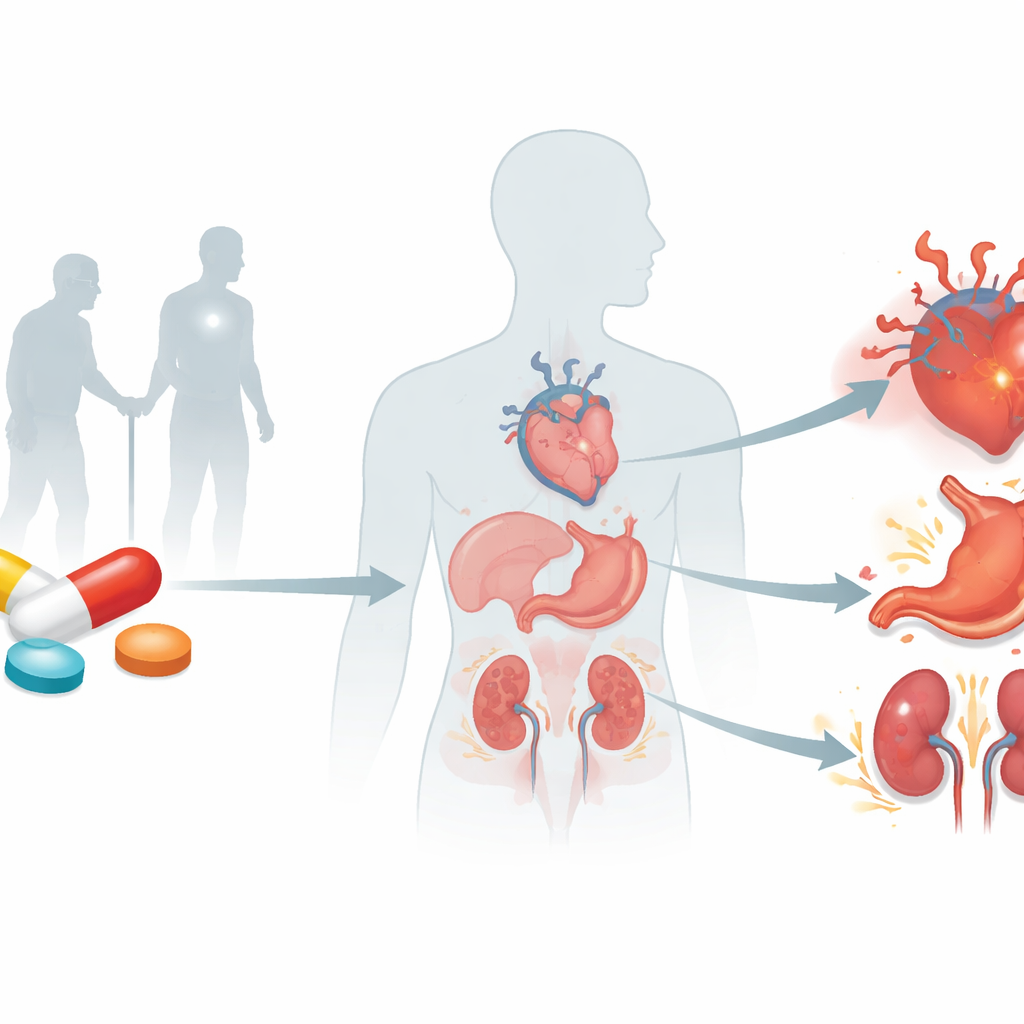
The study did not stop at knowledge; it also asked what people had actually felt after taking NSAIDs. Around three in ten users reported side effects. The most common were nausea, stomach pain, skin rashes, and diarrhea—symptoms that many people might shrug off or fail to connect with a familiar painkiller. Yet these mild problems can be warning signs of more serious damage to the stomach lining, bleeding in the digestive tract, or strain on the kidneys and heart, especially when pills are taken often, at high doses, or together with other medicines.
Why These Findings Matter
Overall, the research paints a picture of a community where everyday painkillers are heavily relied upon but not fully understood. High use combined with patchy awareness, particularly among older adults and people with existing heart or digestive problems, creates a quiet but significant safety risk. The authors argue that better public education is urgently needed, with pharmacists and other front‑line health workers playing a central role in explaining when to use NSAIDs, how much to take, and when to avoid them. For the general reader, the takeaway is simple: common does not mean harmless, and asking a health professional before routinely using these medicines can prevent serious, and sometimes life‑threatening, complications.
Citation: Ayele, H.S., Beyna, A.T., Asrie, A.B. et al. Pattern of use and awareness of side-effects of non-steroidal anti-inflammatory drugs among general public in Gondar city, North west Ethiopia. Sci Rep 16, 13833 (2026). https://doi.org/10.1038/s41598-026-42630-9
Keywords: NSAID safety, painkillers, drug side effects, self-medication, public health