Clear Sky Science · en
Hematologic and coagulation responses to Johnson & Johnson COVID-19 vaccination in the Amhara region, Ethiopia
Why this vaccine study matters
Many people around the world have received the single‑dose Johnson & Johnson COVID‑19 vaccine, often because it is easier to store and deliver than other options. At the same time, rare reports of unusual blood clots and low platelet counts have raised understandable questions about how this vaccine affects the blood. This study from Ethiopia takes a careful before‑and‑after look at people’s blood and clotting tests to see what actually changes in the weeks following vaccination.
Taking a close look at blood before and after the shot
Researchers followed 89 healthy adults in the Amhara region of Ethiopia who chose to receive the Johnson & Johnson vaccine in 2023. All participants were screened to rule out COVID‑19 infection and other illnesses or medications that might affect blood or clotting, such as malaria, liver or kidney disease, or blood‑thinning drugs. Each person had blood drawn just before vaccination and again about four weeks later. The team measured routine blood counts—such as red cells, white cells, and platelets—as well as standard clotting times that show how quickly blood forms a clot.
What people felt after vaccination
The short‑term experiences of these Ethiopian adults were similar to those reported worldwide for COVID‑19 vaccines. Nearly two‑thirds felt pain at the injection site. About one‑third had headaches, one‑third developed fever, and roughly one in four reported fatigue. Muscle pain, diarrhea, and chest discomfort were less common, and no allergic reactions were recorded. In other words, most side effects were mild and temporary, matching what health agencies describe as typical immune responses to vaccination.
Subtle shifts in the blood
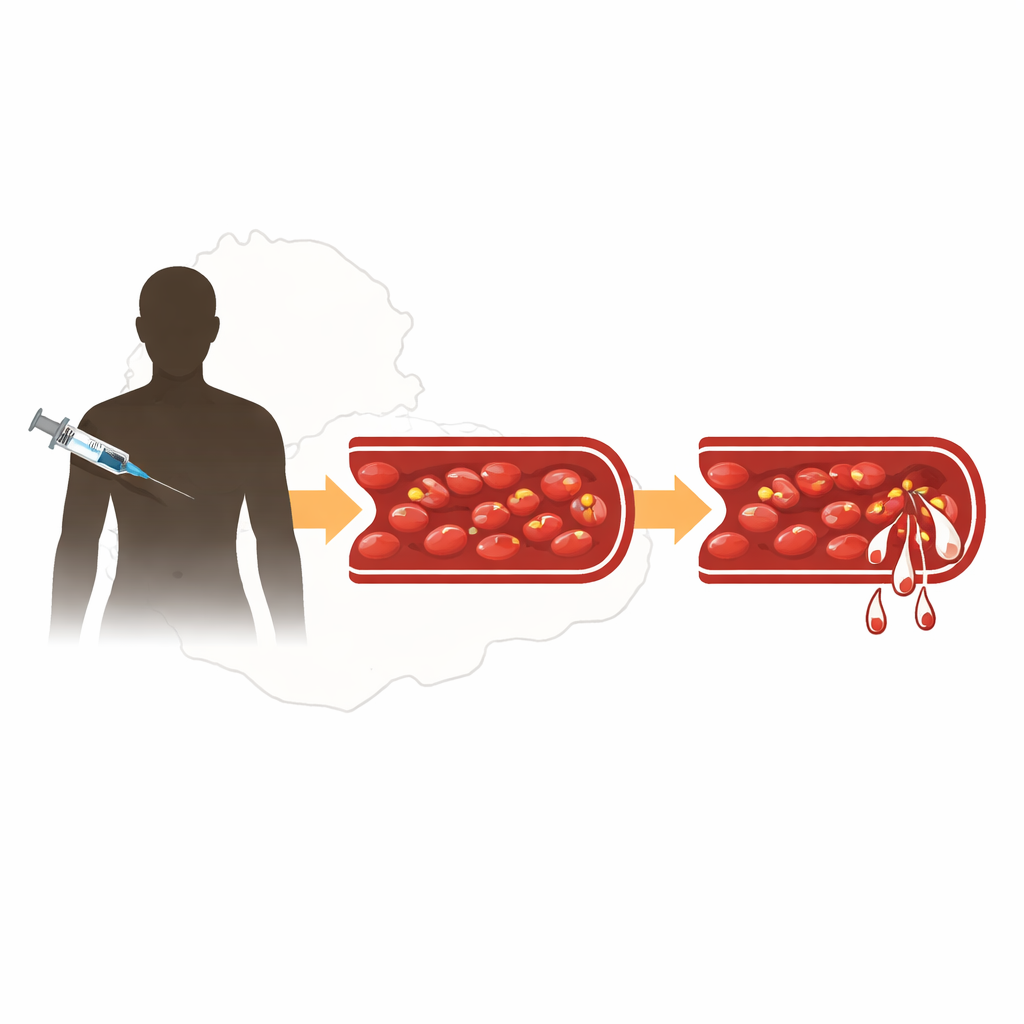
When the researchers compared blood tests before and after vaccination, they found that several measures changed in a statistically clear way. Platelet counts—the tiny cell fragments that help stop bleeding—fell on average from the upper‑normal range to a slightly lower, but still generally normal, range. Red blood cell counts and hematocrit, which reflect how many oxygen‑carrying cells circulate in the body, also dropped modestly. In the weeks after vaccination, about one in four participants met the laboratory definition of anemia, and nearly one in five had platelet levels considered abnormally low. White blood cell counts, including infection‑fighting subtypes like neutrophils and lymphocytes, stayed essentially the same.
Changes in how quickly blood clots
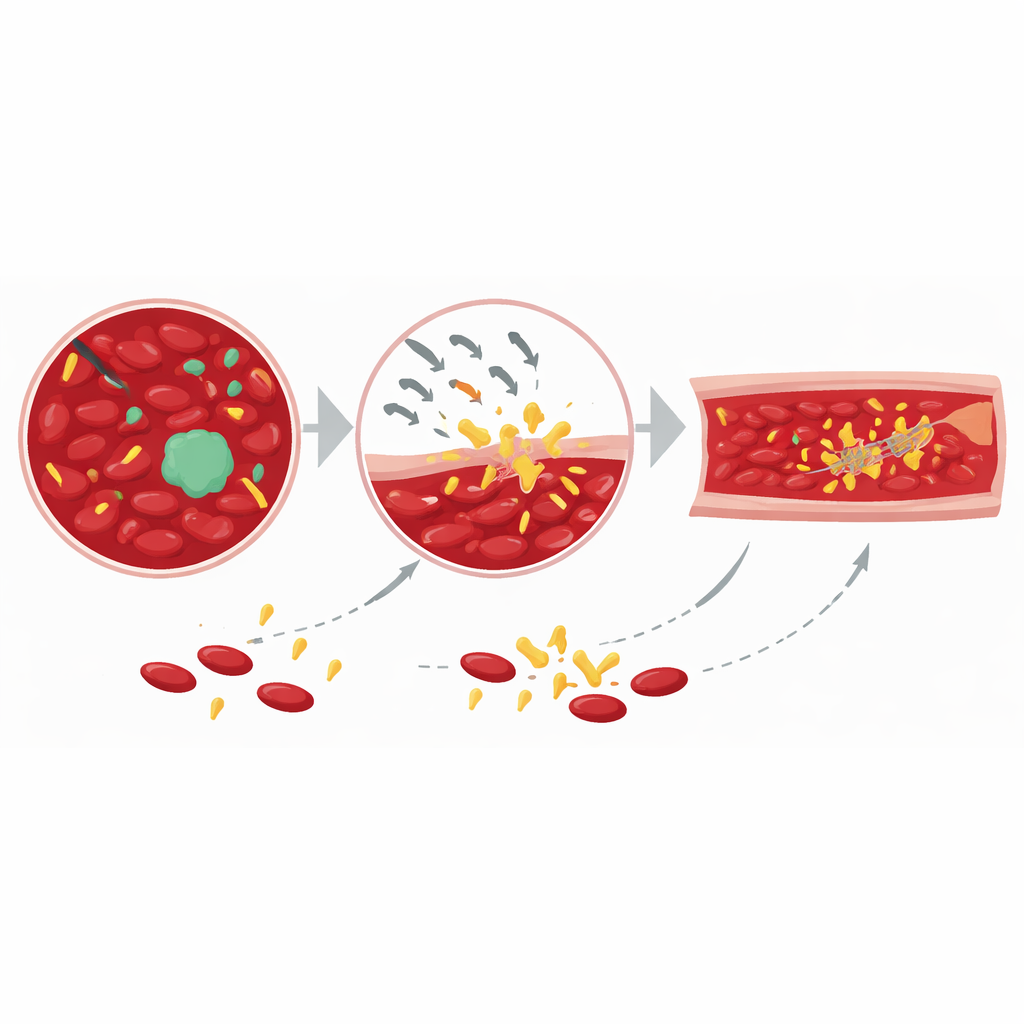
The study also found that standard clotting tests took longer to complete after vaccination. Both prothrombin time and activated partial thromboplastin time—laboratory measures of how quickly blood forms a clot along two major clotting pathways—were noticeably prolonged. More than 60% of participants showed abnormally long prothrombin times, and about 40% had prolonged partial thromboplastin times in the follow‑up sample. The authors suggest that immune reactions triggered by the vaccine could, in some people, briefly overuse or disrupt parts of the clotting system, echoing what has been reported in rare cases of vaccine‑induced clotting problems in other countries.
What this means for vaccinated people
For a lay reader, the key message is that this single‑centered dose vaccine, while effective against severe COVID‑19, can temporarily nudge some blood and clotting measures away from their usual values, even in generally healthy adults. Most people in the study experienced only mild, familiar side effects such as sore arms and headaches, and the blood changes did not automatically translate into serious illness. Still, the pattern of lower red cells and platelets and slower clotting times suggests that careful monitoring may be wise for people at higher risk of bleeding or clotting disorders. The authors call for larger studies across different vaccine types and populations, so that health authorities can better explain both the benefits and the small but important blood‑related risks when people roll up their sleeves.
Citation: Bazezew, A., Woldu, B., Getawa, S. et al. Hematologic and coagulation responses to Johnson & Johnson COVID-19 vaccination in the Amhara region, Ethiopia. Sci Rep 16, 13649 (2026). https://doi.org/10.1038/s41598-026-42484-1
Keywords: COVID-19 vaccination, Johnson and Johnson vaccine, blood clotting, platelet changes, Ethiopia