Clear Sky Science · en
Effect of curcumin on the gut microbiota of patients with ulcerative colitis, Crohn’s disease and healthy participants
Why a kitchen spice matters for gut health
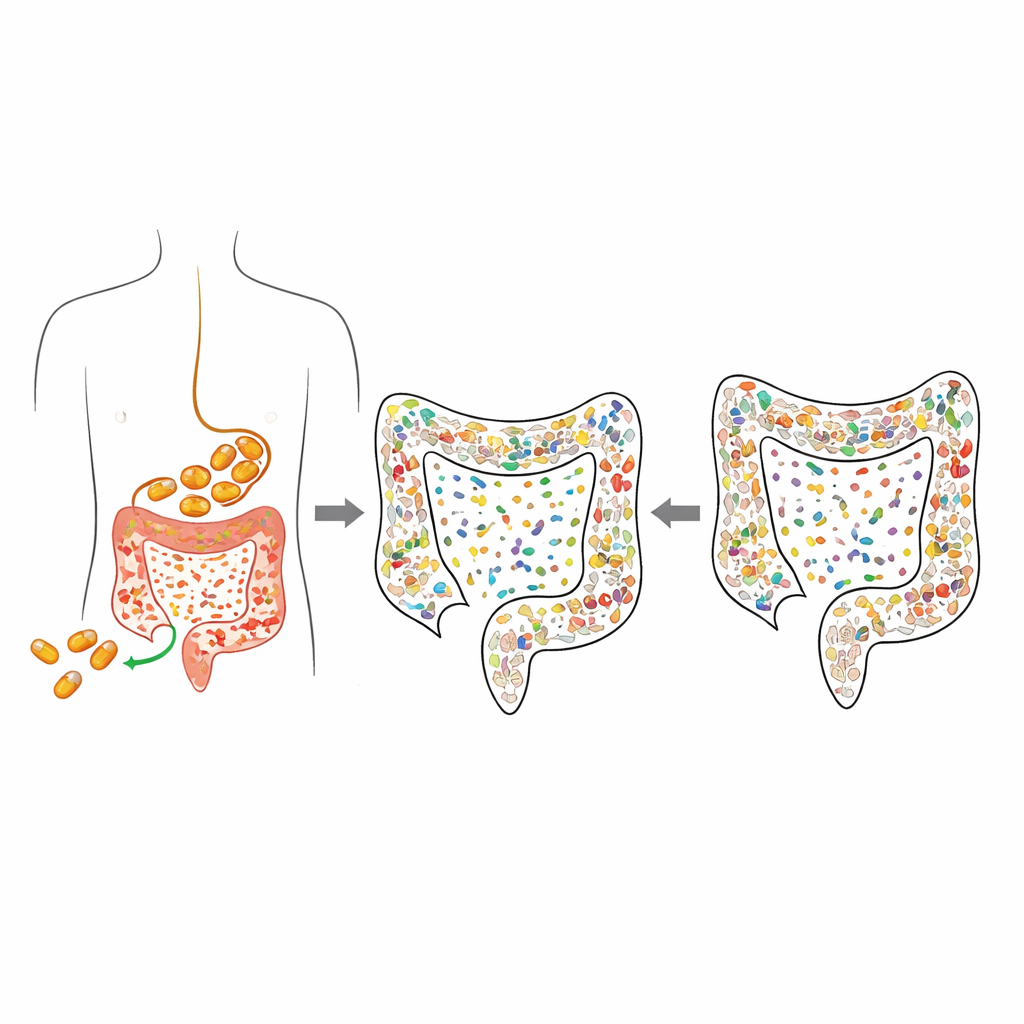
Many people take turmeric or curcumin supplements hoping to calm inflammation in the gut, especially in conditions like Crohn’s disease and ulcerative colitis. Curcumin, the bright yellow compound in turmeric, is known to have anti-inflammatory effects in the lab, but it is absorbed poorly into the bloodstream. This study asked a simple real‑world question: if so much curcumin stays inside the intestines, can it meaningfully reshape the community of microbes living there—and might that help people with inflammatory bowel disease (IBD)?
What the researchers wanted to find out
The team focused on the gut microbiota, the vast collection of bacteria and other microbes that live in our intestines and are thought to influence IBD. Previous work has shown that people with Crohn’s disease or ulcerative colitis often have different gut microbes than healthy individuals, and that some bacteria that produce helpful substances such as butyrate tend to be reduced. Because curcumin lingers in the gut at relatively high levels after swallowing, the researchers wondered whether a strong, prolonged dose could gently nudge this microbial ecosystem in a healthier direction, and whether any such changes would be reflected in routine blood and stool markers of disease activity.
How the study was carried out
In a single‑center exploratory trial, 29 men aged 18 to 65 took curcumin capsules for eight weeks: 3 grams twice daily, for a total of 6 grams per day. The participants were divided into three groups: people with Crohn’s disease in remission, people with ulcerative colitis in remission, and healthy volunteers. Everyone kept their usual medications and lifestyle. At several time points—before curcumin, at four weeks, and at eight weeks—the researchers collected blood, urine, and stool samples. They used DNA sequencing of bacterial marker genes in the stool to measure microbial diversity and composition, and they monitored standard clinical measures such as inflammatory markers in blood, stool calprotectin, and symptom scores.
What happened inside the gut
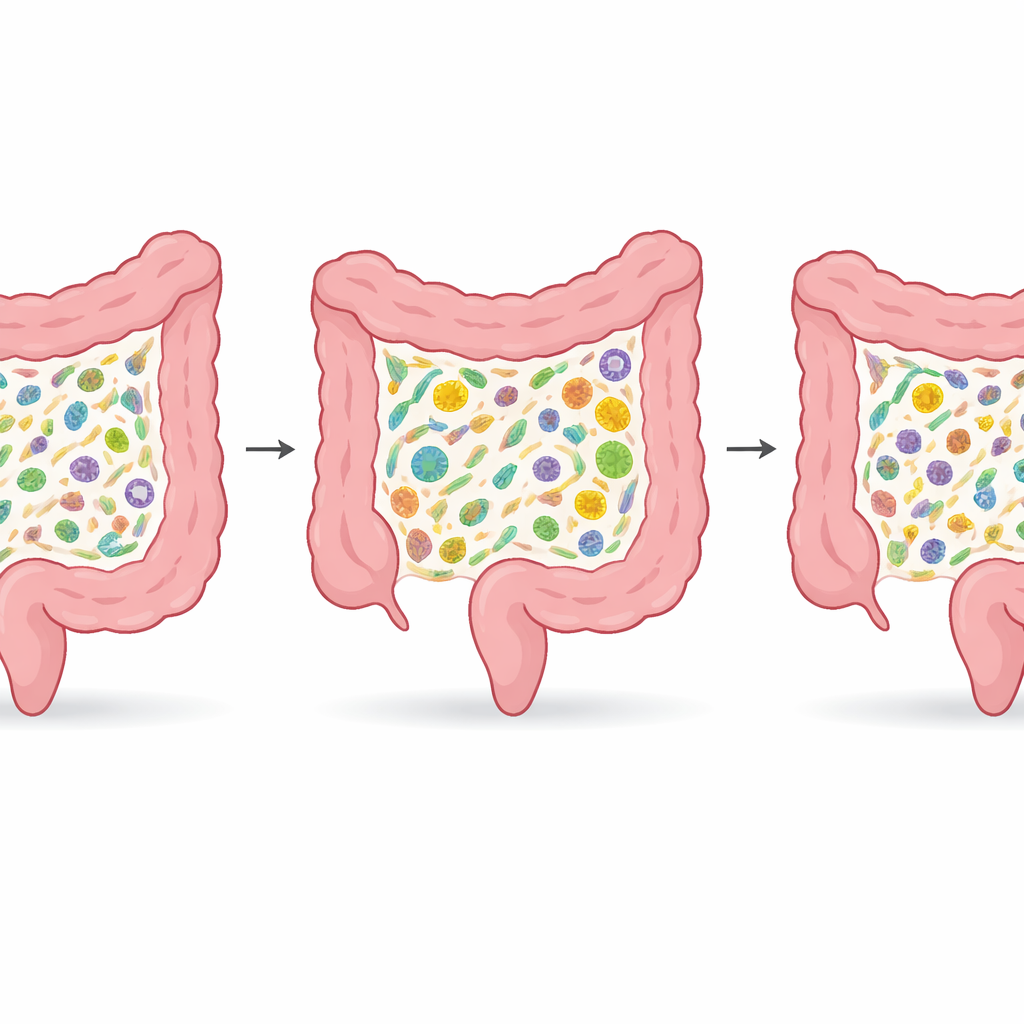
Laboratory measurements confirmed that hardly any active curcumin reached the bloodstream, while levels in stool were thousands of times higher, showing that the gut lining was heavily exposed. Despite this intense local exposure, the overall diversity of microbes within each person’s gut—the number and balance of different types present—did not change significantly during the study. When the team looked at how community composition shifted over time, they saw a modest, temporary rearrangement after four weeks: the microbial profiles moved away from baseline but then drifted back by week eight. Only three specific microbial variants, belonging to bacteria such as Faecalibacterium and Roseburia that are often considered beneficial, clearly increased at the mid‑point and then declined again, affecting just a tiny fraction of the thousands of detectable microbial types.
Effects on symptoms and body chemistry
Clinically, curcumin appeared safe and well tolerated at this high daily dose. Participants’ symptom scores for Crohn’s disease and ulcerative colitis stayed in the remission range, and standard blood tests for inflammation, liver function, and other organ systems remained within normal limits in all groups. Healthy volunteers likewise showed no worrying shifts in cholesterol, sugars, or markers of inflammation. Importantly, there were no clear links between the brief microbial changes seen at four weeks and any improvement or worsening in these clinical or biochemical measures, and the presence of IBD in remission did not seem to alter how curcumin was processed by the body.
What this means for people using curcumin
For lay readers, the bottom line is that even when taken in large amounts over two months, curcumin did not produce strong or lasting changes in the gut microbiota of men with quiescent Crohn’s disease or ulcerative colitis, or in healthy men. The gut community appeared to bend slightly in response to curcumin and then spring back to its original state. Because only a few rare microbial types shifted and no clear clinical benefits were observed, this work suggests that curcumin, at least in the form and dose tested here, is unlikely to be a powerful tool for reshaping the gut microbiome in IBD. It remains a generally safe supplement, but its role in managing these conditions through microbiota modulation alone looks limited and will require larger, more diverse trials to clarify.
Citation: Kroon, M.A.G.M., Wortelboer, K., Davids, M. et al. Effect of curcumin on the gut microbiota of patients with ulcerative colitis, Crohn’s disease and healthy participants. Sci Rep 16, 11491 (2026). https://doi.org/10.1038/s41598-026-42095-w
Keywords: curcumin, gut microbiome, inflammatory bowel disease, Crohn’s disease, ulcerative colitis