Clear Sky Science · en
Molecular identification of bat fly species and associated Bartonella bacteria from Lopburi and Sa Kaeo Provinces in Thailand
Why tiny bat hitchhikers matter
Bats are often in the news as possible sources of new diseases, but the story is more complex than bats alone. Clinging to their fur and skin are bat flies—small, blood-feeding insects that may quietly shuttle bacteria between animals and, in rare cases, to people. This study explores those hidden passengers in caves of central and eastern Thailand, revealing which bat fly species live there and what kinds of Bartonella bacteria they carry, including relatives of strains already linked to human illness.
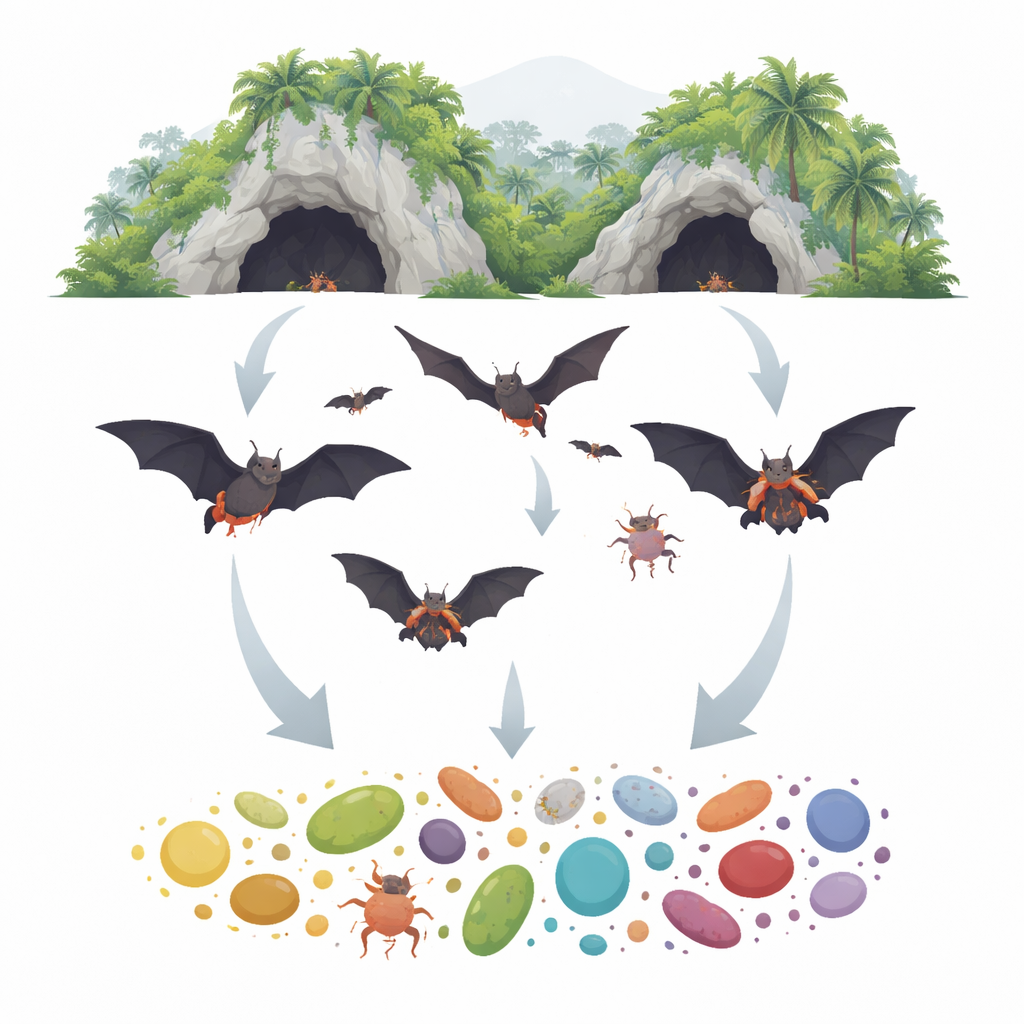
Bats, their flies, and hidden microbes
Bats provide important services to people and ecosystems by pollinating plants, spreading seeds, and eating vast numbers of insects. Many species roost together in caves or buildings, bringing large numbers of animals into close contact. Bat flies—highly specialized insects that spend nearly their entire lives on bats—tap into this crowded world. They feed on bat blood and ride with their hosts from roost to roost, making them ideal candidates to spread blood-borne microbes such as Bartonella, a group of bacteria known to cause a range of human diseases, including some heart infections and the well-known “cat scratch disease.”
Collecting cave dwellers in Thailand
To understand this miniature ecosystem, researchers sampled 50 bat flies from 17 bats in limestone caves in two Thai provinces, Lopburi and Sa Kaeo. Bats were gently caught in fine nets at cave entrances after sunset, briefly examined in cloth bags while scientists removed the bat flies with sterile tools, and then released unharmed. From these collections, the team identified five different bat fly species belonging to two major families. Careful microscopic study distinguished them by body shape and size, while DNA analysis of several genes confirmed that each represented a distinct species and clarified how they are related to similar flies found elsewhere in Asia and beyond.
Uncovering bacterial partners
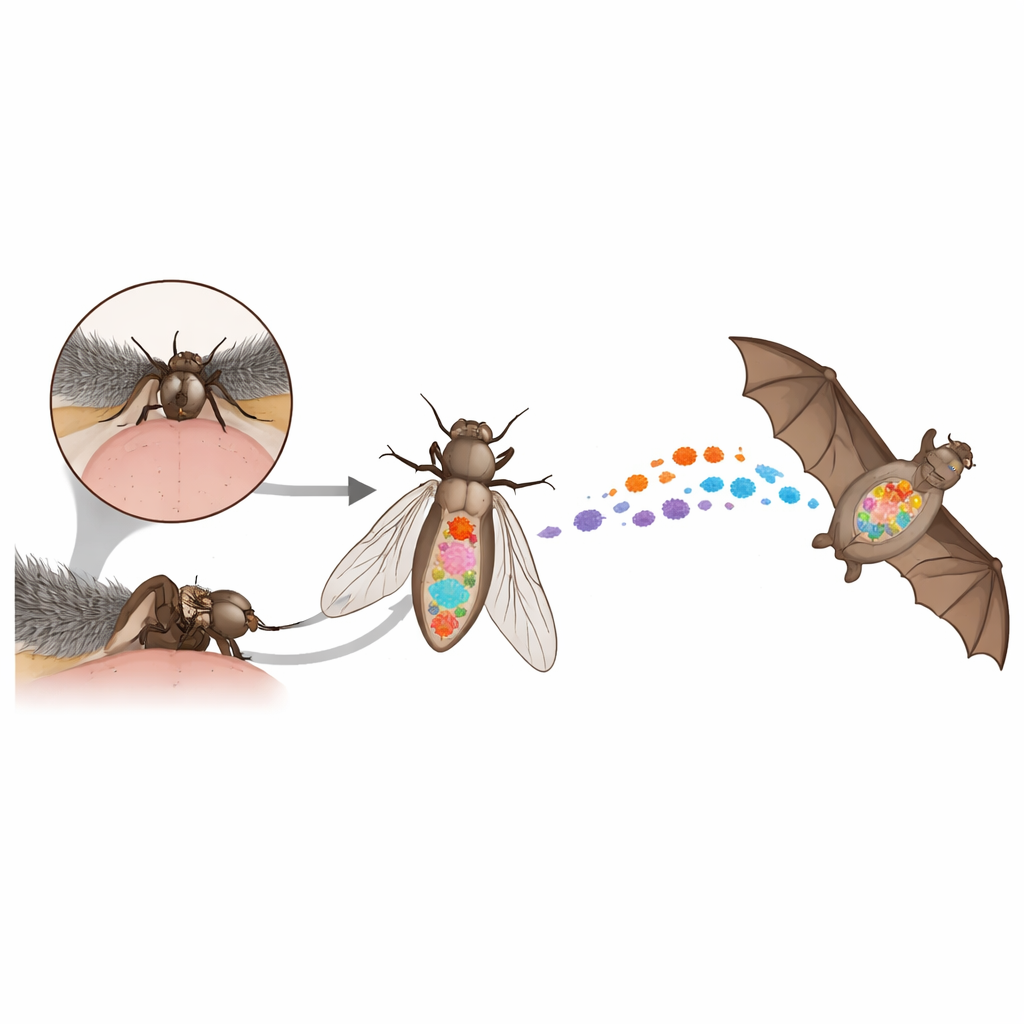
The same bat flies were then tested for Bartonella. Scientists extracted DNA from each insect and screened it using a set of five bacterial genes, allowing them not only to detect the bacteria but also to sort them into genetic groups. Almost half of the flies (24 out of 50) carried Bartonella, a much higher rate than usually seen when bats themselves are tested. From these positive flies, the team identified six clearly different Bartonella lineages. Some lineages were tied to particular fly and bat combinations, suggesting long-term partnerships between certain bats, their flies, and their bacteria. Others matched or closely resembled strains previously found in bats or bat flies in Thailand, Vietnam, China, Egypt, and several African countries.
A troubling family resemblance
One of the most striking discoveries was a Bartonella lineage in the bat fly Eucampsipoda latisterna that was very closely related to Bartonella rousetti, a species first described from African fruit bats and their flies. B. rousetti has been associated with human exposure in Africa, where people living near bat colonies sometimes show antibodies against it. Finding a near twin of this bacterium in Thai caves—carried by flies feeding on common fruit bats that roost near farmland—suggests that related bacteria may be more widespread than previously realized. While no human infections were reported in this study, the genetic similarity raises questions about possible future spillover.
What this means for people and wildlife
Overall, the work reveals a surprisingly rich web of relationships among bats, bat flies, and Bartonella bacteria in a relatively small part of Thailand. The high infection rate in bat flies and the discovery of six distinct bacterial lineages, including relatives of a potentially zoonotic species, point to an active and evolving network of microbes that may occasionally cross species barriers. For the general public, the message is not to fear bats, but to recognize that conserving their habitats and limiting unnecessary disturbance to large colonies is also a form of disease prevention. Understanding these hidden partnerships helps scientists anticipate where new infections might emerge and design better strategies to monitor and manage health risks at the human–wildlife boundary.
Citation: Rattananupong, V., Trinachartvanit, W., Bumrungsri, S. et al. Molecular identification of bat fly species and associated Bartonella bacteria from Lopburi and Sa Kaeo Provinces in Thailand. Sci Rep 16, 12531 (2026). https://doi.org/10.1038/s41598-026-41591-3
Keywords: bats, bat flies, Bartonella, Thailand caves, zoonotic bacteria