Clear Sky Science · en
Bedtime procrastination as the missing link between chronotype and insomnia
Why putting off bedtime matters
Many people promise themselves they will go to bed earlier, only to keep scrolling, streaming, or working late into the night. This study asks a simple but important question: is this habit of delaying bedtime the missing link between being a “night owl” and struggling with insomnia? By looking at everyday sleep habits in a large group of adults, the research helps explain why some people are especially vulnerable to poor sleep—and what kinds of behavior changes might help.
Different inner clocks, different sleep risks
Each of us has a preferred time of day when we feel most alert. Some people are “morning types,” who naturally wake up and perform best early, while “evening types” feel more energetic later and prefer going to bed and getting up late. When social demands like school and work do not match this inner clock, sleep can easily suffer. Earlier studies already showed that evening types more often report sleep problems. This paper builds on that work by asking whether a particular habit—pushing bedtime later for no good reason—helps explain why night owls are at higher risk for insomnia.
Staying up late on purpose
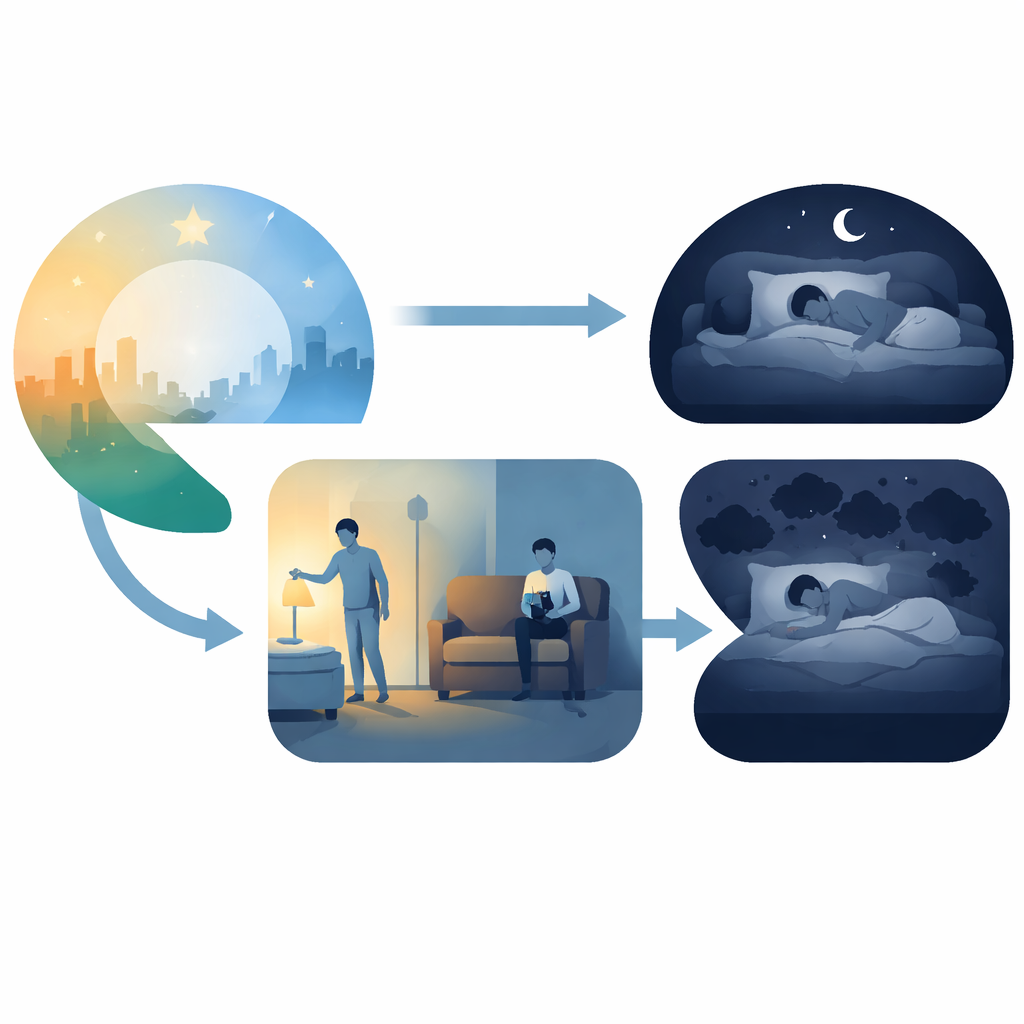
The study focused on “bedtime procrastination,” which means deliberately going to bed later than planned even though nothing external is stopping you. This is not simply staying up because of a late shift or family duties; it is choosing one more episode, one more level in a game, or one more scroll through social media despite knowing tomorrow will be harder. Earlier research linked this behavior to self-control, motivation, and the pull of enjoyable activities, and found that evening types tend to procrastinate on bedtime more than morning types. This study tested whether that bedtime delay might be the key pathway from a late chronotype to insomnia.
What the researchers did
Six hundred seventy-one adults completed an online survey. They answered questions about their chronotype (how strongly they leaned toward morningness or eveningness), how often they delayed going to bed, and their insomnia symptoms, such as trouble falling asleep, waking during the night, and feeling unwell or sleepy during the day. Statistical models were then used to see how these three pieces fit together: does being more of a night owl lead to more bedtime procrastination, which in turn leads to more insomnia symptoms, even when taking age and gender into account?
How bedtime delay links night owls to insomnia
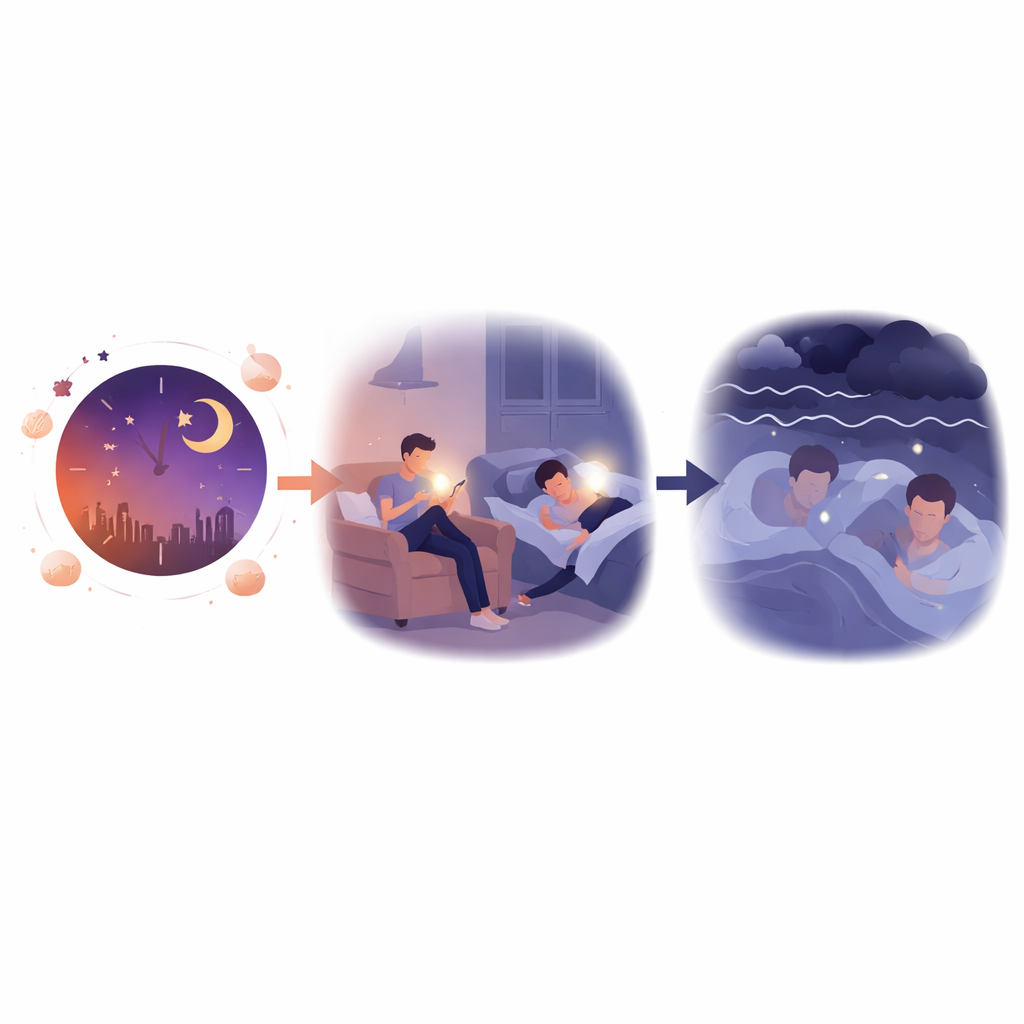
The results painted a clear chain. People with a stronger evening preference were more likely to delay their intended bedtime. Those who procrastinated at bedtime reported more insomnia symptoms and worse daytime functioning. Evening type was directly related to insomnia, but that link was relatively small. When bedtime procrastination was added to the analysis, it explained a substantial portion of the connection between eveningness and insomnia, meaning that part—but not all—of night owls’ extra sleep problems seem to arise because they push bedtime later and cut into their sleep time.
Why we keep saying “just one more episode”
The discussion suggests that bedtime procrastination is not about disliking sleep itself. Most people enjoy sleep; the difficult part is stopping pleasant or meaningful activities. For evening types, this may be even harder. They tend to feel more alert and reward-seeking at night, and modern temptations—glowing screens, games, videos, and social media—make it easy to trade rest for stimulation. Over time, this pattern shortens sleep, raises pre-sleep tension, and may tip people into persistent insomnia. The study also notes that some people may use late-night hours as “revenge” free time when their days feel over-scheduled, which can further encourage delaying bed.
What this means for better sleep
For a general reader, the main takeaway is that knowing you are a night owl is only part of the story. How you handle your evenings—especially the temptation to stay up late without a real reason—plays a major role in whether you end up with insomnia. The author suggests that treatments for insomnia should pay closer attention to chronotype and bedtime procrastination together, teaching people to respect their inner clock while reducing the habit of stretching the evening with screens and other engaging activities. While the study is based on self-reports and cannot prove cause and effect, it offers a practical message: protecting sleep may start not just with what time you need to wake up, but with learning to stop, unplug, and actually go to bed when you said you would.
Citation: Mojsa-Kaja, J. Bedtime procrastination as the missing link between chronotype and insomnia. Sci Rep 16, 12631 (2026). https://doi.org/10.1038/s41598-026-41294-9
Keywords: insomnia, chronotype, bedtime procrastination, sleep habits, night owl