Clear Sky Science · en
Politics matter more than credentials in laypeople’s judgments of expertise
Why we care who to trust
Every day we rely on other people to tell us what is true, from medical advice to news about public policy. We like to think we judge experts by their knowledge and training. This article asks a sobering question: when ordinary people decide which expert to trust, do they really put credentials first, or do they mainly look for someone who shares their political views?
How people say they spot real experts
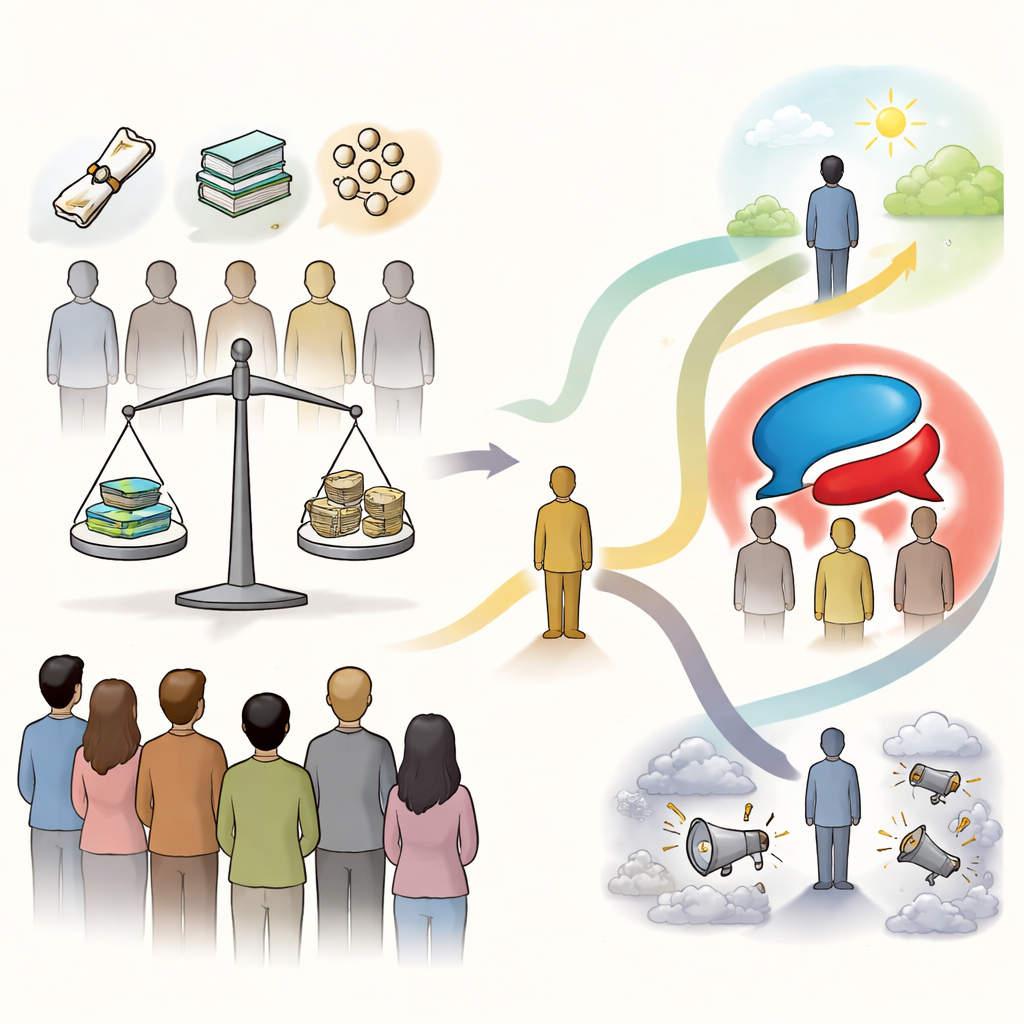
In the first part of the research, volunteers were asked what makes someone an expert on topics ranging from skincare and nutrition to homelessness, police violence, and abortion. People claimed they focused on sensible markers of expertise: years of education, having a relevant degree, time spent studying the topic, recognition from other specialists, and personal experience. They rated surface traits such as height, race, and looks as far less important. Some cues mattered more in specific settings—gender seemed more relevant for abortion, wealth for stock tips, and appearance for skincare—but overall, respondents presented themselves as careful consumers of expert advice.
What really shapes trust in specialists
The second part put those claims to the test using short biographies of fictional experts. Each biography mixed stronger and weaker credentials: how long the person had studied the topic, whether their degree matched the subject, the prestige of their institution, praise from colleagues, social media popularity, and so on. Participants then rated how much they would trust each expert. As expected, the classic signs of expertise—relevant training, years of research, and respect from other experts—had the biggest impact on trust. Weaker signals like a famous university name, anecdotal experience, or a large online following also nudged trust upward, but to a smaller degree. People inferred more than they were told: if one detail made a person look qualified, participants tended to assume they were strong on other fronts too, even when that information wasn’t given.
When politics overrules professional background
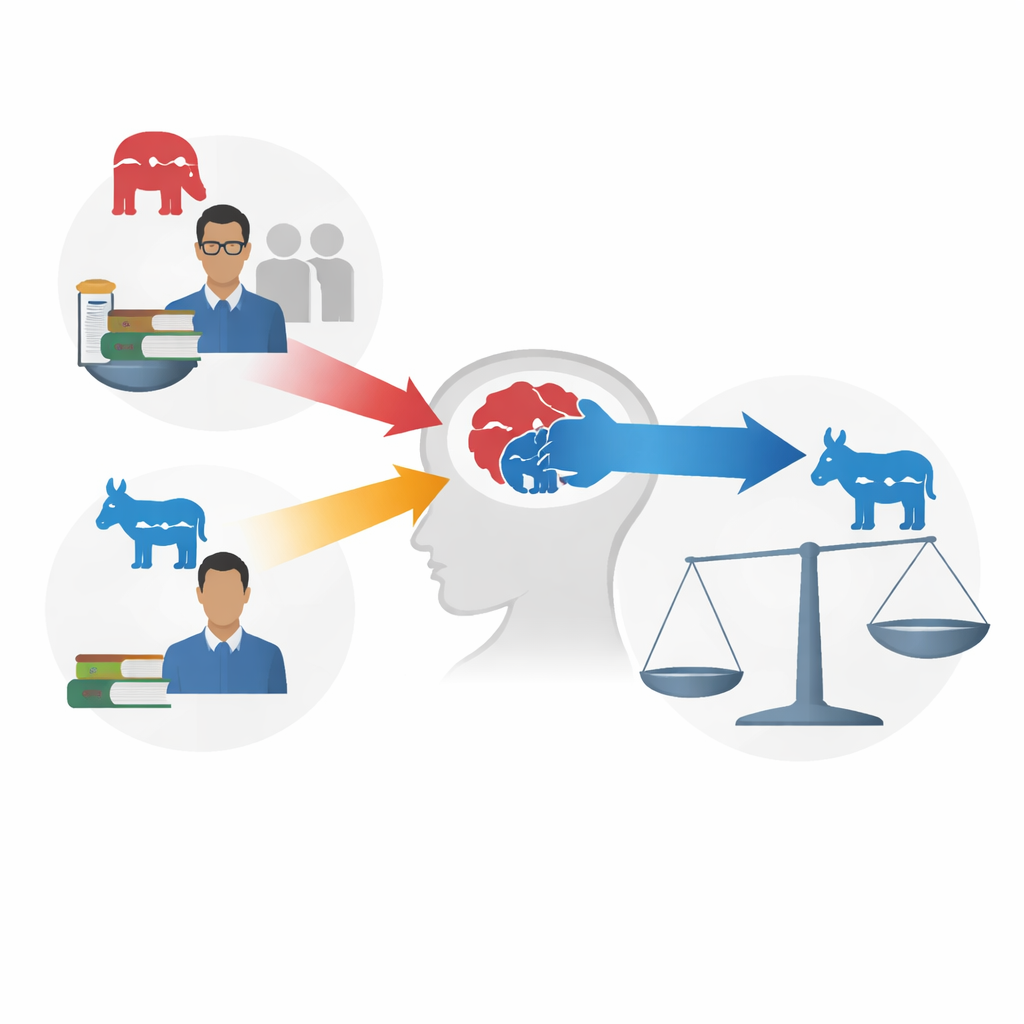
The final and most revealing part of the study focused on abortion, a highly charged issue. Here, the same expert biography was paired either with strong medical credentials and long research experience or with a less relevant engineering background and much less experience. On top of that, the expert was described as holding either pro-choice views, pro-life views, or no stated view. When participants judged how much they trusted the expert, political agreement swamped credentials. People trusted an expert who shared their stance on abortion far more than one who did not, and this effect was more than twice as large as the influence of the expert’s training and experience. In practice, a like‑minded but underqualified expert was trusted about as much as a highly qualified expert whose views were left unspecified, and much more than a highly qualified expert who disagreed with them.
How strong convictions sharpen bias
The researchers also looked at how firmly people held their own views. Those who saw their abortion beliefs as central to their morals, felt very confident, or thought their view was superior to others showed the strongest tilt toward friendly experts and the sharpest distrust of opposing ones. At the same time, these strongly committed participants still noticed the difference between high and low credentials. The pattern suggests that people do recognize expertise, but when an issue is moral and political, agreement in values acts like a powerful filter that colors every other judgment about the expert.
What this means for public debate
The study paints a mixed picture. On neutral topics, many people really do look for the right signs of knowledge and are not easily fooled by superficial traits. But on hot‑button issues, politics matters more than professional background: we are drawn to experts who tell us what we already believe and then mentally upgrade their qualifications to justify our trust. To a layperson, the key takeaway is that “trusting the experts” is not enough if we choose which experts to trust based on team loyalty. Guarding against this instinct—especially on topics that feel morally loaded—may be essential if we want our decisions to be guided more by genuine expertise than by partisan comfort.
Citation: Güngör, M., Ballantyne, N. & Celniker, J.B. Politics matter more than credentials in laypeople’s judgments of expertise. Sci Rep 16, 12765 (2026). https://doi.org/10.1038/s41598-026-40053-0
Keywords: expertise, political bias, trust in experts, partisanship, science communication