Clear Sky Science · en
Humans, shrublands and fires are affecting an endangered wolf population
Why this matters for people and wolves
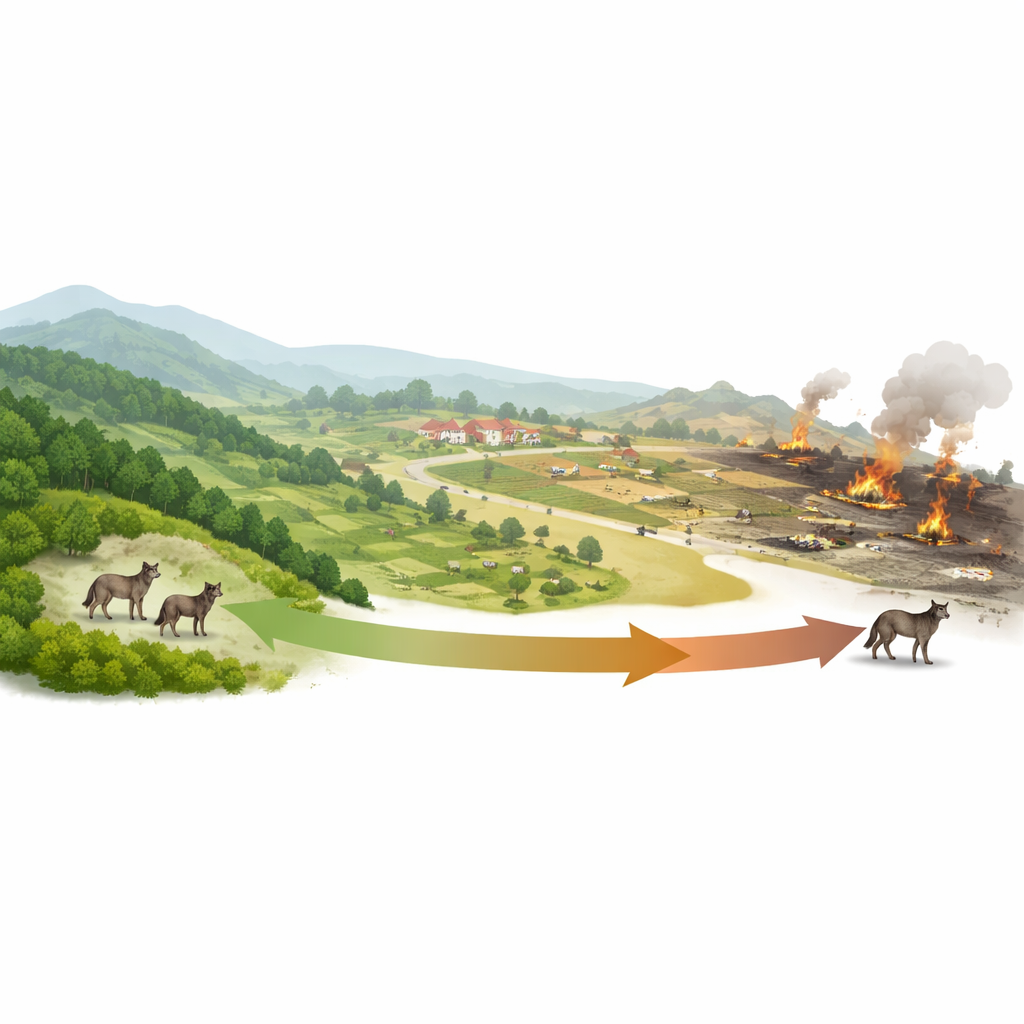
On many European hillsides, people share the land with large predators. In central Portugal, the Iberian wolf now survives in just a fraction of its former range and is officially considered endangered. This study asks a simple but urgent question: in a landscape shaped by villages, farms and frequent fires, what really determines where wolves can still live? The answer has direct consequences not only for the future of this iconic animal, but also for how rural communities manage land, livestock and fire.
Where the last packs still roam
The research focuses on a mountainous region in central‑west Portugal, within two protected areas that together cover about 750 square kilometers. The terrain is rugged, with steep slopes, cool wet winters and mild summers. Forests of pine and eucalyptus cover nearly half the area, while scrublands, farms and villages fill in the rest. Only three wolf packs, totaling a few dozen animals at most, still occupy this landscape, and their range has shrunk dramatically over recent decades. In this setting, wolves feed mainly on free‑ranging goats, sheep, cattle and horses, which graze unfenced hills by day and usually spend nights in barns during winter.
Following wolves by reading their traces
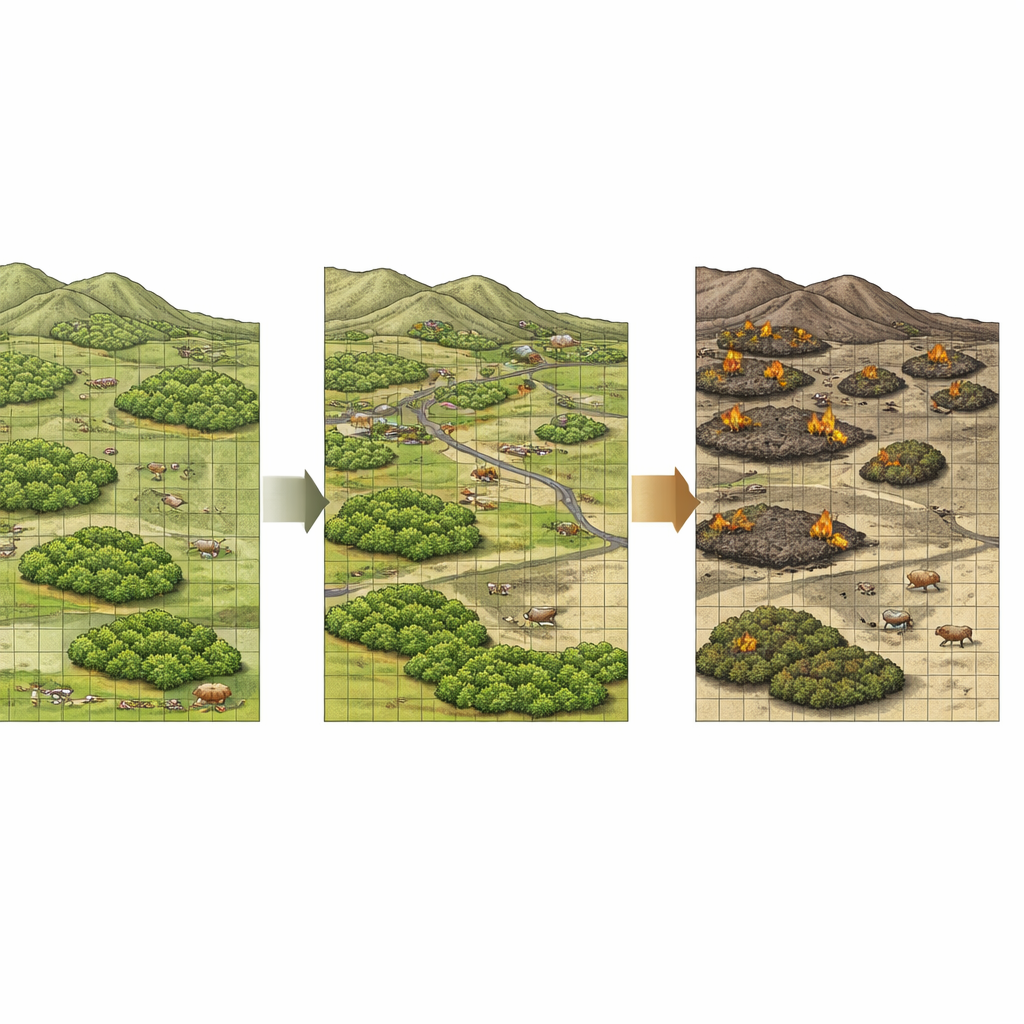
Because wolves are elusive and occur at very low densities, the team relied on a decade of systematic scat surveys, carried out every month from 2011 to 2021 along more than 100 kilometers of fixed routes. Every dropping found was collected and genetically tested to confirm whether it came from a wolf, a dog or a fox. The area was divided into small map squares four kilometers on a side, and each square was classified as either having confirmed wolf presence or not. The scientists then linked each square to detailed information about its altitude, land cover, water, livestock density, wild boar density, fire history and an index that summarizes human influence, including buildings, roads and other infrastructure.
What shapes where wolves can live
Using statistical models, the authors compared three sets of possible influences: the physical landscape, human disturbance and food resources. Human‑related factors explained the largest share of the pattern, especially the Human Footprint Index and the total area burned by wildfires in the previous decade. Both had a strong negative effect: as people and fire pressure increased, the chance of finding wolves dropped. Wolves showed a tendency to use higher, shrubby hilltops and to avoid farmland close to settlements, but these effects were weaker and not statistically decisive. Surprisingly, the availability of food, whether livestock or wild boar, did not clearly predict wolf presence once human disturbance and fire were taken into account.
Fires, shrubs and the search for safe ground
The results paint a nuanced picture of how wolves navigate a risky countryside. Hilltops covered in scrub provide cover and relative safety from people, helping wolves move and rest with less chance of being seen or persecuted. Yet the same hills are often burned deliberately to renew pasture or through arson, and Portugal has one of the most intense fire regimes in southern Europe. Repeated large fires strip away vegetation, reduce shelter for both wolves and their prey, and can force packs to abandon familiar territories. Over time, this chipping away of refuge areas can destabilize packs and make survival even more precarious, even when livestock and some wild prey remain available nearby.
What this means for coexistence
In plain terms, the study shows that the fate of Iberian wolves in central Portugal depends less on how much food they have and more on how people shape and burn the land. Places with fewer signs of human activity and fewer burned slopes are where wolves can still hold on. Protecting and carefully managing shrublands, cutting back on the use of fire, and restoring wild hoofed animals could reduce conflicts over livestock, improve habitat quality and give wolves safer room to live. The authors argue that conservation plans must be designed with local communities, so that changes in fire use and land management support both rural livelihoods and the long‑term future of wolves on the Iberian hills.
Citation: Hipólito, D., Figueiredo, A.M., Ferreira, E. et al. Humans, shrublands and fires are affecting an endangered wolf population. Sci Rep 16, 9995 (2026). https://doi.org/10.1038/s41598-026-39970-x
Keywords: Iberian wolf, human–wildlife conflict, wildfires, Mediterranean landscapes, carnivore conservation