Clear Sky Science · en
Dual-Energy X-Ray absorptiometry associates total body fat and bone mineral content with elevated blood pressure in adult divers
Why Divers’ Hearts Matter to All of Us
People often picture scuba divers as fit and resilient, yet their work places heavy demands on the heart and blood vessels. This study looks closely at professional male divers in southern Chile to understand how body fat, muscle, and bone are tied to blood pressure—a key warning sign for future heart disease and strokes. Although the research focuses on a very specific group, its message is broader: how our bodies are built and how strong we are can quietly shape our risk for serious cardiovascular problems, even when we stay physically active for work.
A Closer Look at Working Divers
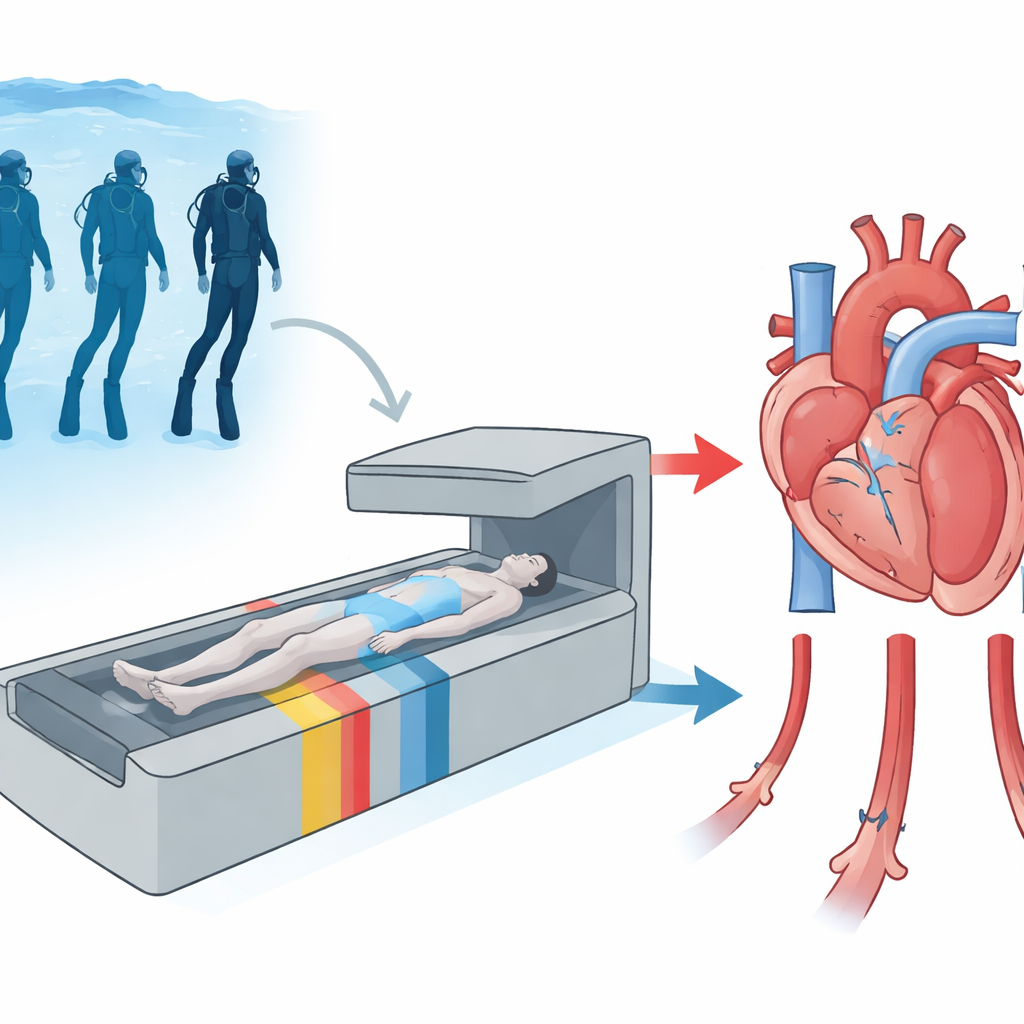
The researchers examined 95 male divers who harvest shellfish along Chile’s southern coast. They divided them into three groups: those with normal blood pressure, those with mildly elevated readings, and those with diagnosed hypertension. All the men were experienced workers who spent years underwater, where the heart must pump against pressure from the surrounding water and support strenuous labor. The scientists measured blood pressure, handgrip strength, and performance on a simple step-like exercise test known as the Ruffier test. They also collected information on physical activity, smoking, and alcohol consumption to better understand the divers’ everyday habits.
How Body Fat, Muscle, and Bone Were Measured
To go beyond simple weight or body mass index, the team used dual-energy X‑ray absorptiometry, or iDXA—a scanning technology often used in hospitals and sports science labs. This method allowed them to separate the body into three main components: fat, lean tissue (largely muscle), and bone mineral content. The scan also broke these measures down by region, such as arms, legs, and trunk. By pairing these detailed body maps with each diver’s blood pressure, the scientists could see which aspects of body composition were most closely linked to higher readings in this physically demanding profession.
What Set Hypertensive Divers Apart
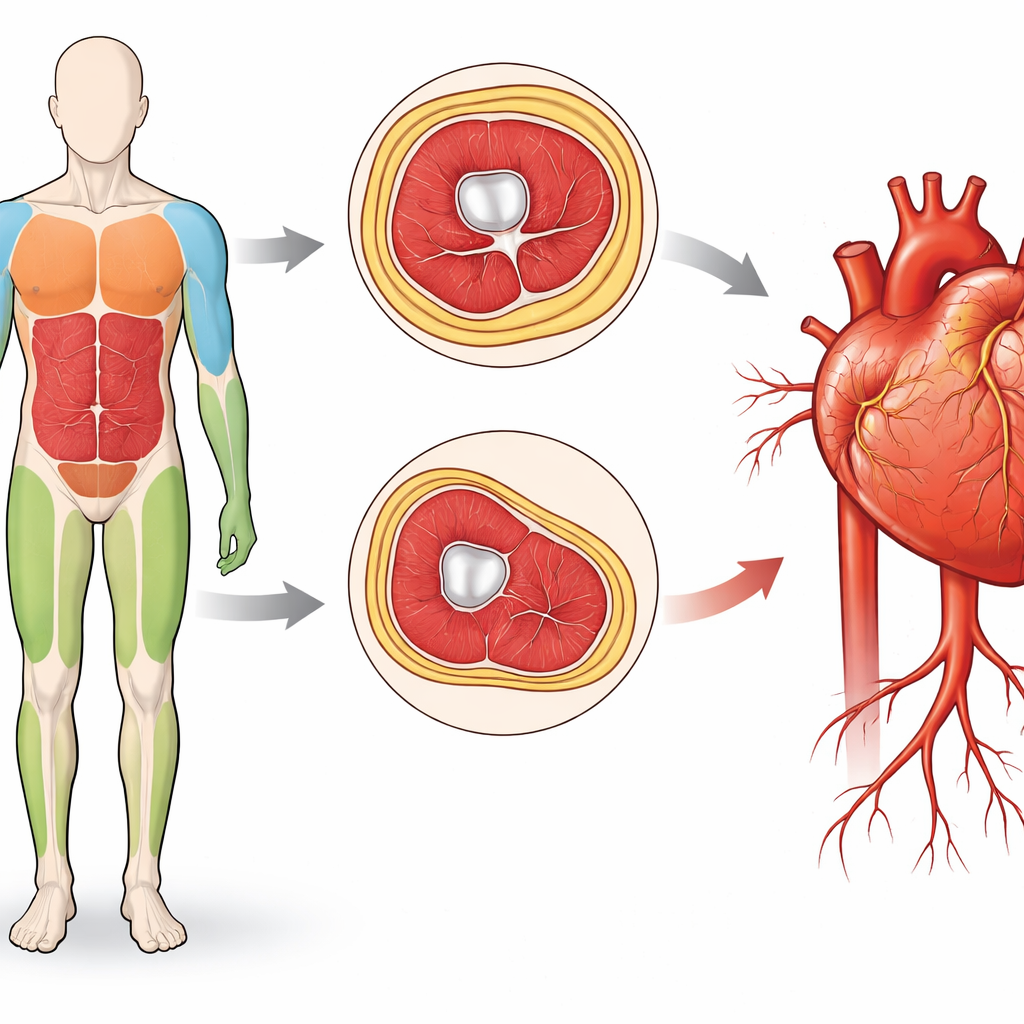
Despite reporting broadly similar physical activity levels to their peers, divers with hypertension showed a distinct physical profile. They tended to be older and had higher total body fat, particularly around the trunk and arms, than men with normal blood pressure or only mildly elevated values. Their average handgrip strength was lower, and they performed fewer repetitions in the Ruffier test, signaling reduced muscular strength and cardiovascular fitness. Interestingly, overall muscle mass did not differ much among groups, suggesting that how much fat a diver carries—and where that fat sits—may matter more for blood pressure than total muscle alone.
Hidden Links Between Fat, Bone, and Blood Pressure
When the researchers used statistical models to tease out which factors best predicted blood pressure, two stood out alongside age: total body fat percentage and total bone mineral content. For every step up in body fat, systolic and diastolic pressures tended to rise. In contrast, higher overall bone mineral content showed a weak but notable association with lower systolic pressure, hinting that stronger bones may travel with a somewhat healthier cardiovascular profile. At the regional level, muscle in the legs—and especially the left leg—showed ties to both systolic and diastolic pressure, underscoring the importance of lower-limb strength in a job where underwater work often emphasizes the arms more than the legs.
What This Means for Divers and Beyond
The study concludes that hypertensive Chilean divers combine higher body fat, weaker grip strength, and poorer exercise recovery, even though their reported activity levels look similar to those of divers with normal blood pressure. In plain terms, simply being active at work is not enough protection when excess fat and declining fitness start to strain the heart. For divers, regular screening of body composition, strength, and blood pressure could help identify those at greatest risk and guide programs to build leg and overall muscle strength while reducing body fat. For the rest of us, the message is similar: maintaining a leaner body, strong muscles, and resilient bones is not just about performance—it is a quiet but powerful defense against high blood pressure and its long‑term consequences.
Citation: Véliz, A., Berrios, R.P., Paris, A.D. et al. Dual-Energy X-Ray absorptiometry associates total body fat and bone mineral content with elevated blood pressure in adult divers. Sci Rep 16, 11783 (2026). https://doi.org/10.1038/s41598-026-38908-7
Keywords: divers, blood pressure, body fat, bone health, occupational health