Clear Sky Science · en
Detection and characterization of MPs in the human stool: an observational study in Bushehr, Iran
Why Tiny Plastics in Our Bodies Matter
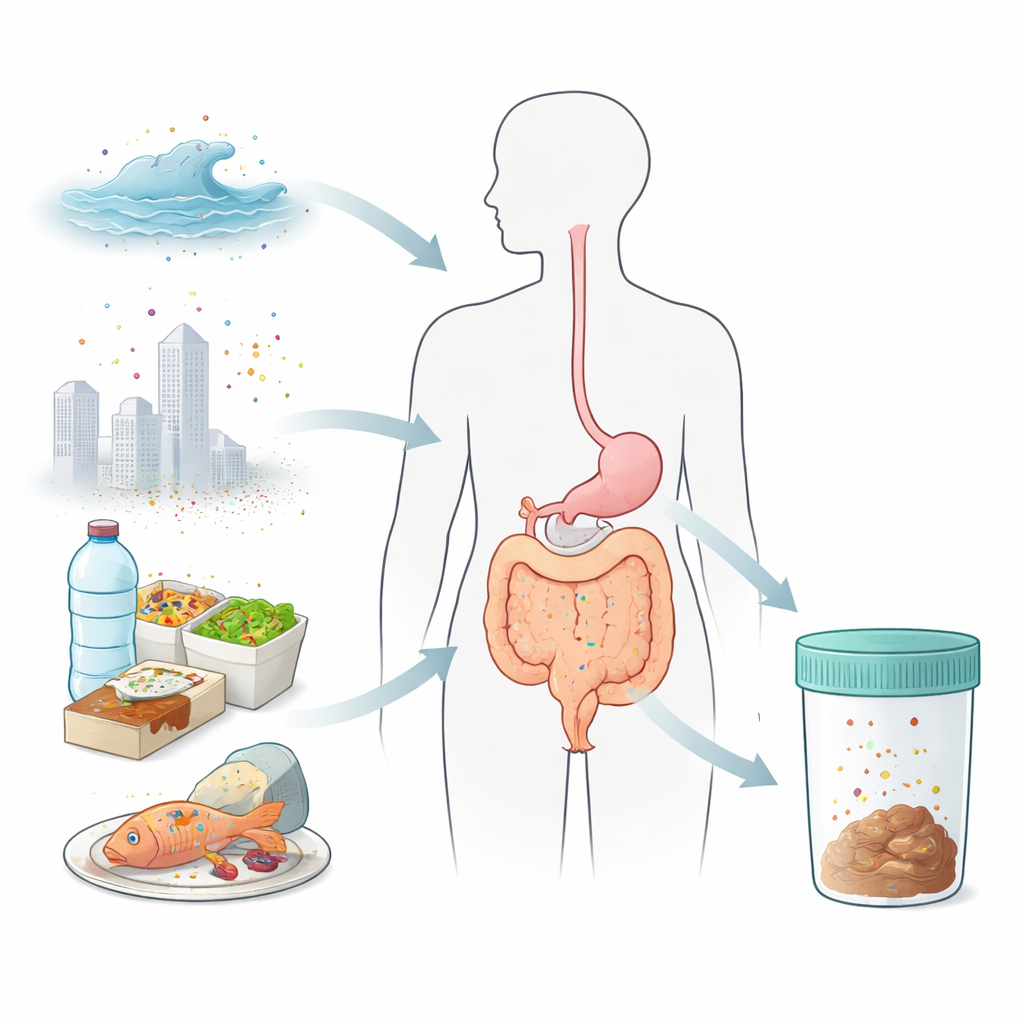
Every day we eat, drink, and breathe in an environment filled with plastic debris that has broken down into tiny specks called microplastics. These particles are smaller than a grain of rice and can slip into our food, water, and even the air indoors. A team of researchers in Iran set out to ask a simple but unsettling question: are these invisible plastic pieces passing through our bodies, and what do they look like once they do—especially in people already dealing with hormone-related illnesses such as diabetes and thyroid problems?
Looking for Plastics in an Unlikely Place
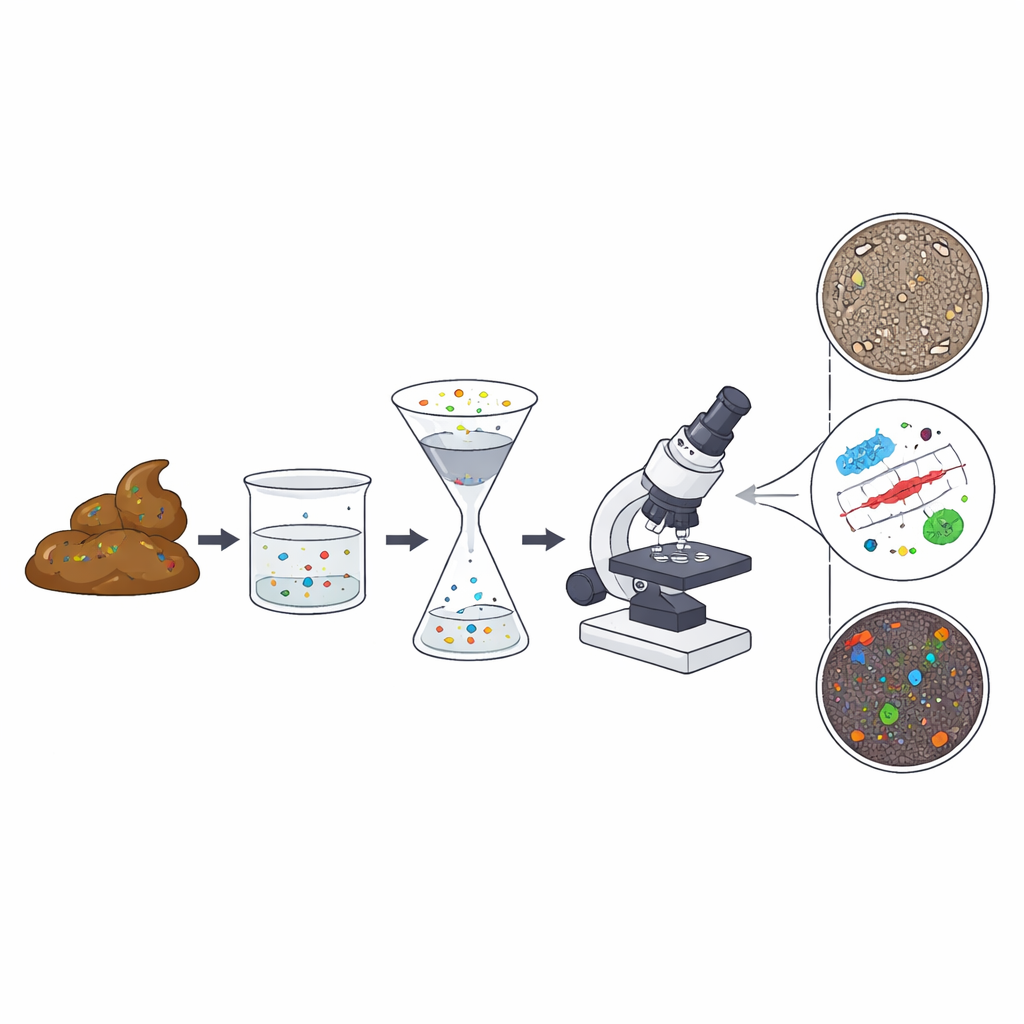
The study focused on 30 adults in Bushehr, a coastal city in Iran, all of whom had diagnosed endocrine disorders, including diabetes or thyroid disease. Volunteers provided stool samples, which were carefully collected in glass containers to avoid adding extra plastic. In the lab, the samples were frozen and then treated with chemicals and salt solutions to dissolve organic matter and separate out any solid particles that might be microplastics. Throughout the process, the team used strict clean-handling steps and blank controls to make sure that airborne fibers or lab equipment did not contaminate the samples.
How the Tiny Pieces Were Found
After digestion and separation, the remaining particles were trapped on fine filters and examined with an optical microscope. The researchers counted each piece, measured its size, and noted its shape and color. To learn what kinds of plastic they were dealing with, they used micro-Raman spectroscopy, which reads the unique light signature of different polymers, much like a fingerprint. Scanning electron microscopy gave close-up images of the particle surfaces, and an attached X-ray detector revealed which chemical elements were present, such as carbon, oxygen, or trace metals stuck to the plastic surfaces.
What Was Found in People’s Waste
Microplastics were present in every single stool sample. On average, there were about 6 items of plastic per gram of stool, with some people having more than double that amount. Most particles were relatively large for microplastics, between half a millimeter and one millimeter in length, and only a small fraction were smaller than fifty micrometers, close to the limit of what the methods could reliably detect. The overwhelming majority—almost 98 percent—were fibers rather than flat films or irregular fragments. When colors were noted, white or transparent fibers dominated, followed by black and gray, with a scattering of brighter shades such as red, blue, and green.
Types of Plastic and Hidden Hitchhikers
Chemical analysis showed that six different plastics were present, with polypropylene, widely used in food packaging and household containers, being the most common. Other identified plastics included polystyrene, polyethylene terephthalate, and several types of polyethylene and polycarbonate. X-ray measurements revealed that, along with the basic building blocks of plastic—carbon and oxygen—many particles carried trace amounts of elements such as sodium, magnesium, silicon, chlorine, potassium, calcium, iron, and iodine. These extra elements may come from additives used during manufacturing or from pollutants that stick to plastics as they weather outdoors, suggesting that once inside the body, microplastics may bring a cargo of other substances with them.
What This Means for Health
Although this study did not prove that microplastics cause endocrine diseases, it clearly shows that adults living with diabetes or thyroid disorders are routinely exposed to these particles and pass them through their digestive systems. The findings support a growing picture from other countries: microplastics are now so widespread that they routinely appear in human stool and even in tissues such as lungs and placenta. Because only a small share of the smallest particles may be taken up into the body, there is concern that long-term, low-level exposure could interact with hormones or deliver other pollutants. The authors call for standardized testing methods, larger studies with healthy comparison groups, and better tools to detect even smaller particles, including nanoplastics. For now, their work offers a clear message for the public: everyday plastics do not just pollute oceans and beaches—they also move through us, turning our own bodies into part of the story of global plastic pollution.
Citation: Ghasemi, F.F., Dehghani, M., Dobaradaran, S. et al. Detection and characterization of MPs in the human stool: an observational study in Bushehr, Iran. Sci Rep 16, 9609 (2026). https://doi.org/10.1038/s41598-025-33204-2
Keywords: microplastics, human stool, endocrine disorders, plastic pollution, polypropylene fibers