Clear Sky Science · en
Social Perception of Autonomous Mobility: A Survey on Public Transport Pilots in Switzerland
Why Robot Buses Matter for Everyday Riders
Self-driving vehicles are often portrayed as either miracle machines or dangerous experiments. But what happens when such vehicles quietly become part of ordinary public transport in real streets, with real passengers? This paper presents a rich survey dataset from two Swiss regions where small autonomous shuttle buses have been running as pilot public transport services. By asking residents about their awareness, worries, and willingness to use these shuttles, the study offers a grounded look at how people actually feel when driverless travel is no longer science fiction but a free bus at the corner.
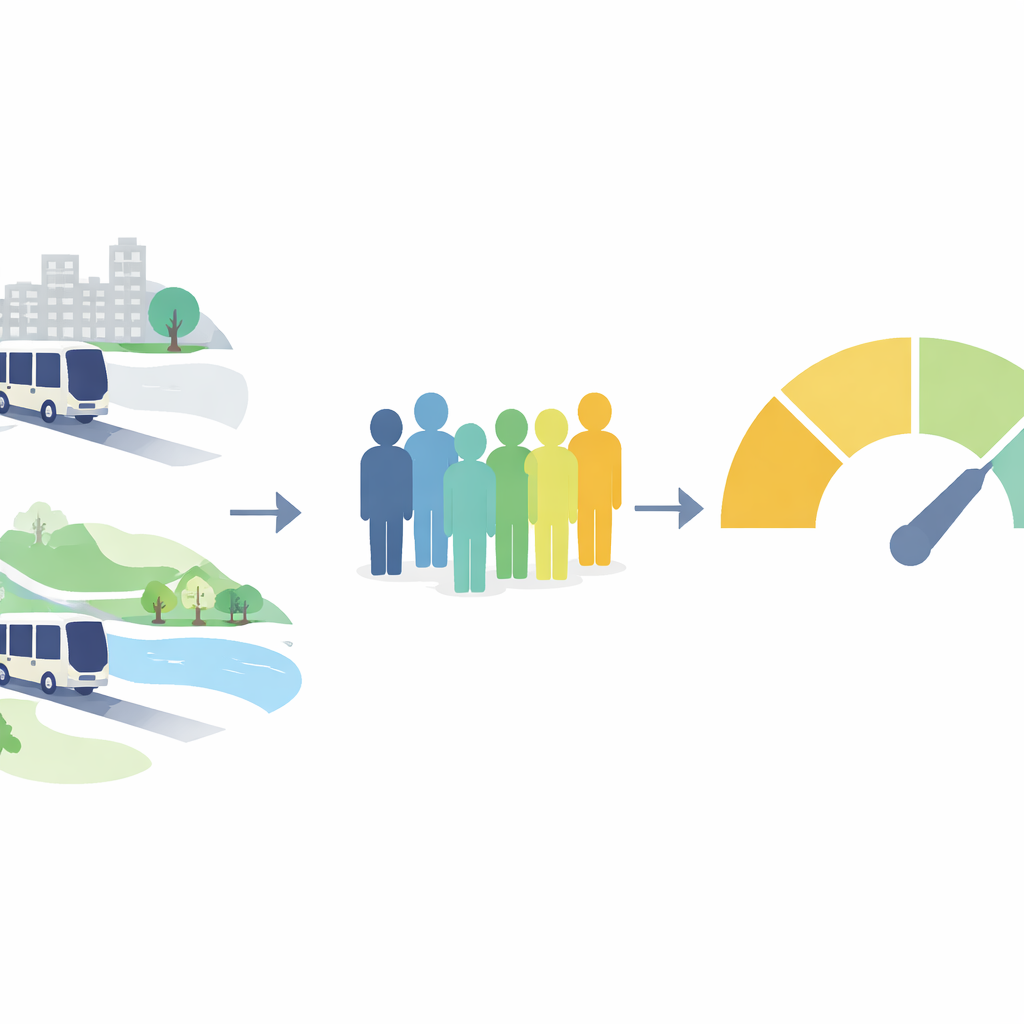
Two Swiss Towns Try Robot Shuttles
The data come from pilots in two cantons: Valais, centered on the city of Sion, and Schaffhausen, focused on the town of Neuhausen am Rheinfall. In both places, small electric shuttles with an onboard safety attendant ran as part of the local transport network. In Sion, the “Smart Shuttle” navigated the narrow streets of the old town and later extended its route to the train station, operating at modest speeds amid dense pedestrian traffic. In Neuhausen, the “Route 12” shuttle first served urban streets and then stretched out toward the nearby famous waterfall, combining city roads with more scenic surroundings. The pilots ran for several years, were free to use, and experienced only a few minor incidents, giving residents many chances to encounter the technology in daily life.
Listening to Residents, Not Just Engineers
To capture how people viewed these services, the researchers carried out large-scale surveys in three municipalities per canton. In Schaffhausen, they followed the same panel of residents over three waves, from before the shuttle started running to well into its operation. In Valais, they ran a matching cross-sectional survey timed with the final wave in Schaffhausen. Invitations were mailed to randomly selected adults, stratified so that half lived in the pilot towns and the rest in nearby communities. Participants could respond online or on paper and in German, French, or English. The resulting combined dataset includes 1,361 respondents and more than 80 questions covering attitudes, experiences, and background information.
What People Care About When Buses Drive Themselves
The questionnaires probed much more than simple like-or-dislike judgments. Residents rated the comfort, spaciousness, and reliability of the shuttles, especially in mixed traffic, bad weather, and around vulnerable users such as schoolchildren and people with disabilities. They were asked how useful they considered the shuttles for everyday mobility, how safe they felt using them, and whether they thought the services were time-saving, affordable, and environmentally friendly. Other items explored broader concerns about data protection, liability in case of accidents, and the need for clear rules. The survey also measured personality traits and general openness to new technology, allowing analysts to see how individual differences shape acceptance of autonomous mobility.
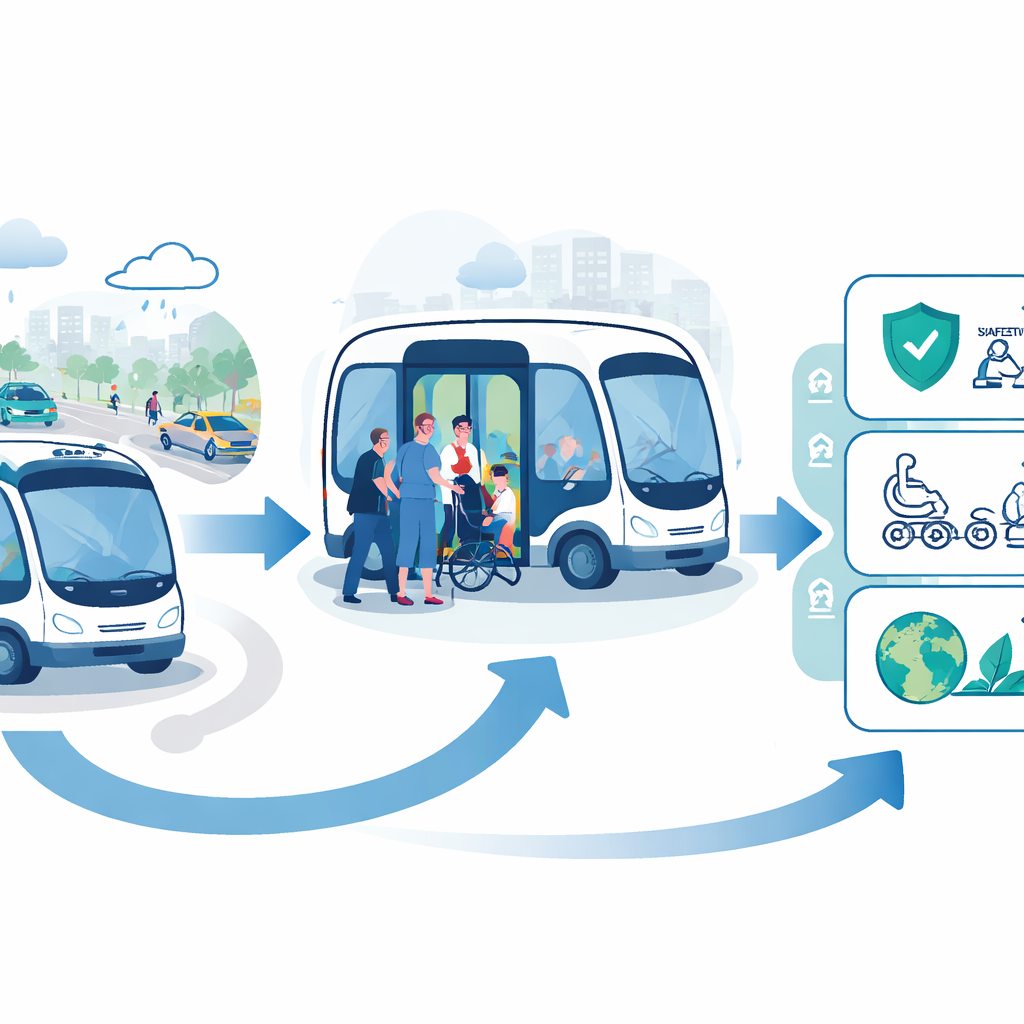
Comparing Regions and Tracking Change
Because the same core questions were used in both cantons, the dataset makes it possible to compare how local context affects social acceptance. For example, residents in Valais tended to rate the shuttles as more accessible for people with disabilities and more beneficial for children than residents in Schaffhausen, even though the vehicles themselves were the same. The repeated waves in Neuhausen further reveal how awareness and attitudes evolve over time. Awareness of the trial climbed above 90 percent, and acceptance of the shuttle remained consistently high, even though some initial fears—such as loss of control and doubts about reliability—continued to predict lower support among certain groups.
What the Findings Mean for Future Travel
Overall, the paper concludes that real-world trials of autonomous shuttles can build broad familiarity and stable acceptance, but they do not automatically erase all worries. Highly publicized fatal accidents abroad briefly dampened trust, while minor local mishaps had little lasting effect. People were generally positive about using the shuttles, especially when they offered clear advantages such as shorter travel times or lower costs, yet they were not willing to pay much extra for the service. For planners, transport agencies, and policymakers, this dataset provides a detailed starting point for understanding how communities respond when the bus driver is an algorithm—and what matters most to keep that ride both trusted and useful.
Citation: Wicki, M., Verma, H., Reichenbach, J. et al. Social Perception of Autonomous Mobility: A Survey on Public Transport Pilots in Switzerland. Sci Data 13, 551 (2026). https://doi.org/10.1038/s41597-026-06672-y
Keywords: autonomous shuttles, public transport, social acceptance, Switzerland, self-driving vehicles