Clear Sky Science · en
Altered wakeful theta activity characterizes levodopa-induced dyskinesia in Parkinson’s disease
Why sleep and daytime brain waves matter in Parkinson’s
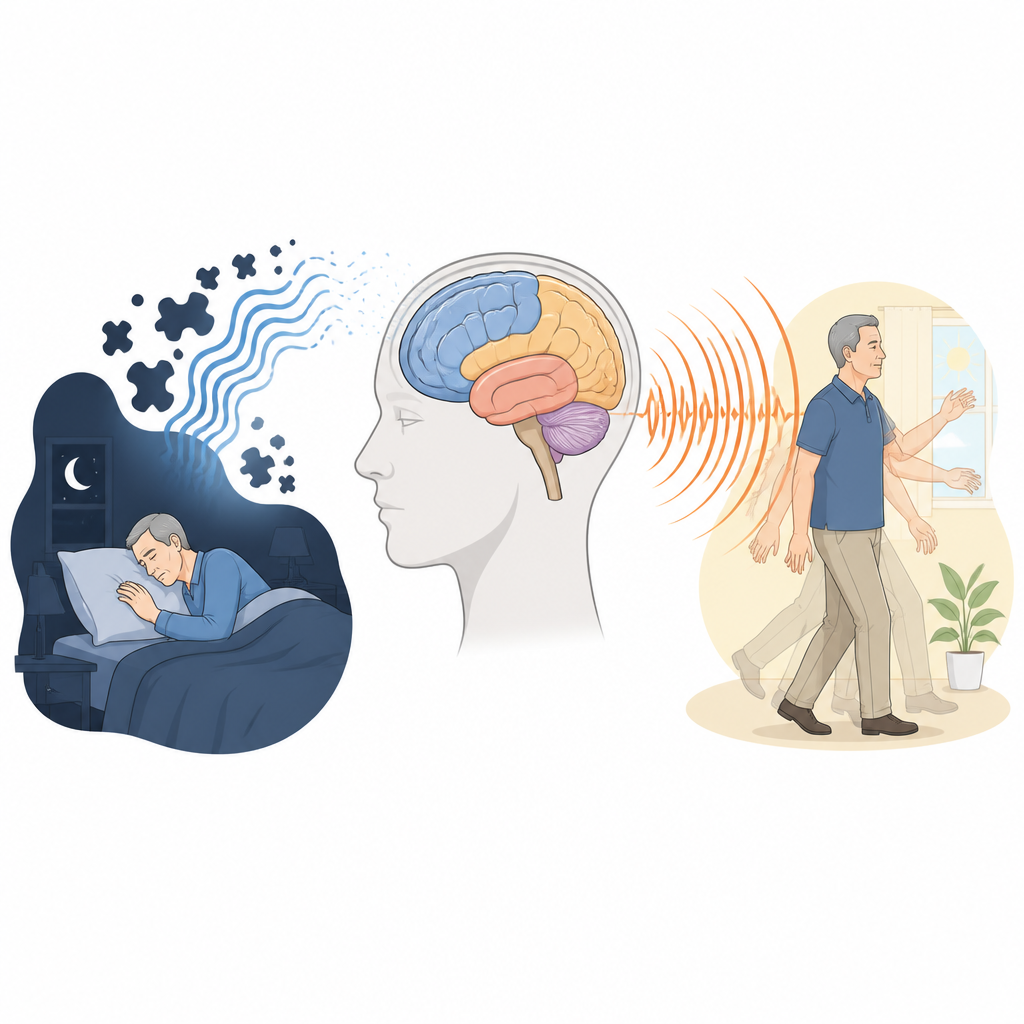
People with Parkinson’s disease often struggle not only with movement, but also with poor sleep and side effects from their main medication, levodopa. One of the most disabling side effects is levodopa-induced dyskinesia, a pattern of involuntary, twisting movements. This study asks a simple but important question: could changes in brain activity during wakefulness, linked to how well people sleep, help explain why some patients develop these troublesome movements while others do not?
Different groups of patients, different daily routines
The researchers followed four groups of volunteers: healthy adults, people with early-stage Parkinson’s, people with advanced Parkinson’s without dyskinesia, and people with advanced Parkinson’s who already had dyskinesia. Everyone wore a wrist sensor at home for a week, which tracked how long they stayed in bed, how much they actually slept, and how often they woke up during the night. After this week, each person completed two short brain recordings at home using a cap with many electrodes: one in the morning and one about nine hours later in the evening, while simply resting with eyes closed.
Broken nights in those with involuntary movements
Data from the wrist sensors showed a clear pattern. People with dyskinesia had the most disturbed sleep. They took longer to fall asleep, woke up more often during the night, and had the lowest sleep efficiency, meaning much of their time in bed was spent awake. Their sleep schedule was also less regular from day to day. Patients with advanced Parkinson’s but no dyskinesia showed milder problems, while those in the early stage and healthy volunteers slept comparatively better. Interestingly, when patients were asked about their sleep using standard questionnaires, they did not report differences as striking as those seen in the objective measurements.
A daytime brain rhythm that fails to reset
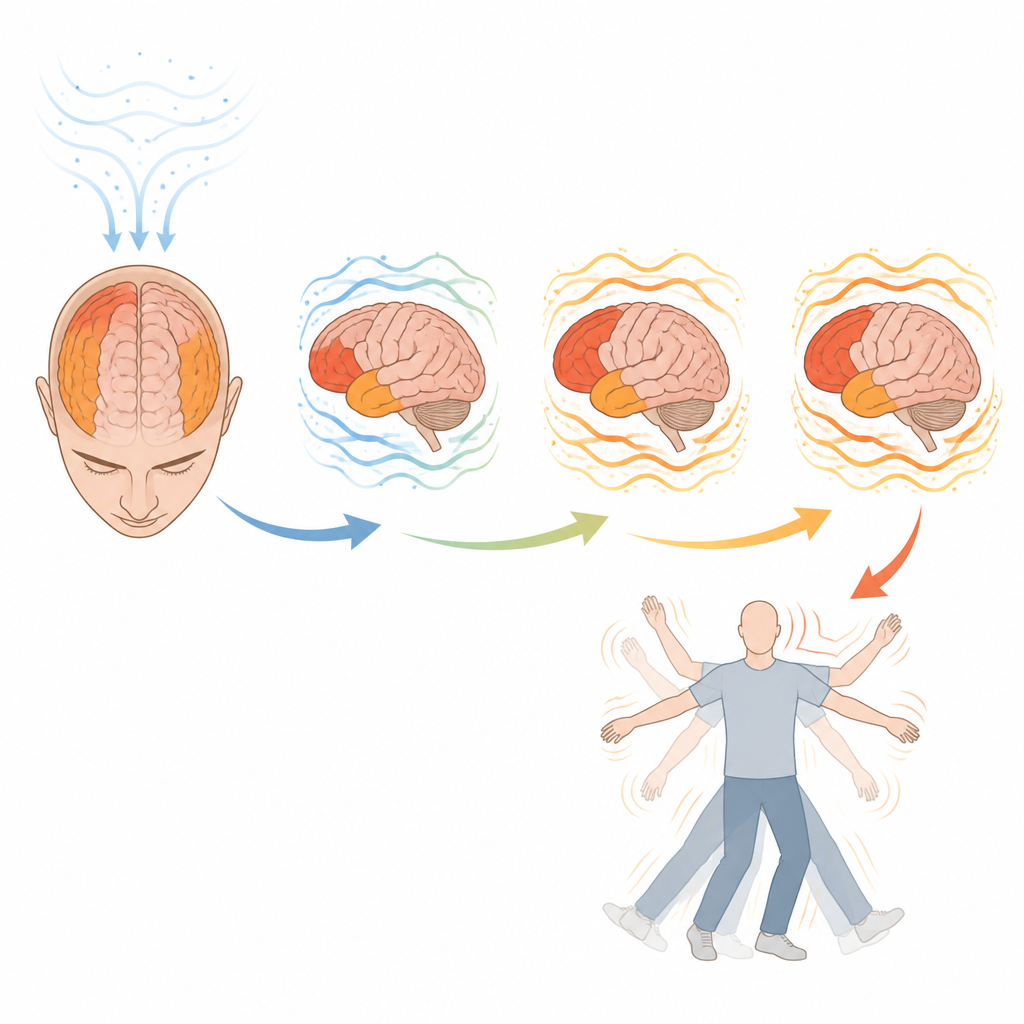
The brain recordings focused on theta activity, a gentle rhythm in the electrical signal that is usually stronger the longer we stay awake and is thought to reflect how much the brain’s connections have "wound up" during the day. In healthy volunteers, as well as in early and advanced patients without dyskinesia, theta activity was relatively low in the morning and increased by evening, as expected. In contrast, people with dyskinesia started the day with unusually high theta activity across large parts of the brain and showed little or no further increase by evening. Their brains looked as if they had already reached a ceiling early in the day and could not build up further.
Links to medication dose and movement problems
Among patients with dyskinesia, those taking higher daily doses of levodopa tended to show higher morning theta activity and a smaller rise across the day. There was also a suggestive link between higher morning theta and more severe involuntary movements, although the study was not large enough to prove this definitively. These patterns were not seen in the other patient groups, even though advanced patients with and without dyskinesia had similar disease duration and similar overall medication doses. This suggests that the altered daytime rhythm is tied specifically to dyskinesia, rather than simply to having more advanced Parkinson’s or taking more drugs.
What this means for people living with Parkinson’s
Overall, the study paints a picture in which people with levodopa-induced dyskinesia experience both fragmented sleep at night and a brain rhythm during the day that seems unable to reset properly. Their brains may start the morning already in a highly activated state and show little flexibility over the course of the day. The authors suggest that this combination could reflect a deeper imbalance in how brain connections strengthen while awake and are trimmed back during sleep. If future, larger studies confirm these results, carefully measuring sleep and simple resting brain activity could help identify patients at risk of dyskinesia and guide new treatments that work not only on movement, but also on restoring healthy sleep and daily brain rhythms.
Citation: Fiorillo, L., Lombardi, G., La Porta, N. et al. Altered wakeful theta activity characterizes levodopa-induced dyskinesia in Parkinson’s disease. npj Parkinsons Dis. 12, 115 (2026). https://doi.org/10.1038/s41531-026-01320-z
Keywords: Parkinson’s disease, dyskinesia, sleep disruption, theta activity, levodopa