Clear Sky Science · en
Associations between food addiction symptoms, food intake and BMI-for-age in children from a low-income region: A structural equation modeling approach
Why this matters for kids and parents
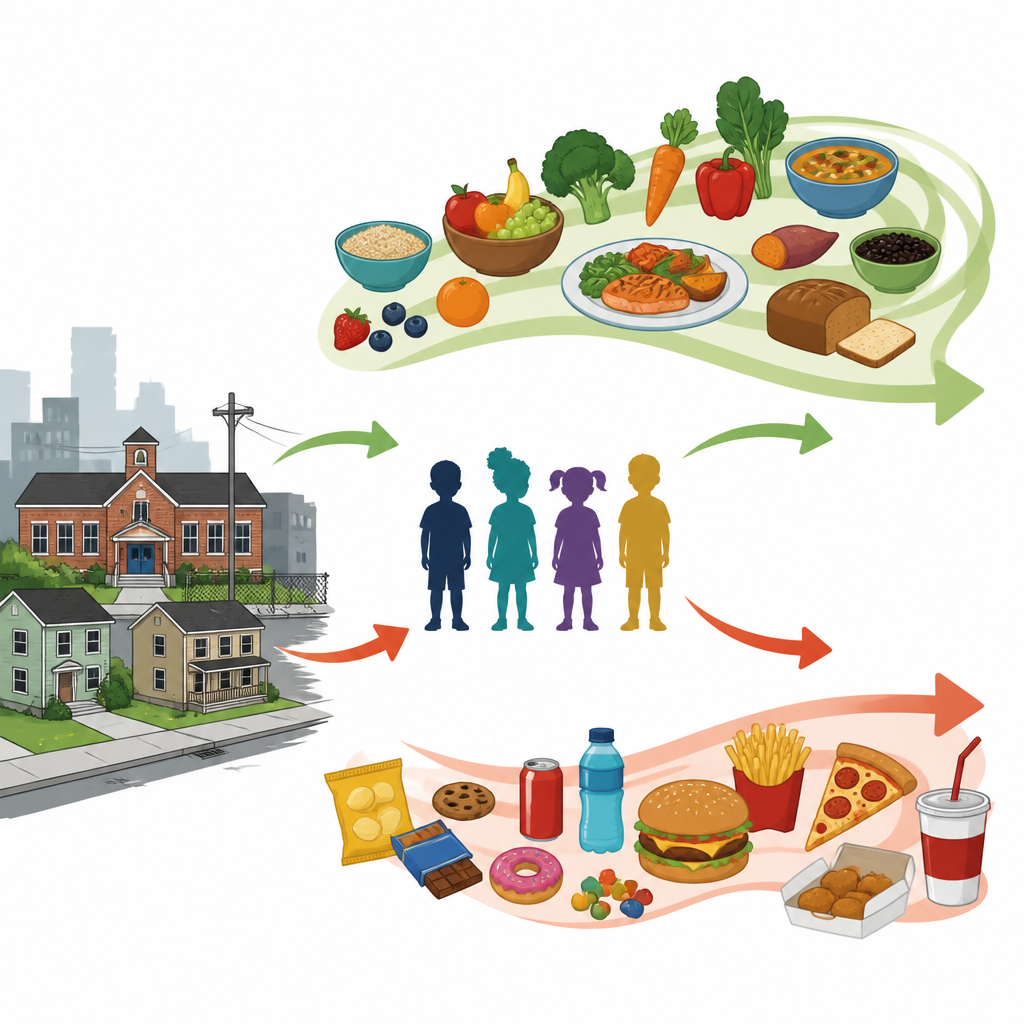
Children today are surrounded by brightly packaged snacks and sugary drinks that are easy to grab and hard to resist. This study looked at how “food addiction” like behaviors in Brazilian schoolchildren relate to what they actually eat and how this connects to their growth. Understanding these links can help families, schools, and policymakers create environments that support healthier choices for kids, especially in low income communities.
Children, junk food, and everyday life
The research followed 259 children aged 7 to 10 years who attended public schools in a low income city in Northeast Brazil. Most of these children lived in households with limited financial resources and faced social inequalities that can shape their access to food. The team asked each child about their eating habits over the past month, measured their height and weight to calculate a body mass index for age score, and assessed signs of food addiction using a questionnaire specially adapted for children.
What the researchers measured
To understand how different foods fit into the children’s diets, the scientists used a system that groups foods according to how much they are processed. Fresh and minimally changed foods like fruits, vegetables, beans, and plain meats formed one group. Basic cooking ingredients such as oil and sugar made up another, while packaged or canned staples like bread and cheese formed a third. The last group included ultra processed products such as soft drinks, instant noodles, packaged snacks, sweets, and fast food. The researchers then used a statistical method that lets them study several links at once: how food addiction symptoms related to each food group, and whether these eating patterns were tied to children’s body size.
Food addiction symptoms and what kids eat
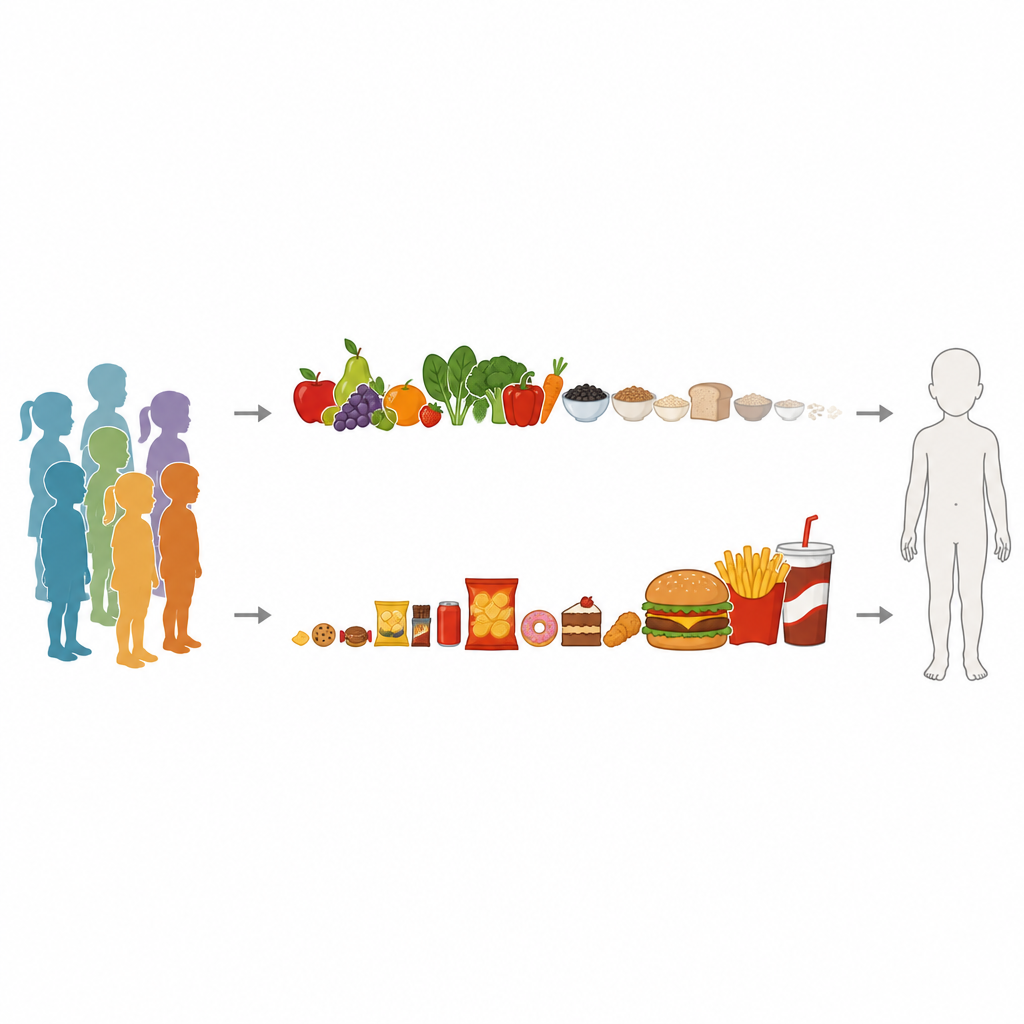
Food addiction symptoms in the study covered behaviors like often eating more than intended, struggling to cut back, spending a lot of time seeking certain foods, and continuing to eat them despite negative consequences. Children who showed more of these symptoms tended to eat fewer fresh and minimally processed foods. At the same time, they consumed more ultra processed items high in sugar, fat, and salt. In other words, signs of addictive style eating were linked with a shift away from home style staples toward ready to eat industrial products that are designed to be highly appealing.
Body size, processed foods, and missing links
The team also asked whether these eating patterns explained differences in the children’s body mass index for age. They found that higher intake of processed foods such as breads and cured meats was related to slightly higher body mass index scores. However, ultra processed foods showed no clear direct link with body mass index in this group, possibly because such products were widely eaten by nearly all the children, leaving little contrast. Most importantly, the study did not find evidence that eating patterns mediated the relationship between food addiction symptoms and body size. In other words, having more food addiction symptoms was tied to what children ate, but this did not strongly translate into differences in measured growth.
What this means for families and policy
The study suggests that children who struggle with addictive like responses to food are drawn away from fresh, simple meals and toward ultra processed snacks and drinks, even when they live in communities with limited resources. While this did not clearly show up as higher body mass index in this cross sectional snapshot, the pattern still raises concerns for long term health. The authors argue that protecting children will require more than just personal willpower: they highlight the need for public policies that make healthier foods easier to obtain and that limit the marketing and availability of ultra processed products to young people.
Citation: Jurema Santos, G.C., Góis Leandro, C., Oliveira, T.L.P.S.d.A. et al. Associations between food addiction symptoms, food intake and BMI-for-age in children from a low-income region: A structural equation modeling approach. Eur J Clin Nutr 80, 515–523 (2026). https://doi.org/10.1038/s41430-026-01715-4
Keywords: food addiction, ultra processed foods, child nutrition, low income children, BMI for age