Clear Sky Science · en
Association of maternal smoking during pregnancy with youth depression and subsequent adult chronic diseases in offspring
Why this study matters for families
Many parents know that smoking during pregnancy can affect a baby’s birth weight or lungs, but far fewer realize it may also shape a child’s mood and long‑term health. This large study followed tens of thousands of people in the UK to ask a sobering question: when mothers smoke around the time of birth, does it raise the risk that their children become depressed in youth and later develop serious chronic illnesses as adults? The findings suggest that avoiding cigarettes during pregnancy could prevent a meaningful share of depression and physical disease in the next generation.
Tracing health from the womb to adulthood
Using data from more than 60,000 participants in the UK Biobank, researchers looked back at whether each person’s mother smoked regularly around the time they were born. They then tracked when participants first experienced a prolonged episode of low mood or loss of interest before age 18, which was used to define youth depression, and followed them further into adulthood to see who developed major chronic conditions such as asthma, chronic lung disease, high blood pressure, liver disease, and blood vessel problems. By linking early exposure, mental health, and later physical illness in one framework, the team could trace how a single prenatal risk might ripple across an entire life course. 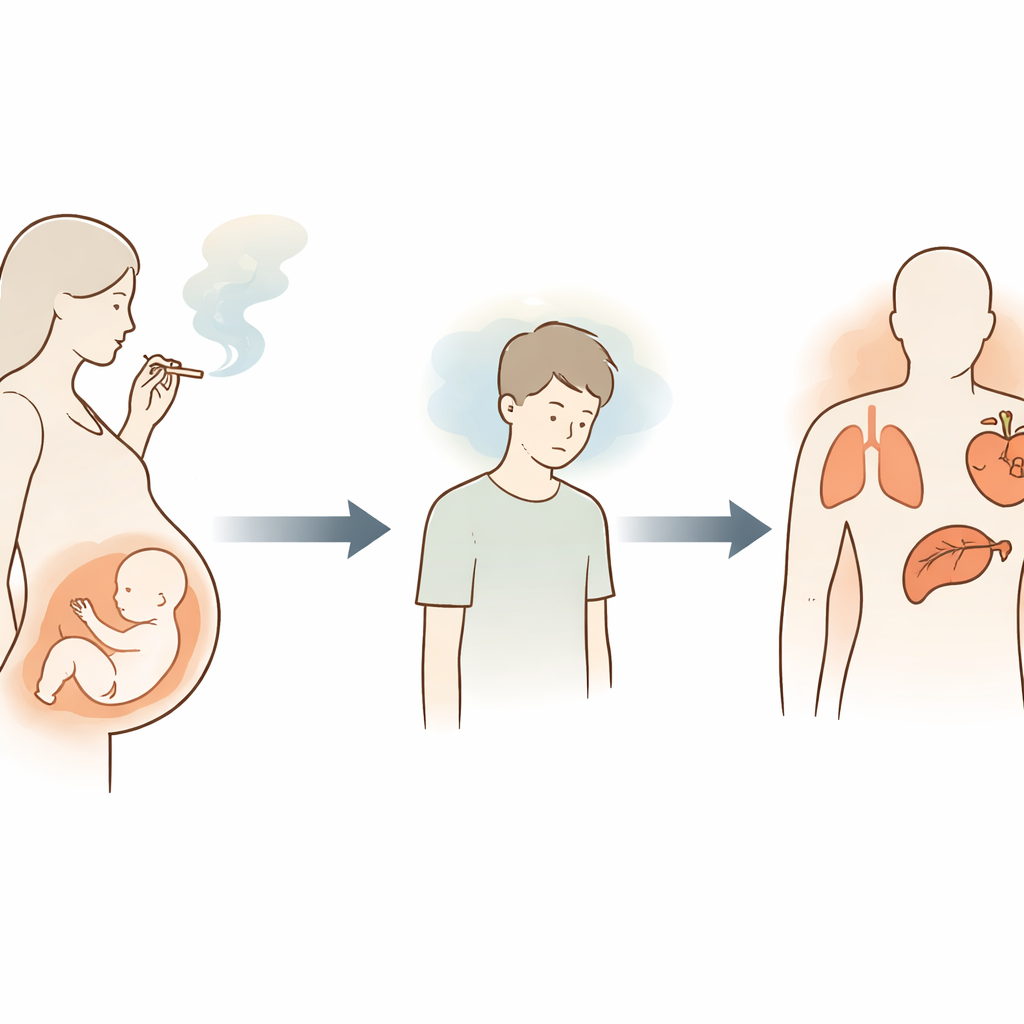
Higher risk of low mood in growing girls
The results showed that people whose mothers smoked during pregnancy were about one quarter more likely to develop depression during childhood or adolescence than those whose mothers did not smoke. The difference was strikingly stronger in girls and young women: among females, maternal smoking was clearly linked to increased youth depression, while in males the association was weaker and not statistically certain. The risk of depression began to rise noticeably around age six and climbed sharply through the teenage years, underscoring that this is not only a late‑adolescent problem but one that can emerge in early school age and build over time.
Genes that load the dice
Depression runs in families partly because of inherited DNA. To understand how genes and cigarette exposure might work together, the researchers scanned the whole genome and discovered a cluster of genetic variants in a gene called ABR that was linked to youth depression, especially in females. They also built a “polygenic risk score” that summed up many small genetic effects into a single measure of inherited vulnerability. Young people with the highest genetic risk were far more likely to become depressed. Crucially, those who both carried a high genetic load and were exposed to maternal smoking had the greatest danger, suggesting that genes and prenatal smoke interact rather than acting in isolation.
From sad mood to sick body
The story did not end with mood problems. The team used a multi‑step model to follow people from prenatal exposure to youth depression, then on to adult physical disease and death. Maternal smoking was tied not only to more youth depression and higher mortality overall, but also to a markedly increased risk of several chronic illnesses among those with depression, including asthma, chronic obstructive pulmonary disease, high blood pressure, liver disease, and disease of the peripheral blood vessels. Both young women and men with depression who had been exposed to maternal smoking showed a heavier burden of multiple co‑existing conditions, although the pattern of diseases differed somewhat by sex. 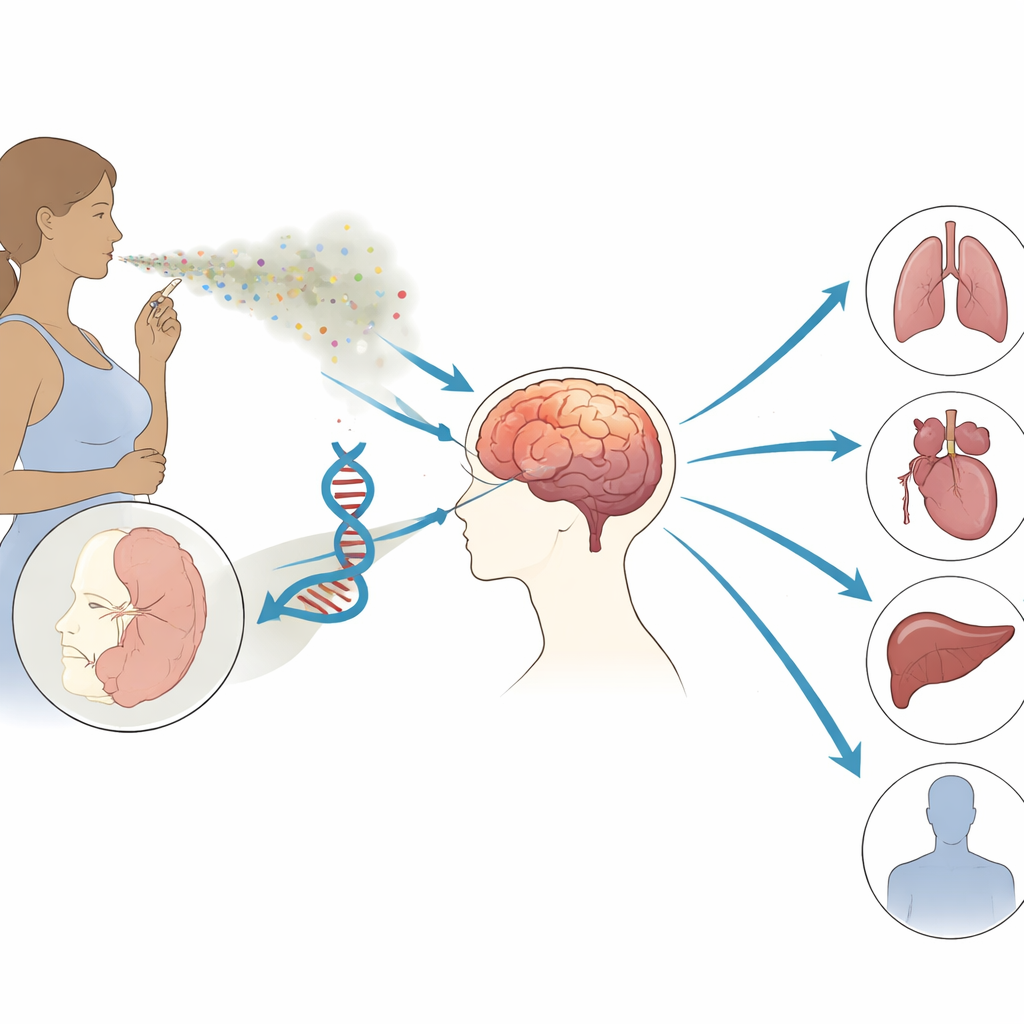
What this means for prevention
To put the findings in practical terms, the authors estimated that if maternal smoking around birth could be eliminated, roughly 6 percent of youth depression cases might be prevented in this population, with even larger benefits for girls and for those already carrying a high genetic risk. The study cannot prove cause and effect with absolute certainty and is limited mainly to people of European ancestry, but it adds powerful evidence that cigarettes in pregnancy can leave a long shadow on both mind and body. For expectant mothers, the message is clear and hopeful: quitting smoking is not only good for their own health, it may also spare their children from a higher risk of early depression and serious chronic disease decades down the line.
Citation: Wei, W., Cheng, B., Qi, X. et al. Association of maternal smoking during pregnancy with youth depression and subsequent adult chronic diseases in offspring. Transl Psychiatry 16, 207 (2026). https://doi.org/10.1038/s41398-026-03976-w
Keywords: maternal smoking, youth depression, prenatal exposure, genetic susceptibility, chronic disease