Clear Sky Science · en
First insight into the artistic materials of Willi Baumeister´s paintings using in situ non-destructive multi-analytical methods
Peeking Beneath the Paint
What if you could look inside a famous painting without removing a single flake of paint? This study does exactly that for works by German modernist Willi Baumeister. By using hospital‑style scanners and cameras instead of scalpels, researchers uncover the hidden mix of old and new materials in three discarded paintings, offering fresh insight into how 20th‑century artists embraced industrial products—and what that means for preserving their art today.
An Artist Between Scarcity and Innovation
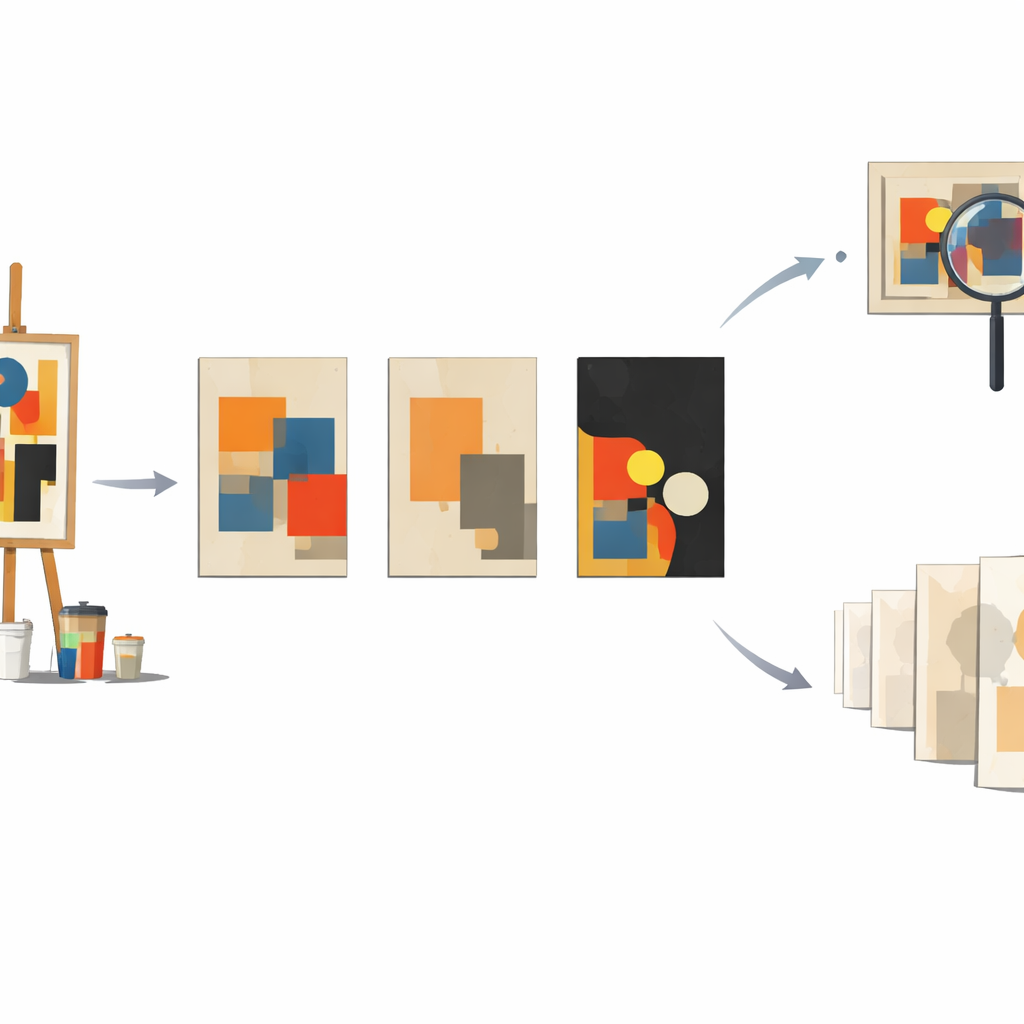
Willi Baumeister worked through turbulent decades in Germany, from before the rise of National Socialism to the post‑war years. Materials were often hard to come by, yet the chemical industry was flooding the market with new paints, plastics and coatings. Baumeister, known for his abstract forms and experimental spirit, stood at this crossroads. The question driving this project is simple but powerful: when he reached for modern products like industrial lacquers or synthetic binders, was he improvising under shortage—or deliberately choosing them to shape a new kind of painting?
Three Rejected Paintings as Hidden Archives
The team focused on three works Baumeister himself had rejected and altered—cut down, crossed out, or overpainted. Though not part of his official catalogue, these fragments are technical time capsules spanning roughly 1931 to 1955. Each shows traces of earlier compositions, overpainting, and surface coatings. Instead of removing samples, scientists brought portable instruments into the conservation studio and examined the paintings where they are stored, treating them almost like patients in a clinic.
Scanning Without Touching
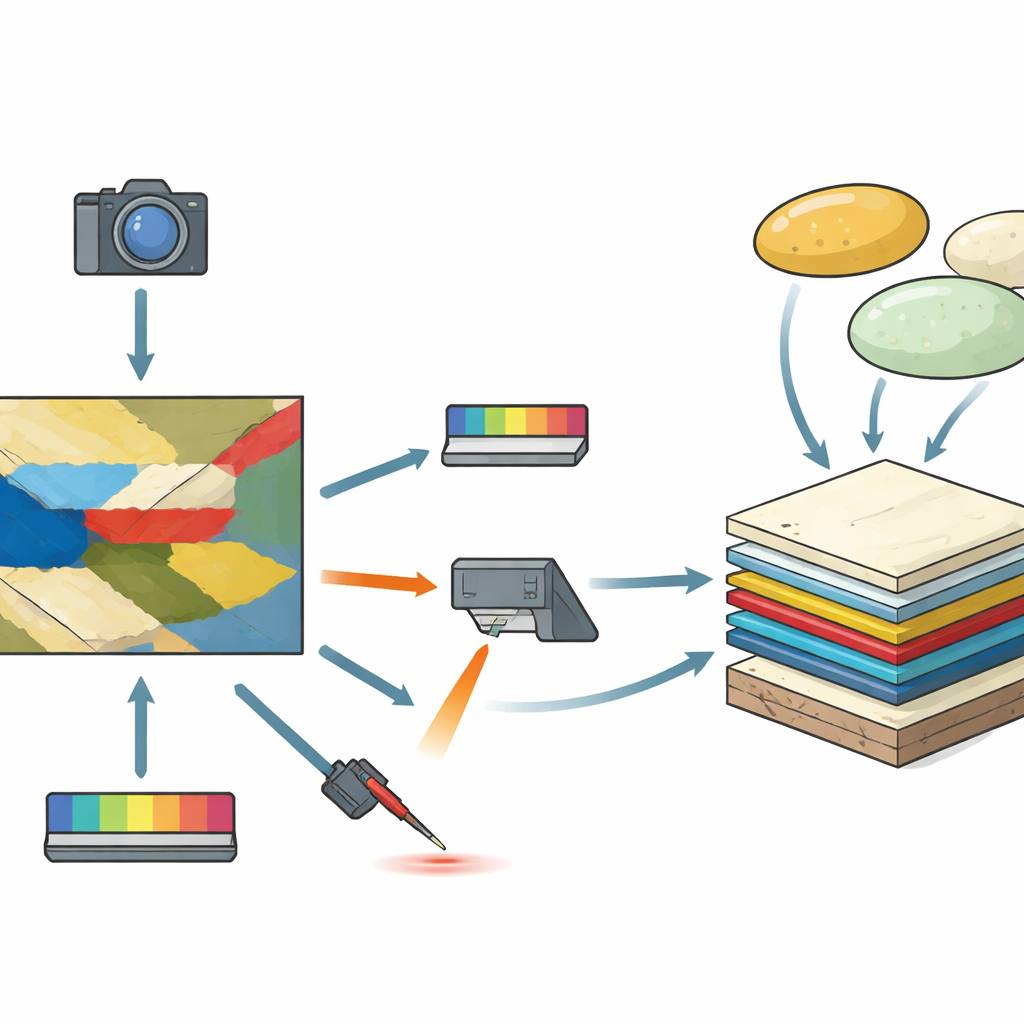
To see what lies beneath the surface, the researchers combined several non‑destructive methods. Multiband and hyperspectral imaging captured how different colors reflect and glow under visible, infrared and ultraviolet light, revealing hidden lines, buried shapes and pigment signatures. Macro X‑ray fluorescence mapping showed where elements such as lead, zinc, cadmium and copper are concentrated, pointing to specific pigments. Portable Raman and infrared spectrometers, held just above the paint, read the “vibrations” of molecules to identify binders and fillers. Together, these tools produced layered information about both mineral pigments and organic materials without lifting a single chip.
Old Pigments, New Plastics and Even Buttermilk
The fragments reveal a rich blend of traditional and novel materials. Baumeister used classic pigments such as ultramarine blue, ochres, bone black and lead white, alongside modern titanium white and cadmium reds. Common fillers like chalk, barium sulfate and clay, typical of commercial paints, appear throughout. More striking are the organic components: drying oil remains a mainstay, but in one fragment he seems to have added a thin buttermilk layer as a matte coating—an unusual choice for easel painting, yet consistent with descriptions of his studio practice. In a later fragment, the crossing‑out marks likely contain cellulose nitrate, a brittle early plastic once used in lacquers. In the most recent work, the team finds strong evidence for polyvinyl acetate, a synthetic binder related to modern household paints and glues, and signs of metal soaps that hint at slow chemical changes within the paint.
Why These Findings Matter
Taken together, these results confirm Baumeister as an artist who did not simply endure new materials but actively explored them, blending industrial products with traditional oil painting to achieve his desired look—especially the velvety matte surfaces he prized. For curators and conservators, knowing that a black overpaint may rest on oil, that a cross may be rich in cellulose nitrate, or that a surface may carry a fragile buttermilk film is crucial when planning cleaning, restoration or display. Beyond Baumeister, the study demonstrates how a carefully chosen “toolkit” of non‑destructive techniques can open up the material story of modern paintings, guiding future, more detailed sampling while keeping the artworks as intact as possible.
Citation: Angelin, E.M., Mindermann, S., Lenz, R. et al. First insight into the artistic materials of Willi Baumeister´s paintings using in situ non-destructive multi-analytical methods. npj Herit. Sci. 14, 201 (2026). https://doi.org/10.1038/s40494-026-02464-0
Keywords: modern painting materials, art conservation, non-destructive analysis, synthetic binders, Willi Baumeister